
Still listening through a cheap dongle and wondering why your music feels flat? In 2026, your smartphone is no longer the weakest link—your audio chain is. A portable DAC/Amp can unlock a level of clarity, depth, and power that most users have never experienced before. Whether you’re chasing true Hi-Res sound or simply want your headphones to finally perform at their full potential, this guide reveals the best portable DAC/Amps that actually make a difference in real-world use.
Best Portable DAC/Amp for Smartphones (2026 Review)
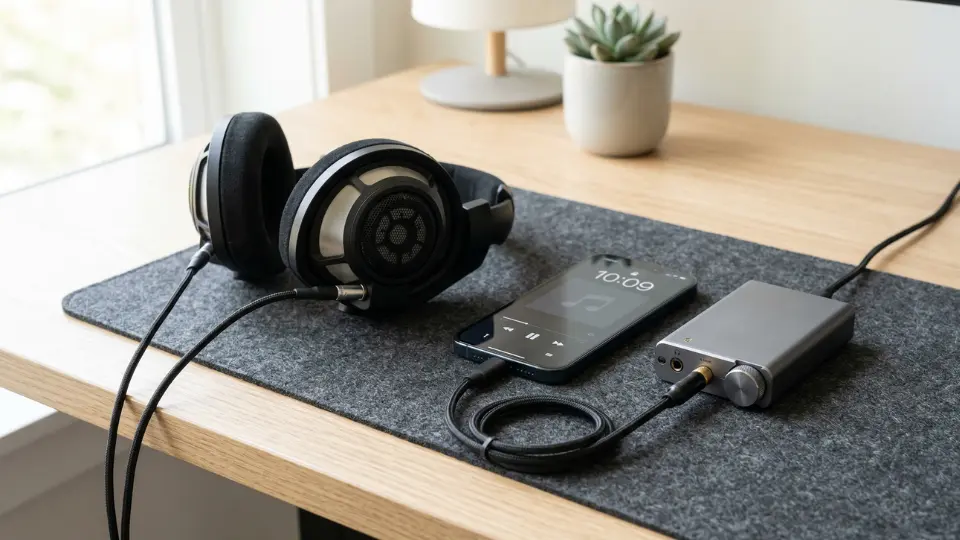
Welcome to 2026. The 3.5mm headphone jack on smartphones is now little more than a nostalgic memory, fully replaced by USB-C and an overwhelming push toward wireless audio. While the convenience of wireless listening is undeniable—as seen in our roundup of the best wireless earbuds in 2026—true audiophiles know that Bluetooth compression still leaves something to be desired. If you have invested in a high-quality pair of wired In-Ear Monitors (IEMs) or demanding over-ear headphones, plugging them directly into a cheap $10 dongle adapter is doing your audio gear a massive disservice.
This is where a portable Digital-to-Analog Converter (DAC) and Amplifier steps in. A portable DAC/Amp bypasses your smartphone’s internal, often noisy and underpowered audio processing. It takes the pure digital signal from your phone’s USB-C port, converts it into a pristine analog signal, and amplifies it with enough clean power to drive everything from sensitive IEMs to high-impedance studio headphones. If you’ve ever found yourself wondering why earbuds sound worse than expected, a lackluster DAC is often the hidden culprit.
In this comprehensive 2026 review, we are breaking down the absolute best portable DAC/Amps for smartphones. Whether you are an iPhone user looking to maximize Apple Music’s Hi-Res Lossless tier, an Android enthusiast tweaking parametric EQs, or simply trying to upgrade your work from home audio setup, we have tested and ranked the top contenders.
Understanding the Tech: Why Do You Need a DAC/Amp?
Before diving into our top picks, it is crucial to understand what you are actually buying. Every smartphone, tablet, and laptop has a built-in DAC. However, smartphone manufacturers prioritize battery life, screen technology, and camera sensors over audio fidelity. The built-in DACs are typically mass-produced, unshielded chips that pick up electromagnetic interference from the phone’s cellular and Wi-Fi antennas, resulting in a subtle “hiss” or distortion in the background of your music.
Furthermore, internal smartphone amplifiers are incredibly weak. If you are reading our headphones buying guide and deciding to purchase a pair of 300-ohm Sennheiser or planar magnetic HiFiMan headphones, your phone simply cannot provide enough voltage to move the drivers properly. The music will sound quiet, thin, and lacking in dynamic punch (bass).
A portable DAC/Amp solves both problems simultaneously. It provides an isolated, high-precision conversion of your digital files (supporting high-resolution formats like 32-bit/768kHz PCM and DSD512) and delivers robust, clean power. For users trying to create the best tech setup for deep focus, eliminating audio hiss and experiencing music as the artist intended is a game-changer.
The Top Portable DAC/Amps for Smartphones in 2026
1. iFi GO bar Kensei (2026 Edition) – The Best Premium Dongle DAC
Best for: Audiophiles who want uncompromising desktop-class sound in a pocketable format.
The iFi GO bar series has always been a benchmark for portable audio, but the 2026 Kensei edition takes it to another level. Forged from Japanese stainless steel, it feels incredibly premium and acts as a natural heatsink for the powerful internals. It utilizes a custom 32-bit Cirrus Logic DAC chipset, paired with iFi’s signature GMT (Global Master Timing) clock to eradicate jitter.
What truly sets the GO bar apart is its sheer power. Outputting a staggering 477mW into 32 ohms via its 4.4mm balanced output, this tiny dongle can drive almost any over-ear headphone on the market. It also features iFi’s beloved analog processing modes: XBass+ (which adds a satisfying, non-muddy low-end punch) and XSpace (which widens the soundstage, making closed-back headphones sound more open).
- Pros: Massive power output, exceptional build quality, dedicated physical buttons for volume and sound tweaking, IEMatch technology eliminates background hiss on sensitive in-ear monitors.
- Cons: Expensive, heavy for a dongle, drains your smartphone battery significantly faster than budget options.
2. FiiO BTR17 – The Best Bluetooth/Wired Hybrid
Best for: Commuters who want the convenience of wireless without sacrificing audiophile quality.
Dongles are fantastic, but having a rigid wire hanging out of your phone’s USB-C port while walking can be annoying. Enter the FiiO BTR17, the undisputed king of portable Bluetooth DAC/Amps in 2026. This device clips to your shirt or slides into a pocket and connects to your phone via Bluetooth 5.4, bringing near-lossless wireless audio to your wired headphones.
The BTR17 features dual ESS Sabre DACs and THX AAA amplification, providing a startlingly clean and neutral sound signature. Because it relies on wireless transmission, codec support is everything. FiiO has included support for LDAC, aptX Adaptive, and the new aptX Lossless. If you are confused by these terms, check out our deep dive where Bluetooth codecs are explained, or our direct comparison of LDAC vs AAC vs SBC.
The greatest advantage of the BTR17 is its internal battery. Because it powers itself, it does not drain your smartphone’s battery—a crucial factor for power users. Furthermore, when you sit down at your desk, you can plug it in via USB-C to use it as a standard, uncompressed wired desktop DAC.
- Pros: Independent battery life (up to 12 hours), flawless Bluetooth stability, parametric EQ via the FiiO Control app, excellent physical volume wheel.
- Cons: Bulky compared to simple dongles, wireless audio (even LDAC) is still technically inferior to a direct wired connection for trained ears.
3. Qudelix 7K Reference – The Tweaker’s Dream
Best for: Data-driven audiophiles who love Equalization (EQ) and fine-tuning their sound.
Following the legendary success of the Qudelix 5K, the new 7K Reference model retains its crown as the ultimate software-driven DAC/Amp. On the hardware side, it is a highly competent device featuring dual AKM DAC chips and plenty of power. However, the true magic of the Qudelix 7K lies in its companion app.
The Qudelix app features a system-wide, 20-band Parametric EQ (PEQ) with AutoEQ integration. This means you can look up the frequency response curve of almost any headphone ever made and instantly apply a corrective EQ profile to make it sound perfectly neutral (the Harman Target). If you recently read our cheap vs expensive earbuds 2026 comparison and bought a budget pair of wired IEMs, the Qudelix 7K can digitally correct their flaws, making a $50 pair of earphones sound like a $500 pair.
- Pros: The best companion app in the industry, unmatched DSP/EQ capabilities, incredibly lightweight, supports both wired USB-C and wireless LDAC modes.
- Cons: The plastic build feels slightly cheap compared to FiiO or iFi, the app UI has a steep learning curve for beginners.
4. Moondrop Dawn Pro 2 – The Best Budget Pick
Best for: Audio beginners looking for a massive upgrade over the standard $10 Apple/Google dongle.
You don’t need to spend hundreds of dollars to get great audio. The Moondrop Dawn Pro 2 is a testament to how far budget Chi-Fi (Chinese Hi-Fi) has come in 2026. For under $60, this sleek, aerospace-grade aluminum dongle houses dual Cirrus Logic DACs and provides both a standard 3.5mm unbalanced port and a 4.4mm balanced port.
It won’t drive 600-ohm studio headphones, but for 95% of users looking to power high-quality IEMs while sitting at their desk audio setup for focus, the Dawn Pro 2 is practically flawless. It has an incredibly low noise floor, meaning you won’t hear any static during silent passages of music, making it excellent for classical music and acoustic tracks (see our guide on the best earbuds for classical music).
- Pros: Unbeatable price-to-performance ratio, transparent and clean sound, compact and lightweight, independent volume control.
- Cons: No internal battery (drains phone power), sharp corners on the metal casing can scratch your phone in your pocket.
How to Choose the Right Portable DAC/Amp for You
When selecting your ideal audio companion, consider the following three crucial factors:
1. Wired Dongle vs. Battery-Powered Bluetooth
This is the most important decision you will make. Wired dongles (like the iFi GO bar) offer the absolute highest fidelity with zero latency. They are perfect if you are looking for the best tech for studying at a desk. However, they draw power directly from your smartphone’s USB-C port. Depending on the efficiency of the DAC, this can reduce your phone’s battery life by 15% to 30% faster than normal.
Battery-powered options (like the FiiO BTR17) are bulkier, but they save your phone’s battery and offer the freedom of Bluetooth. If you are moving around the house or commuting, this is usually the better choice. You can read more about battery management in our earbuds battery life comparison.
2. Power Output and Impedance Matching
Not all headphones require a powerful amplifier. If you are using sensitive, multi-driver IEMs, you don’t need raw power; you need a low noise floor. A powerful amp with a poor noise floor will sound like a waterfall hissing in your ears. Conversely, if you are using 250-ohm Beyerdynamic over-ear headphones, a budget dongle like the Moondrop Dawn won’t be loud enough. Always check the impedance (Ohms) and sensitivity (dB/mW) of your headphones before buying a DAC/Amp.
3. Smartphone OS Compatibility
In 2026, the playing field has leveled significantly now that Apple has fully transitioned to USB-C, matching the standard set by the best earbuds for Android ecosystems. Almost all USB-C DACs are plug-and-play on both iOS and Android. However, Android users still have an advantage: they can bypass the operating system’s native sample rate conversion using apps like USB Audio Player PRO (UAPP) for bit-perfect audio delivery. iPhone users are locked into Apple’s Core Audio, which is excellent, but less customizable.
Final Thoughts: Is It Worth the Upgrade?
If your daily driver is a pair of True Wireless Stereo (TWS) earbuds like the Sony WF-1000XM6 or the Bose QuietComfort Ultra, a DAC/Amp will do absolutely nothing for you. Wireless earbuds have their own internal DACs and amplifiers built directly into the earpieces; they receive a digital Bluetooth signal, so plugging a DAC into your phone will not alter their sound.
However, if you own a good pair of wired IEMs or over-ear headphones, a dedicated portable DAC/Amp is the single most impactful upgrade you can make. It bridges the gap between the convenience of your smartphone and the audio fidelity of a dedicated home stereo system. It turns your daily commute into a private concert hall and your work from home setup into an audiophile sanctuary.
For the absolute best pure sound quality, the iFi GO bar Kensei is unmatched. For the perfect balance of convenience, power, and wireless freedom, the FiiO BTR17 is our top recommendation for 2026. Whichever route you choose, your ears will thank you.
Looking for more audio guides? Check out our breakdown on the ultimate guide to noise and focus tech, or explore our side-by-side comparison of ANC vs. Passive Noise Isolation to perfect your listening environment.
“`Comparison Breakdown: Specs at a Glance
To help you choose, here is a quick side-by-side comparison of our top picks. If you are also looking to compare popular wireless options like the Apple AirPods Pro 2 USB-C with traditional wired setups, understanding these specs will help clarify the power difference.
| Model | Type | DAC Chipset | Max Power (Balanced) | Internal Battery? | Best Feature |
|---|---|---|---|---|---|
| iFi GO bar Kensei | Wired Dongle | Custom Cirrus Logic | 477mW @ 32Ω | No | XBass+ / XSpace Analog EQ |
| FiiO BTR17 | Wireless / Wired | Dual ESS Sabre | 340mW @ 32Ω | Yes (12 hours) | aptX Lossless & Bluetooth 5.4 |
| Qudelix 7K | Wireless / Wired | Dual AKM | 260mW @ 32Ω | Yes (15 hours) | 20-Band Parametric EQ App |
| Moondrop Dawn Pro 2 | Wired Dongle | Dual Cirrus Logic | 120mW @ 32Ω | No | Unbeatable Value (<$60) |