
ANC vs Passive Noise Isolation: What Actually Blocks More Noise?
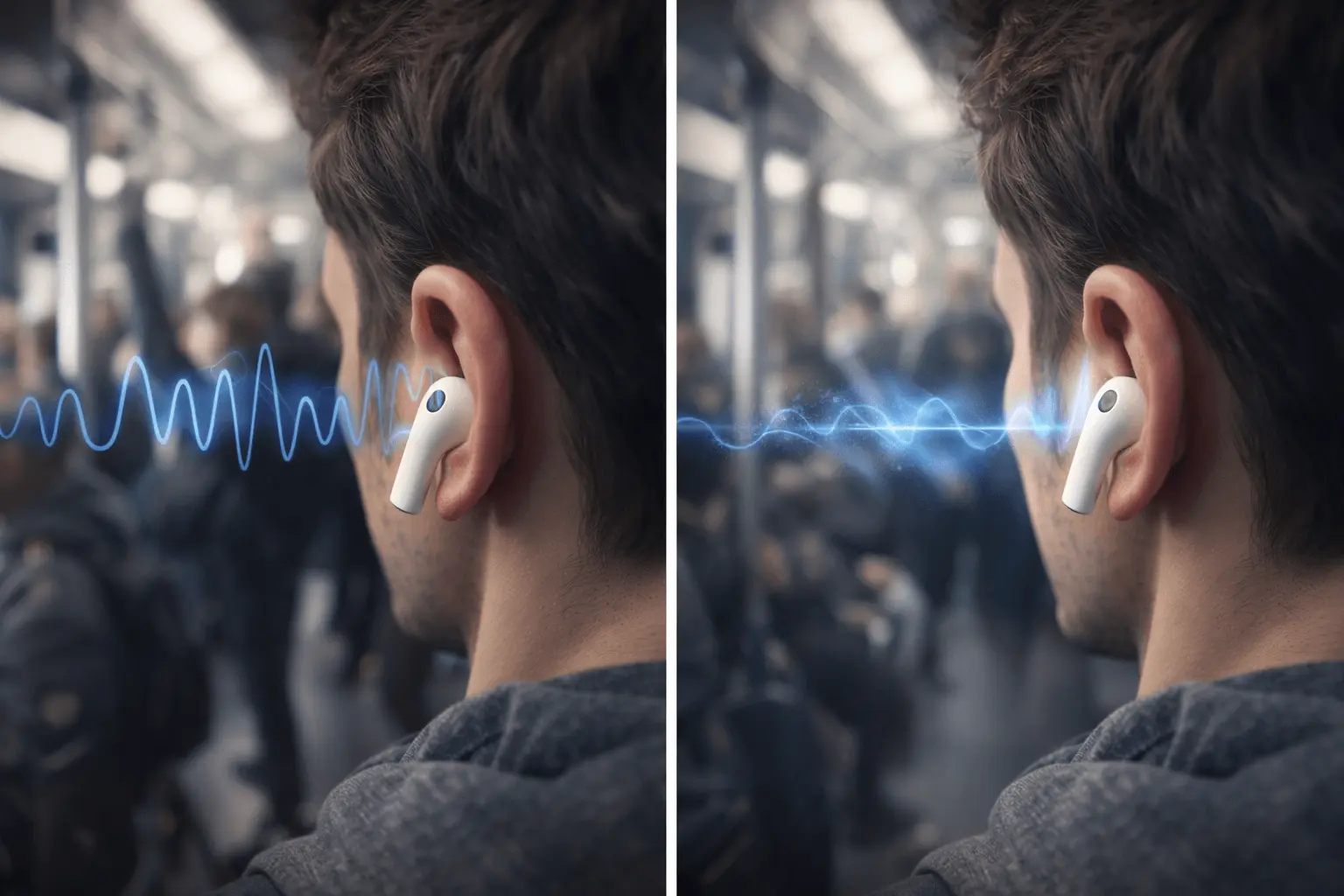
When shopping for wireless earbuds or headphones, two terms appear again and again: active noise cancelling (ANC) and passive noise isolation. They sound similar, and both are meant to reduce outside noise, but they work in very different ways. Understanding that difference can help you choose better earbuds for travel, work, workouts, calls, and everyday listening.
Many buyers assume ANC is always better because it sounds more advanced. In reality, passive noise isolation can sometimes be just as important, and in some situations, it can even matter more. A pair of earbuds with a secure seal and good passive isolation may outperform weak ANC earbuds in the real world. On the other hand, premium ANC can dramatically reduce low-frequency background noise that passive isolation alone cannot fully handle.
In this guide, we explain how ANC and passive noise isolation work, the biggest differences between them, which one blocks more noise in different environments, and what matters most when choosing earbuds. If you are comparing top models overall, you can also explore our guide to the best wireless earbuds for broader recommendations.
What Is Active Noise Cancelling (ANC)?
Active noise cancelling, usually shortened to ANC, is a technology that reduces outside sound using microphones and signal processing. Instead of relying only on physical materials to block noise, ANC earbuds actively listen to the environment and generate an opposite sound wave to reduce certain frequencies before they reach your ears.
The easiest way to understand ANC is to think of it as a system that fights noise in real time. Tiny microphones on the earbuds pick up sounds around you, especially constant low-frequency noises such as airplane cabin hum, train rumble, bus engines, air conditioners, fans, and office ventilation. The earbuds then create an inverted audio signal that cancels part of that external sound.
There are different types of ANC systems. Feedforward ANC uses microphones on the outside of the earbuds to detect environmental sound before it reaches your ears. Feedback ANC uses microphones inside the ear area to monitor what you are actually hearing and correct remaining noise. Many premium earbuds use a hybrid system that combines both approaches for better overall performance.
ANC is most effective against predictable, continuous background noise. It is not equally effective against every sound. Sudden voices, keyboard clicks, dishes clattering, or sharp high-frequency noises are often harder to cancel completely. This is one reason why good passive isolation still matters even on expensive ANC earbuds.
For commuters, frequent travelers, and office users, ANC can be a major quality-of-life feature. It lets you listen at lower volumes, reduces fatigue from constant environmental noise, and helps make music, podcasts, and calls easier to hear.
What Is Passive Noise Isolation?
Passive noise isolation works in a completely different way. Instead of using microphones and electronic processing, it reduces noise through physical design. Earbuds or headphones create a barrier between your ears and the outside world, which blocks or absorbs part of the surrounding sound.
In earbuds, passive isolation depends heavily on fit. The ear tips form a seal in the ear canal, and that seal prevents outside sound from entering as easily. In over-ear headphones, passive isolation comes from the ear cup shape, padding, clamp force, and materials used around the ears. The better the physical seal, the stronger the passive isolation.
This is why fit is so important in earbuds. A great seal improves not just comfort and bass response, but also how much outside noise gets blocked. For many users, especially those with smaller ears, the wrong tip size can reduce passive isolation dramatically. If comfort and seal are a concern, our earbuds for small ears fit guide may help you choose a better design.
Passive isolation is often especially effective against mid and high-frequency sounds, such as chatter, keyboard clicks, dish noise, footsteps, and some street sounds. While it does not “cancel” sound electronically, it can still make a very noticeable difference, particularly when the fit is tight and secure.
One major advantage of passive isolation is simplicity. It does not require battery power, does not introduce processing artifacts, and works all the time as long as the fit remains good. Even earbuds with no ANC at all can feel surprisingly quiet if they isolate well.
ANC vs Passive Noise Isolation: The Core Difference
The key difference is simple: ANC is electronic noise reduction, while passive noise isolation is physical noise blocking. ANC listens to the environment and tries to reduce sound using technology. Passive isolation physically limits how much outside sound reaches your ears in the first place.
That difference changes how each one performs. ANC is strongest against steady low-frequency sounds. Passive isolation is often stronger against mid and high-frequency noise when the seal is good. In the best earbuds, the two systems work together. Passive isolation reduces the amount of sound entering the ear, while ANC further lowers the background noise that remains.
Another important difference is power. Passive isolation works whether your earbuds are on or off. ANC requires battery life and active electronics. If your earbuds run out of power, ANC stops working, but passive isolation remains.
There is also a difference in consistency. Passive isolation depends on fit, and fit can change with ear tip size, ear shape, movement, and insertion depth. ANC quality depends on the hardware, processing algorithm, and how well the microphones work in real-world conditions. A poor seal can weaken ANC results because too much noise leaks in before the system can help.
In practical terms, buyers should not think of ANC and passive isolation as competing features. The best listening experience usually comes from combining both. Premium earbuds with strong ANC and a secure seal tend to perform better than earbuds that rely only on one method.
Which Blocks More Noise?
The honest answer is: it depends on the type of noise. There is no single winner in every situation. ANC and passive noise isolation are better at different things.
ANC usually wins against low-frequency noise. If you are on an airplane, subway, train, or bus, ANC is often the more valuable feature. Engine hum, air conditioning, and constant mechanical rumble are exactly the kinds of sounds ANC is designed to reduce. In these environments, strong ANC can make a dramatic difference.
Passive isolation often performs very well against higher-frequency sounds. Human voices, office chatter, gym noise, keyboard typing, dishes, and some street sounds may still come through even on ANC earbuds. A strong physical seal is often what helps most here.
That means if you compare earbuds with weak ANC but excellent isolation versus earbuds with poor fit and average ANC, the better-isolating pair may feel quieter in real life. This is especially true with in-ear earbuds, where seal quality changes everything.
The best answer for most people is to look for earbuds that combine both strengths. A secure seal gives you strong passive isolation, while ANC handles the remaining low-frequency noise. Together, they create a much more complete sense of quiet.
This is one reason why premium models often stand out. They do not rely only on ANC marketing claims. They also pay attention to ear tip design, ergonomic housing shape, and overall fit, which makes the technology perform better.
ANC vs Passive Isolation in Real-World Situations
Airplanes and trains: ANC is usually the bigger advantage here. Continuous engine and cabin noise are exactly where active noise cancelling shines. Passive isolation still helps, but the added reduction from ANC is often easy to notice.
Office environments: A combination of both works best. ANC can reduce ventilation systems and low background hum, while passive isolation helps with nearby conversations and keyboard clicks. For people who work in shared spaces, this is one of the most valuable use cases for premium earbuds.
Cafés and public spaces: Voices, dishes, and sudden noises are harder for ANC to eliminate completely. Good passive isolation matters a lot here. A well-fitted pair of earbuds may feel better than a loosely fitting pair with stronger ANC on paper.
Gym workouts: Secure fit becomes more important than pure ANC strength. If earbuds slip during movement, passive isolation breaks, and the listening experience suffers. In many cases, workout users should prioritize stability, comfort, and water resistance first. If this is your use case, our upcoming gym-related earbuds recommendations can fit well within your broader audio cluster strategy.
Phone calls: Noise reduction for what you hear is different from microphone noise handling for what other people hear. ANC may help you hear better in noisy places, but good call quality also depends on mic performance and voice isolation algorithms. Buyers often confuse these two things, but they are separate.
Home listening: In a quiet house or bedroom, passive isolation may be enough. If your environment is already relatively calm, paying extra for elite ANC may not always be necessary unless you specifically want the most isolated experience possible.
Why Earbud Fit Matters More Than Most People Realize
One of the biggest mistakes buyers make is focusing on ANC strength while ignoring fit. In earbuds, passive isolation starts with the seal, and that seal affects nearly everything else. If the earbuds do not fit securely, outside sound leaks in, bass response becomes inconsistent, and even strong ANC will feel weaker than it should.
Ear tips are often the most underrated part of the entire experience. The right size and material can dramatically improve isolation. Silicone tips tend to be easier to clean and more durable, while foam tips can expand to fill the ear canal and sometimes improve isolation further. Neither is automatically better for everyone. It depends on your ears, comfort preferences, and how deeply the earbuds sit.
Housing shape matters too. Compact earbuds often work better for users who need a stable seal, especially if their ears are smaller. If the body of the earbud presses awkwardly against the outer ear, you may constantly readjust it, and every adjustment can break isolation.
In real use, some users blame weak ANC when the true problem is poor fit. Before judging noise performance, make sure the ear tips are correct, the seal feels stable, and the earbuds remain secure while walking or moving your jaw. A good fit can transform the way earbuds sound and isolate noise.
If you are choosing between two models, do not just compare ANC claims. Compare comfort, fit options, included ear tips, and how naturally the earbuds sit in the ear. Those factors often matter more than people expect.
When Passive Noise Isolation Can Be the Better Choice
There are several situations where passive isolation may be the more practical or cost-effective priority. First, if you are buying on a tighter budget, good isolation can be more valuable than weak or poorly implemented ANC. Many affordable earbuds advertise ANC, but the actual benefit may be modest. In these cases, strong fit and isolation may deliver more consistent results.
Second, passive isolation is useful if you do not want to depend on battery-powered features. Since it works physically, it does not drain power. Some people prefer simpler earbuds that still block noise well without relying on electronics.
Third, passive isolation can feel more natural in certain situations. Some listeners are sensitive to the sensation of ANC, especially when it creates subtle pressure or changes the way ambient sound feels. Not everyone notices this, but for those who do, passive isolation can be more comfortable.
Fourth, workout users often benefit more from a stable seal than premium ANC. During exercise, slipping earbuds quickly ruin the listening experience. A snug and reliable fit is often the top priority.
Finally, passive isolation may be all you need if you mostly listen in quiet spaces. If your environment is not especially noisy, you may not need top-tier ANC at all.
When ANC Is Worth Paying Extra For
ANC is usually worth the extra cost if you spend a lot of time in noisy environments with continuous low-frequency sound. Frequent flyers, commuters, students in shared spaces, and office workers often benefit the most. Good ANC can lower fatigue, improve focus, and reduce the need to increase volume in loud environments.
It is also worth paying for if you want a more premium all-around listening experience. Strong ANC is usually found in higher-end earbuds that also bring better microphones, better transparency mode, stronger app support, and more polished tuning.
If you listen to podcasts, audiobooks, or quieter music in public spaces, ANC can make those formats much easier to enjoy. Without ANC, many users compensate by turning up the volume, which is less comfortable over time.
Still, ANC should not be judged in isolation. The best value comes when it is paired with a secure fit and solid passive isolation. If you are exploring premium options overall, our guides to the best AirPods Pro alternatives and the Sony WF-1000XM5 review can help show how top models balance these features.
Common Buying Mistakes to Avoid
One common mistake is assuming ANC alone determines how quiet earbuds feel. As this guide has shown, passive isolation is a major part of the experience. Buyers who ignore fit often end up disappointed even with premium earbuds.
Another mistake is confusing ANC with transparency mode. ANC reduces outside sound. Transparency mode does the opposite: it intentionally lets in outside sound so you can hear voices, traffic, or announcements without removing the earbuds. Both are useful, but they solve different problems.
Some buyers also overpay for ANC when their real need is better fit, stronger battery life, or more reliable call quality. The right choice depends on your routine. If you mostly use earbuds at home or in relatively quiet places, elite ANC may not be necessary.
It is also important not to trust marketing language alone. Terms like “noise reduction,” “environment mode,” and “isolating design” do not always mean the same thing across brands. Read the features carefully and focus on real use cases rather than buzzwords.
A smarter buying strategy is to ask: where will I use these earbuds most often, what kind of noise do I want to reduce, and how important is long-term comfort? Those questions usually lead to better decisions than chasing the most aggressive specs sheet.
Final Verdict: ANC vs Passive Noise Isolation
If you want the simplest answer, here it is: ANC is better for reducing constant low-frequency noise, while passive noise isolation is essential for physically blocking outside sound and improving overall performance. Neither one makes the other irrelevant. In the best earbuds, they work together.
If you travel often, commute regularly, or work in noisy environments, strong ANC is often worth the extra money. If fit, comfort, budget, or simplicity matter more, passive isolation may be the feature you notice most day to day. And if your earbuds do not seal properly, even premium ANC will never perform at its best.
The smartest approach is to look for earbuds with both: a secure fit for strong passive isolation and a proven ANC system for low-frequency noise reduction. That combination delivers the most complete quiet, the most consistent sound quality, and the best long-term listening experience.
For more buying help, you can also read our broader guides on the best ways to choose wireless earbuds and the best wireless earbuds available right now.
Frequently Asked Questions
Is ANC better than passive noise isolation?
ANC is better for reducing steady low-frequency noise such as airplane hum, train rumble, and air conditioning. Passive noise isolation is often better for physically blocking mid and high-frequency sounds. The best earbuds use both together.
Can passive noise isolation work without battery?
Yes. Passive noise isolation works through physical design and seal, so it does not need battery power.
Why do my ANC earbuds not block as much noise as expected?
Poor fit is one of the most common reasons. If the ear tips do not seal properly, too much sound leaks in and ANC performance feels weaker.
Does ANC remove voices completely?
Not usually. ANC is strongest against continuous low-frequency sounds. Voices and sudden sharp sounds are harder to eliminate completely.
What is better for gym use: ANC or passive isolation?
For gym use, stable fit and passive isolation are often more important. If the earbuds move during workouts, noise blocking and sound quality both suffer.