
Staying aware while working doesn’t mean sacrificing good audio anymore.
Open-ear headphones are designed to keep you safe and focused — whether you’re in an office, on a construction site, or moving through a busy environment. But not all models deliver the right balance of comfort, sound, and awareness.
In this guide, we break down the best open-ear headphones for work safety in 2026 so you can stay productive without losing awareness of what matters around you.
Best Open-Ear Headphones for Work & Safety (2026)
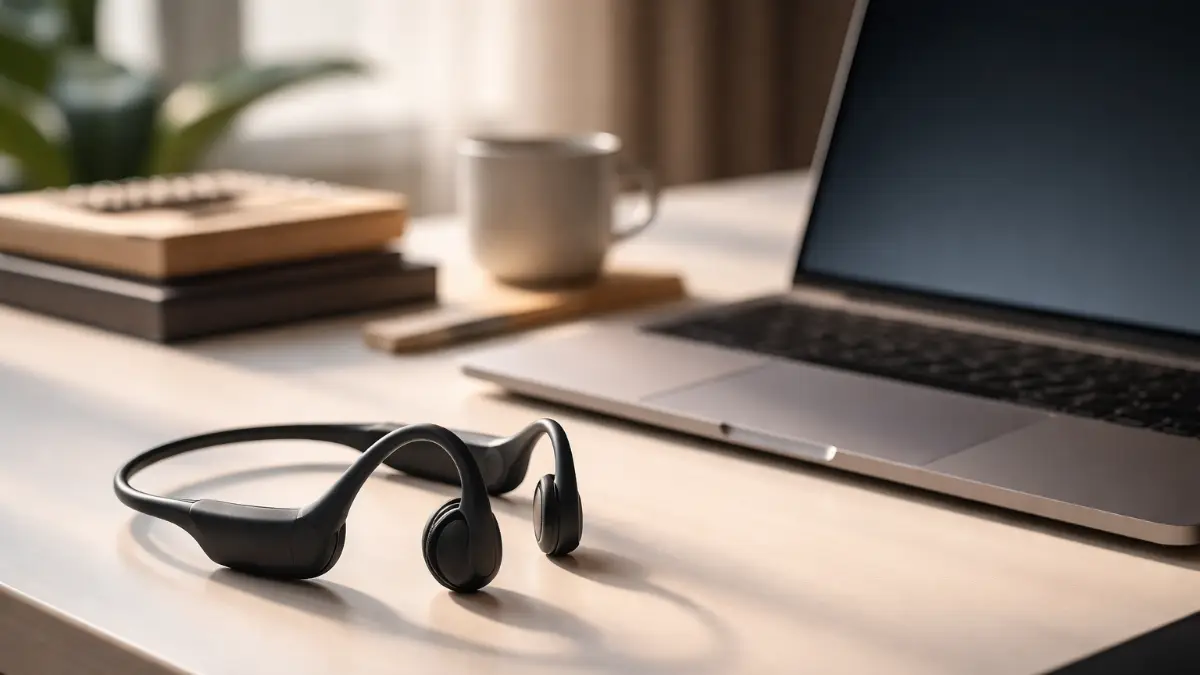
The best open-ear headphones for work and safety help you stay aware of people, traffic, alarms, and your surroundings while still enjoying music, podcasts, and calls.
The best open-ear headphones for work and safety help you stay aware of people, traffic, alarms, and your surroundings while still enjoying music, podcasts, and calls.
Open-ear headphones have gone from niche sports gear to one of the most practical audio categories for everyday life. In 2026, they are especially useful for people who want to listen without cutting themselves off from the world. That includes office workers, warehouse staff, remote workers, cyclists, commuters, dog walkers, and anyone who needs a better balance between audio and awareness. While traditional earbuds and ANC headphones are built to block outside noise, open-ear models are designed for the opposite purpose: they let you hear your content while keeping your environment in the picture.
That difference matters more than many buyers expect. In real work settings, total isolation is not always helpful. You may need to hear coworkers, delivery knocks, printers, children, traffic, warning sounds, or your own name from across the room. If you are constantly pulling earbuds out to talk, check your surroundings, or stay safe while moving between spaces, open-ear headphones can be a smarter fit. They are not about maximum bass or total immersion. They are about freedom, comfort, and practical awareness.
This guide focuses on the best open-ear headphones for work and safety in 2026, but it also explains who should buy them, what trade-offs to expect, and how they compare with more traditional earbuds. If you are still deciding between categories, our comparison on over-ear headphones vs earbuds for work focus gives useful context, and our guide to ANC vs passive noise isolation explains why blocking more sound is not always better. For people who want the opposite of noise cancellation, open-ear models are often the answer.
Why Open-Ear Headphones Make Sense for Work
The biggest reason to buy open-ear headphones is situational awareness. Instead of sealing your ear canal, they leave your ears open or place sound near the ear rather than inside it. That means you can still hear the room, nearby voices, and environmental cues. This is useful in shared workspaces, home offices, workshops, retail spaces, and during outdoor movement. It also makes casual conversation much easier. Instead of pausing and removing earbuds every few minutes, you can often stay connected without interruption.
Comfort is another major advantage. Many people simply do not enjoy the feeling of silicone tips pressing into the ear for hours. Others experience fatigue from noise-canceling pressure or from the weight of full-size over-ear headphones. Open-ear models often feel lighter and less intrusive over long sessions. For buyers who care about long-wear comfort, they can be a strong alternative to some of the products featured in our best earbuds that don’t hurt after long use guide and our roundup of the best office chairs for long hours, where comfort over time matters just as much as headline specs.
They also fit modern hybrid routines well. Many people no longer spend their entire day sitting still in one room. You may work at a desk, move into the kitchen, take a call while walking, step outside for errands, and then return to deep work. In that kind of day, headphones that support awareness can feel far more natural than products designed only for isolation. For broader productivity gear ideas, our work productivity setup 2026 and best tech for deep focus guides show how audio choices fit into a larger work setup.
What to Look for Before You Buy
Not every open-ear headphone is equally good. The first thing to understand is the design type. Some models use bone conduction, sending sound through vibrations around the cheekbones. Others use open air-conduction speakers positioned near the ears. Bone-conduction models often prioritize awareness and secure fit, while air-conduction models may sound fuller and more natural for casual listening. Neither is automatically better. The right choice depends on your priorities.
Battery life matters more than many buyers think. For work use, six hours may be enough, but eight to ten hours is much more practical. If you want one device that lasts through a full shift, charging habits matter too. Fast charging is especially helpful for people who forget to plug in their gear overnight. If battery life is one of your top concerns, it may also be worth looking at our broader battery-focused guides like best earbuds for long battery life and earbuds battery life comparison 2026 to see how this category compares.
Microphone quality is another major factor. Some buyers want open-ear headphones mainly for music, but many want them for calls first. If your day includes Zoom, Teams, Google Meet, or regular phone conversations, weak call quality can ruin the value of the product. That is why some work-focused models stand out even if they are not the most exciting for music. If calls are your top priority, our guides to the best earbuds for phone calls and best earbuds for calls and Zoom meetings offer additional context.
Finally, think about fit. Open-ear headphones only work well if they stay in place comfortably. A stable but gentle frame is ideal. If the fit shifts constantly, presses too hard around the ears, or conflicts with glasses, your long-term experience will suffer. That is why real-world wear matters just as much as headline specs.
Best Overall: Shokz OpenRun Pro 2
For most people, the Shokz OpenRun Pro 2 is the best overall choice in 2026. It delivers the strongest blend of awareness, comfort, reliability, and all-around usability. This is the kind of headphone that works for far more than just running. It fits desk use, calls, moving around the office, outdoor walking, commuting, and hybrid workdays surprisingly well.
Its biggest strength is balance. Some open-ear models feel too sport-focused for everyday work. Others feel too casual for movement. The OpenRun Pro 2 sits nicely in the middle. It stays secure when you move, yet it is comfortable enough for long sessions at a desk. That makes it the easiest recommendation for buyers who want one product that can handle multiple scenarios well.
Sound quality is still different from the richer presentation you get from premium earbuds like those featured in our best earbuds under $200 roundup or our budget vs premium earbuds comparison. But for podcasts, background music, spoken content, and day-to-day work listening, it is more than good enough. Most importantly, it avoids the feeling of being cut off from the real world.
Best for Calls and Communication: Shokz OpenComm 2
If your main use case is talking, not just listening, the Shokz OpenComm 2 is one of the smartest picks. This model is more work-oriented than fitness-oriented, and that matters. It is designed for voice communication, with features that make more sense for professionals than for casual gym use. If you spend large parts of the day on calls, training sessions, customer support, or team check-ins, that focus is valuable.
The standout feature is its call performance. A dedicated boom mic can still outperform more casual headphone microphones in many real-life situations, especially if you move while talking or work in spaces with background noise. For remote workers, hybrid workers, and busy office users, that can be the difference between sounding merely acceptable and sounding clear and dependable.
This kind of product is especially interesting if you have already looked at more traditional work earbuds. For example, many people searching for call quality end up comparing categories, not just products. If that sounds like you, our reviews of the JBL Tour Pro 3, Technics EAH-AZ100, and Sony LinkBuds Fit can help show what you gain and lose when moving away from in-ear designs.
Best Value Pick: Budget Open-Ear Models
Not everyone needs to spend flagship money to benefit from open-ear audio. A well-chosen budget model can still make sense if your goals are simple: hear podcasts while working from home, listen during walks, or keep light background audio playing while staying aware of people and surroundings. The key is understanding the trade-offs. Budget open-ear headphones usually sacrifice some combination of build quality, battery life, microphone performance, and sound refinement.
Still, the category itself can be so useful that even entry-level options are worth considering. For first-time buyers, a lower-cost model may be the smartest way to test whether open-ear audio actually fits daily life. If you discover that you use them constantly, then upgrading later becomes much easier to justify. We have seen the same value logic apply in our more price-sensitive buying guides such as best earbuds under $100, earbuds under $100 vs under $150, and cheap vs expensive earbuds.
Best for Outdoor Work and Active Movement
If your day includes walking, cycling, delivery work, light lifting, or moving between spaces, a secure open-ear design becomes even more important. This is where classic lightweight wraparound models continue to perform well. They are simple, stable, and easy to trust. When you are moving through unpredictable environments, a low-fuss design often matters more than small differences in sound tuning.
For this kind of buyer, awareness is the real feature. You want to hear traffic, other people, door sounds, and surroundings without giving up audio entirely. That is one reason this category overlaps so naturally with running gear. If you are also considering them for exercise, our related guides on the best open-ear headphones for running and best earbuds for running are useful companion reads.
This is also where open-ear models often beat ANC earbuds for practical safety. Noise cancellation is excellent for flights and loud public spaces, but in outdoor movement it can become a disadvantage. That is one reason our travel and ANC-focused lists such as best ANC earbuds for travel should not automatically be treated as the best choice for every scenario.
Open-Ear vs Earbuds for Work
For many buyers, the real question is not which open-ear model is best. It is whether open-ear headphones are the right category at all. In pure sound quality, premium earbuds still win. They offer stronger bass, better isolation, and often more refined audio tuning. That is why products in our best wireless earbuds tested and ranked roundup remain better choices for people who prioritize music enjoyment above everything else.
But work and safety are not just about audio quality. They are about context. If you need to hear your room, respond quickly, and stay aware of life around you, open-ear headphones often make far more sense. They are less immersive, but that is exactly the point. They are designed to support your day without fully removing you from it.
They also solve a problem many workers quietly dislike: constant ear fatigue. In-ear products can become irritating over time, especially in long work sessions. If that sounds familiar, our guides on best earbuds for small ears and earbuds for smaller ears fit guide explain why fit issues matter more than marketing suggests. Open-ear products avoid many of those in-ear comfort problems entirely.
Are Open-Ear Headphones Actually Safer?
They can be safer than isolating earbuds in many everyday situations, but only if used properly. Open-ear headphones do not block the ear canal, which helps preserve awareness. That makes it easier to hear speech, traffic, alarms, and general activity around you. But they do not guarantee safety. If you raise the volume too high or let yourself become fully absorbed in content, you can still miss important cues.
The safest way to use them is at moderate volume. They are most effective when your audio remains in the background rather than taking over your attention. This is especially true for commuting, walking near roads, and working in shared or active environments. They are not a replacement for workplace safety rules or protective equipment, but they are often a smarter listening option than isolating headphones when awareness matters.
This is also why they make sense for people building a more balanced work setup. If your routine includes concentration but also motion, communication, and awareness, open-ear audio can feel like the missing middle ground between silence and isolation. That broader setup logic is part of what we cover in pieces like tech marketing vs reality and why earbuds sound worse than expected, where practical daily use matters more than flashy specs.
Who Should Buy Open-Ear Headphones in 2026?
Open-ear headphones are ideal for remote workers who need to hear the room, office workers who take regular calls, active users who move around throughout the day, commuters who want safer awareness, and people who simply dislike in-ear pressure. They are also a great fit for parents working from home, warehouse staff who need to stay alert, and anyone whose routine mixes movement with listening.
They are less ideal for people who want strong bass, cinematic immersion, or deep noise isolation. If you mostly listen in loud places and want to shut the world out, then traditional ANC earbuds may still be better. In that case, it is worth checking our broader buying guides like headphones buying guide and how to choose wireless earbuds before deciding.
Final Verdict
The best open-ear headphones for work and safety in 2026 are the ones that help you stay aware without making listening feel like a compromise. For most people, the best overall choice is a model like the Shokz OpenRun Pro 2 because it offers the strongest balance of comfort, awareness, stability, and everyday usability. If calls matter more than music, a communication-focused model like the OpenComm 2 is often the smarter option. If your budget is tighter, a simpler open-ear pair can still deliver the core benefit that makes the category valuable.
What makes these headphones worth buying is not pure sound quality. It is how naturally they fit real life. They let you work, walk, answer, move, and stay connected to your environment. In a world where many audio products are built to isolate you more completely, open-ear headphones stand out by doing the opposite. For many people, that is not a drawback. It is exactly the feature they have been missing.
Related Reading on Topivo
- Best Open-Ear Headphones for Running
- Over-Ear Headphones vs Earbuds for Work Focus
- Best Earbuds for Calls and Zoom Meetings
- Best Tech for Deep Focus
- Work Productivity Setup 2026
- ANC vs Passive Noise Isolation
FAQ
Are open-ear headphones good for office work?
Yes. They are especially useful if you need to hear coworkers, your phone, a doorbell, or general room activity while still listening to music, podcasts, or calls.
Do open-ear headphones sound as good as earbuds?
No. Most earbuds still offer stronger bass and more immersive sound. Open-ear headphones trade some sound quality for awareness, comfort, and flexibility.
Are open-ear headphones better for safety?
They can be better than isolating earbuds because they allow you to hear more of your surroundings. They still need to be used at sensible volume levels.
Which open-ear headphones are best for calls?
Work-focused models with stronger microphones, especially communication-oriented options like the OpenComm line, are usually the best choice for heavy call use.
Who should avoid open-ear headphones?
People who want deep bass, maximum immersion, or strong noise cancellation may be happier with premium earbuds or over-ear headphones instead.