
A quieter home can improve more than comfort. It can help you focus better, sleep more easily, take clearer calls, and reduce the daily stress that builds up when background noise never really stops. While wireless earbuds can help in some situations, they are only one piece of the puzzle. The best noise reduction setup at home usually comes from combining several practical tools that work together.
Quick answer: The best way to reduce noise at home is to combine acoustic panels, thick curtains, rugs, and white noise. Earbuds alone are not enough for most real-world environments.
Best Noise Reduction Tools for Home (Beyond Earbuds 2026)
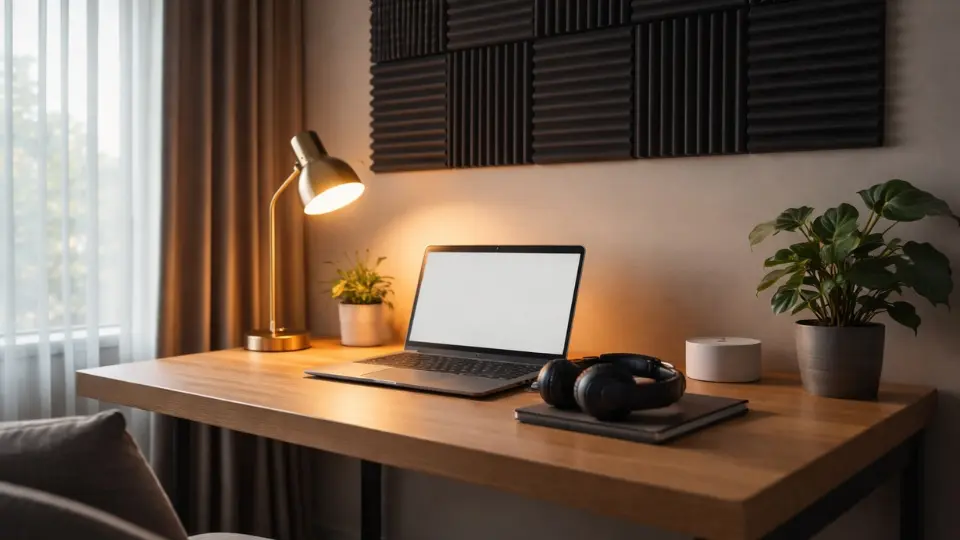
A smart home noise reduction setup often works better than relying on earbuds alone.
If your home feels louder than it should, earbuds are not always the best long-term answer. Even excellent models can only do so much against barking dogs, hallway footsteps, loud neighbors, street traffic, kitchen appliances, or family activity in the next room. In many cases, the better strategy is to reduce noise at the source, soften how sound travels through the room, and then use audio gear only as a final layer. That creates a more natural, less tiring environment for work, study, rest, and everyday life.
This guide covers the best noise reduction tools for home in 2026 beyond earbuds. Instead of focusing only on what goes in your ears, we are looking at what actually changes the room around you. That includes acoustic panels, thick curtains, rugs, white noise machines, door seals, under-door blockers, desk placement, and a few smart upgrades that can make a surprisingly big difference for a relatively low cost.
Why Earbuds Alone Are Not Enough
Earbuds are useful, but they are reactive. They do not fix the room itself. That matters because a noisy room creates several kinds of problems at once. Some sounds come from outside, some bounce around inside, and some get amplified by hard surfaces like tile, glass, or bare walls. Active noise cancellation is great for steady low-frequency sounds, but it is less reliable against sudden voices, clattering dishes, doors closing, or TV audio from the next room.
We have already covered several earbud-related use cases on Topivo, including the best earbuds for working from home, the best earbuds for calls and Zoom meetings, and the best earbuds that do not leak sound. Those are helpful if you need private audio or better microphone quality. But if the actual goal is a quieter home, room-based tools usually deliver more lasting value.
1. Acoustic Panels for Echo and Room Harshness
One of the most effective upgrades for a noisy home office or study corner is a set of acoustic panels. These do not fully block outside noise, but they reduce echo and soften the harsh reflections that make a room feel louder and more stressful than it really is. If your calls sound hollow, your keyboard seems too sharp, or every small sound feels exaggerated, this is often the missing piece.
Acoustic panels work especially well in rooms with painted walls, laminate floors, bare desks, and little fabric. In that kind of space, sound bounces everywhere. A few well-placed panels behind your desk, on the side wall, or on the wall facing your setup can make the room feel calmer almost immediately.
For people building a more focused workspace, this pairs well with our guide to the best tech for studying and the best work productivity setup. Better acoustics often improve concentration more than buying another gadget.
2. Thick Curtains for Windows and Street Noise
Windows are one of the weakest points in most homes when it comes to noise. Even if the glass is decent, many rooms still let in traffic hum, wind, neighborhood sounds, and early morning activity. Thick curtains help in two ways. First, they add a softer surface that reduces reflections inside the room. Second, they create an extra layer in front of the window, which can slightly reduce incoming noise and make the room feel more insulated.
Blackout curtains are often a smart choice because they tend to be denser than decorative curtains. They also help with light control, which makes them useful in bedrooms and multipurpose workspaces. They will not replace proper window insulation, but they are one of the easiest and most affordable upgrades for renters who want less noise without permanent changes.
3. Rugs and Soft Flooring Layers
Hard floors reflect sound. That is especially obvious in apartments, hallways, and rooms with minimal furniture. Adding a thick rug can reduce footstep harshness, soften chair movement, and make the overall acoustic character of the room feel less bright and aggressive. If the room still feels empty, layering a rug over a rug pad can improve both comfort and sound absorption.
This matters more than many people think. A room does not need to be objectively loud to feel distracting. Sometimes the problem is simply that every little sound is sharp. A rug is one of the easiest tools for reducing that edge.
4. White Noise Machines for Masking Unpredictable Sounds
When noise cannot be fully removed, masking can be more effective than fighting every sound individually. That is where a white noise machine helps. A good model creates a stable, neutral background that makes inconsistent sounds less noticeable. This can be useful for sleep, focus, reading, and deep work, especially in apartments or shared homes where you cannot control every noise source.
Some people use speakers or smart devices for this, but dedicated white noise machines are often better because they are designed for consistency and lower distraction. They also work well if you are trying to avoid wearing earbuds all day. If you are deciding between environmental masking and wearable audio, our comparison on ANC vs passive noise isolation can help clarify what each approach does best.
5. Door Seals and Under-Door Draft Stoppers
Many noise problems come through gaps rather than walls. A simple door seal kit or under-door blocker can reduce the amount of sound entering from hallways, kitchens, entry areas, or other rooms. These are low-cost upgrades, but the effect can be larger than expected, especially in older apartments where the gaps are easy to notice once you start paying attention.
This is one of the best value improvements for home offices because it addresses a weak point directly. It is also easy to combine with curtains, rugs, and better desk placement without changing the look of the room too much.
6. Better Desk Placement and Room Layout
Sometimes the best noise reduction tool is not a product at all. It is a layout change. If your desk is placed directly beside a window, facing a reflective wall, or next to the noisiest part of the home, moving it can reduce distraction immediately. Even rotating the desk so your voice projects into a softer part of the room can improve call quality and reduce the feeling of acoustic chaos.
Try to avoid placing your setup in a sound tunnel, such as a narrow room with hard walls and no soft materials. Bookshelves, fabric furniture, cushions, and wall art on canvas can all help break up reflections. For people creating a cleaner, less distracting office, this also fits naturally with our article on the best tech setup for ADHD focus.
7. Quiet Fans and Air Purifiers That Do Not Add More Noise
Sometimes the tool meant to improve the room creates a new problem. Cheap fans, loud purifiers, or poorly tuned home devices can add constant background noise that slowly becomes fatiguing. If you need airflow or cleaner air, look for products that are specifically praised for low-noise operation.
This is where product selection matters. A quiet purifier can help both air quality and sleep comfort, while a loud one can make focus worse. If you are also improving your living space overall, you may want to browse related Topivo guides such as the best air purifier for bedroom vs living room, the best air purifier for small rooms, and the best air purifier for pet.
8. Open-Ear Audio vs Isolation When You Still Need Sound
Not everyone wants a completely sealed listening experience. In some homes, you still need to hear the doorbell, a child in another room, or basic activity around you. In that case, the answer may not be stronger isolation. It may be smarter room control plus open-ear listening for awareness.
That is why room-based noise reduction tools can be more flexible than simply buying stronger ANC earbuds. If your environment becomes calmer first, you have more freedom in what kind of headphones you use afterward. For that side of the decision, see our guides to the best open-ear headphones for work safety and open-ear vs in-ear earbuds.
What Actually Makes the Biggest Difference?
If you want the biggest improvement for the least money, start with the room surfaces and gaps. In many homes, the best upgrade path looks like this: first, soften the room with a rug and curtains. Second, seal the door gap. Third, add acoustic panels near your work area. Fourth, use a white noise machine only if random background sounds still break your concentration. This layered approach works because each tool solves a different part of the noise problem.
That is also why expensive audio gear does not always win on its own. As we found in our expensive vs cheap earbuds blind test, price alone does not guarantee a dramatically better everyday experience. The environment around you matters just as much as the hardware in your ears.
Best Noise Reduction Setup by Use Case
For home office focus
Start with acoustic panels, a rug, and a door seal. Then add a quiet white noise machine if voices or outside activity still break your concentration. If you still need audio gear, consider models from our working from home earbuds guide.
For apartment living
Focus on curtains, rugs, under-door blockers, and layout changes. These are renter-friendly and often make a bigger difference than expected without requiring major installation.
For sleep and evening quiet
Use blackout curtains, soft furnishings, and a white noise machine. Avoid relying on earbuds overnight unless you specifically need them for a short-term situation.
For family homes
Use zones instead of trying to eliminate all sound. Calm your main workspace first, then choose awareness-friendly listening if needed. That may be more practical than constant full isolation.
Final Verdict
The best noise reduction tools for home in 2026 go far beyond earbuds. Earbuds can help, but they are rarely the full solution. If you want a home that feels quieter, calmer, and easier to live in, start with the room itself. Acoustic panels reduce harsh reflections, curtains soften window noise, rugs tame hard floors, door seals block obvious sound leaks, and white noise machines mask the sounds you cannot control.
For most people, the smartest move is not to buy the strongest possible earbuds and hope for the best. It is to build a layered setup where the room does more of the work. Once you do that, every other tool becomes more effective, from your speakers to your calls to your daily focus routine.