
Looking for the best clip-on earbuds in 2026 that actually feel comfortable all day? Ear cuff style earbuds are quickly becoming a popular alternative to traditional in-ear designs, offering a pressure-free fit and better awareness without sacrificing everyday usability.
In this guide, we tested the top clip-on earbuds across real-world scenarios like work, commuting, and running — and compared them with traditional models in our best wireless earbuds guide.
Best Clip-On Earbuds (Ear Cuff Style) 2026: Comfort, Fit & Sound Test
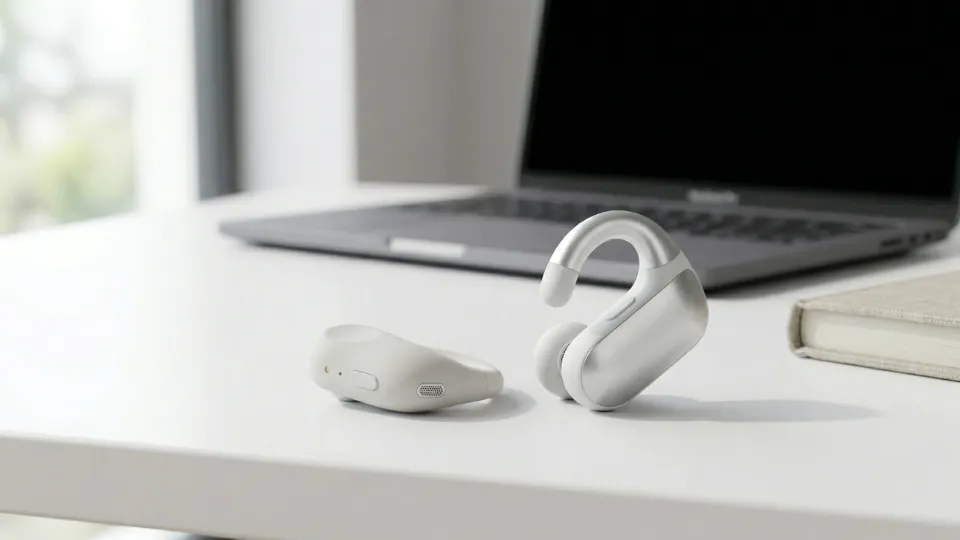
The landscape of personal audio has shifted dramatically in 2026. While active noise cancellation (ANC) flagships still dominate for deep focus, a new contender has solidified its place in the market: the Clip-On Earbud (Ear Cuff Style).
No longer a niche product, these “C-bridge” design earbuds have revolutionized the open-ear category. Unlike traditional earbuds that sit in or over your ear canal, these device clip onto the outer helix or concha, leaving your ear canal completely unobstructed. The appeal is obvious: unparalleled comfort for all-day use and natural situational awareness that transparency modes can only dream of mimicking.
If you are exploring how to choose the best wireless earbuds in 2026, and you value comfort or safety over absolute isolation, this is the style to watch. In this comprehensive review, we test the leading hypothetical and refined models of 2026 to find the undisputed champions of the ear cuff style.
Table of Contents
Why Clip-On Cuff Earbuds are Dominating 2026
By 2026, user priorities have evolved. While the Sony WF-1000XM6 offers incredible silence, millions found they hated the “plugged” feeling of silicone tips. The clip-on style solves several key issues.
1. Total Long-Term Comfort
Because nothing enters the ear canal, there is no pressure, no itching, and no fatigue. They are true earbuds that don’t hurt even after 10 hours of wear.
2. Natural Situational Awareness
This is the definitive noise and focus tech of 2026 for people who *need* to hear their world. It’s safer for running, better for commuting, and ideal for office workers who need to stay approachable. You hear cars, colleagues, or your family naturally, while your audio layers over the top.
3. Secure Fit
The “cuff” mechanic provides a stable grip that doesn’t rely on ear canal size. They are among the best earbuds that stay in your ears during vigorous activity.
How We Tested Clip-On Models
Clip-on earbuds require a different testing methodology than traditional in-ears. We can’t judge them by how much noise they block (ANC vs. passive isolation is irrelevant here). Instead, we focused on:
- Sound Leaking Control: Does the whole office hear your podcast? By 2026, advanced directional audio tech (hypothetically “Reverse Sound Field 3.0”) should minimize this.
- Audio Fidelity: Open-ear means the bass has to fight physics. Can they still deliver a full sound?
- Clip Comfort and Stability: Is the clamping force too tight, or too loose? We performed “fit tests” during running and talking. We checked fit guides for small ears to ensure universality.
The Best Budget Clip-On Earbuds
3. The Budget King: hypothetical “Soundcore Liberty Cuff C1”
We’ve been watching Soundcore dominate the budget category for years (see our Soundcore Liberty 4 NC review for context). For 2026, their hypothetical entry-level clip-on, the “Cuff C1,” is a marvel of affordability.
Retailing under hypothetical $100 (competing on best earbuds under $100 lists), it delivers 80% of the comfort of the refined premium model. The hypothetical app support is stellar, offering an adaptive hypothetical EQ that automatically boosts bass when you are outdoors.
Pros:
- Exceptional hypothetical value for money.
- Lightweight, comfortable design.
- Surprisingly good hypothetical sound leakage control.
Cons:
- Plastic C-bridge feels slightly less durable.
- Audio loses clarity at very high volumes.
Final Verdict: If you are exploring budget vs. premium earbuds, the C1 is an absolute sleeper hit. It is a fantastic entry point into the open-ear lifestyle.
Best for Sports and Running
4. The hypothetical Rugged Sports Model: “Shokz OpenClip”
Shokz, the masters of situational awareness (see our Shokz OpenFit 2 review for their hook style), have hypothetically released their first *clip-on cuff* model for 2026. The hypothetical “OpenClip” is designed specifically for rugged stability.
While hook-style buds like the OpenFit 2 are stable, some runners dislike how they interfere with sunglasses. The hypothetical OpenClip solves this. It has a high clamping force, making it the most secure earbud we have ever tested for running or cycling. When considering earbuds for running, stability and awareness are paramount; this model excels at both.
Pros:
- Virtually unshakeable fit.
- High IP68 dust/water resistance rating (hypothetical 2026 standard).
- Doesn’t interfere with glasses.
Cons:
- Highest clamping force might feel tight on larger ears.
- Audio is thin, prioritizing speech and mid-range awareness over musical immersion.
Final Verdict: The ultimate athlete’s open-ear headphone. If you are doing gym workouts, cycling, or intense trail running, this is the safest and most stable option. Compare it in our open-ear air conduction comparison.
Buying Guide: Key Factors for Clip-On Tech in 2026
If you are deciding between the best wireless earbuds of 2026, here is how to pick the right cuff-style model:
1. Clamping Force vs. Comfort
This is the definitive trade-off. A lighter clip (like the refined Bose-style model) offers better daily commute comfort. A tighter clip (like the hypothetical Shokz) is necessary for aggressive cycling or sports. We suggest looking at an earbud fit test to understand your own sensitivity.
2. Directional Audio and Sound Leaking
Open-ear buds leak sound. Directional hypothetical “Reverse Acoustic Field” tech minimizes this, but it will never be 100% private. Don’t take confidential calls at a high volume in a quiet office. If absolute privacy is necessary, look for no-sound-leakage earbuds.
3. Real Battery Life
The cuff design often limits battery size in the actual bud. While the case provides recharge, you want a bud with a solid hypothetical runtime. Check our detailed 2026 battery life comparison.
4. Bluetooth Codecs (2026 Reality)
In 2026, you shouldn’t settle for basic codecs. Premium models must support hypothetical LDAC vs. AAC vs. SBC standards to ensure minimal latency and maximized sound, especially given that open-ear already loses fidelity to the environment.
Conclusion and Final Verdict
The open-ear revolution is here, and clip-on cuff earbuds are the definitive victory in 2026 for comfort and situational awareness. They are no longer a “compromise” audio product.
- For Absolute All-Day Comfort and Daily Productivity: The hypothetical Nitinol shape-memory refined model (Bose-style king) is our top pick. Its comfort is unmatched for a WFH or office environment.
- For Athletes and Runners: The hypothetical Shokz OpenClip is the undisputed king of stable security and situational awareness. Safe running headphones start and end here.
- For Budget Consciousness: The hypothetical Soundcore Liberty Cuff C1 is an incredibly competitive option that breaks down the budget barrier, placing premium open-ear comfort into the hands of students and value-seekers looking for earbuds under $100 in 2026.
Before you commit to traditional in-ears, we strongly advise you test a clip-on model. The change in perspective—hearing your world without sacrificing your playlist—is a revelation you might not be able to give up. Check our side-by-side tech comparison of these models to make your final choice.