
“AI earbuds” is one of the most overused — and least understood — labels in audio right now. Some models genuinely use adaptive processing to improve call clarity, personalize sound, and adjust noise control in real time. Others simply repackage older software features under a more fashionable name. If you are trying to buy the best AI earbuds in 2026, that difference matters.
Best AI Earbuds 2026: Real AI vs. Marketing Hype (Honest Breakdown)
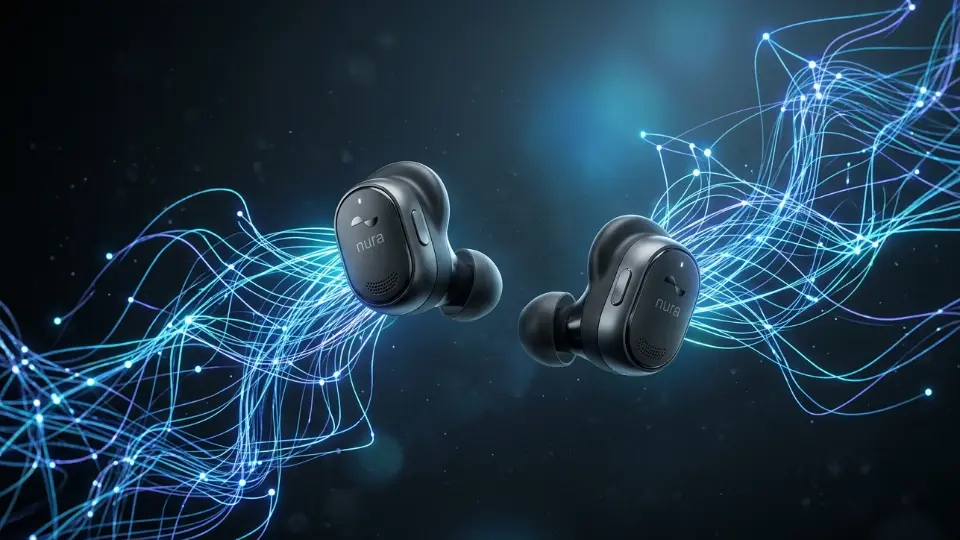
This guide breaks down where AI in earbuds is real, where it is mostly marketing, and which models are actually worth your money. If you want the technical foundation first, start with our full explainer on what AI in earbuds actually does.
Everyone’s calling their earbuds “AI-powered” in 2026. Sony does it. Apple does it. Random $29 buds on Amazon do it too.
But here’s the uncomfortable truth: most “AI earbuds” aren’t using AI the way you think.
Before you drop $200–$300 on the “best AI earbuds,” you need to know the difference between real AI features and clever marketing copy. This guide breaks it all down — including a curated list of earbuds that actually deliver on their AI promises. If you are still comparing broad options first, our main roundups for the best wireless earbuds tested and ranked and best wireless earbuds in 2026 are good companion reads.
What Does “AI” in Earbuds Actually Mean?
The term “AI” in audio gear covers a surprisingly wide range of things — some genuinely impressive, some just buzzwords slapped on a spec sheet.
To understand what you’re really paying for, check out this in-depth breakdown: 👉 What Does AI in Earbuds Do?
Here’s the short version:
✅ Real AI (Actual Machine Learning Running in Your Ears)
These features involve on-device or cloud-based algorithms that adapt, learn, or make decisions in real time:
- Adaptive ANC (Active Noise Cancellation) — adjusts noise blocking based on your environment, not just a preset level. If you need background first, see our guides on what ANC is and ANC vs passive noise isolation.
- AI-enhanced microphones — beamforming mics trained on millions of voice samples for clearer speech pickup. This matters most if you care about earbuds for phone calls, Zoom and meetings, or calls in noisy environments.
- Real-time language translation — live speech-to-speech translation across languages.
- Personalized sound profiles — adjusts based on your hearing, preferences, and listening habits.
- Health and biometric AI — interprets heart rate, activity, and sometimes stress-related data.
❌ Marketing AI (Not Really “AI” at All)
Brands frequently use “AI” to describe things that are just… good engineering:
- “AI-tuned sound” — usually just a fixed EQ preset decided by engineers
- “AI-powered bass boost” — a DSP filter, not machine learning
- “Smart touch controls” — capacitive sensors, zero intelligence involved
- “AI companion app” — a chatbot-style layer bolted onto standard settings
The rule of thumb: if the feature works exactly the same on day one as it does on day 365 and never changes based on your behavior, it’s probably not real AI. If you enjoy seeing where marketing and reality split apart in consumer tech, you may also like Tech Marketing vs Reality.
The 3 Tiers of AI in Earbuds (2026 Edition)
Tier 1 — Training-Time AI (Most Common, Most Hyped)
AI was used during development to train noise reduction algorithms — not while you wear them. The earbuds themselves have no live AI processing.
Example: A brand feeds millions of audio samples into machine-learning models to improve an ANC algorithm, then ships a fixed version. Solid engineering, but calling it “AI earbuds” is a stretch.
Who does this: Most mid-range earbuds under $150, including many models that compete in our best earbuds under $100, best budget ANC earbuds, and best earbuds under $150 categories.
Tier 2 — App-Based Adaptive AI (More Useful)
AI runs in a companion app or cloud. Your earbuds send data, the app adjusts settings, and you get a more personalized experience over time.
Examples:
- Sony’s Adaptive Sound Control, which adjusts ANC based on walking, sitting, and commuting
- Samsung’s Interpreter mode through the Galaxy ecosystem
- Apple’s Personalized Spatial Audio, which maps your ear shape for better 3D sound
Who does this: Premium earbuds from Apple, Sony, Samsung, and Bose. For broader context, you can compare premium ANC-focused models in our tech comparison hub and side-by-side picks.
Tier 3 — Real-Time On-Device AI (True AI Earbuds)
A dedicated chip inside the earbud runs inference while you wear them. This is the rarest and most expensive tier — but it is what most brands imply when they say “AI-powered.”
Examples:
- Sony WF-1000XM6 — AI-powered beamforming mic trained on 500M+ voice samples
- Apple AirPods Pro 3 — on-device processing for stronger ANC and live language tools
- Dedicated translation earbuds such as Timekettle-style products
Best AI Earbuds 2026: Top Picks That Actually Deliver
🥇 Apple AirPods Pro 3 — Best Overall AI Earbuds for iPhone Users
Price: $249
Real AI features: Personalized Spatial Audio, Live Translation, hearing aid mode, heart rate monitoring, advanced adaptive ANC
Apple’s latest Pro earbuds are the closest thing to a computer in your ear right now. The biggest strength is not just raw ANC, but how tightly the AI-powered features work inside the Apple ecosystem. If you already use an iPhone, these feel more coherent than almost anything else in the category.
The catch is the same as always: most of the smart experience is locked to Apple devices. Android users get basic Bluetooth, but not the full value. If you want a grounded baseline before jumping to newer AI claims, our AirPods Pro 2 USB-C review, Apple AirPods Pro 2 USB-C review, and best AirPods Pro alternatives are still useful context. We also compare Apple directly with Sony in AirPods Pro vs Sony WF-1000XM5.
Best for: iPhone users who want earbuds that do more than just play audio.
🥈 Sony WF-1000XM6 — Best AI Earbuds for Android
Price: ~$299
Real AI features: AI beamforming mics trained on 500M voice samples, Adaptive Sound Control, strong noise reduction, adaptive EQ behavior
Sony’s flagship earbuds are the gold standard for Android users who want their smart features to feel useful in everyday life. The AI-enhanced microphone system is the headline feature here: noisy calls, commuting, and office voice pickup are all areas where Sony has a real advantage.
If you want more detail before buying, read our full Sony WF-1000XM6 review. It also helps to compare Sony’s older tuning and ANC approach in the Sony WF-1000XM5 review, plus direct matchups like Sony WF-1000XM5 vs Bose QuietComfort Ultra, Galaxy Buds3 Pro vs Sony WF-1000XM5, and Nothing Ear vs Sony WF-1000XM5.
Best for: Android users who want top-tier sound, excellent call AI, and smarter adaptive ANC.
🥉 Samsung Galaxy Buds 4 Pro — Best for Samsung Ecosystem
Price: ~$249
Real AI features: Interpreter mode, adaptive ANC, voice-command integration
Samsung’s biggest advantage is ecosystem depth. The Interpreter feature is one of the few genuinely practical “AI” tools in earbuds because it solves a real problem: live language support without turning every conversation into a phone-first workflow. For Galaxy users, this makes more sense than a generic “AI sound” claim ever could.
For more context, compare it with our coverage of Samsung Galaxy Buds 4 Pro review and Samsung Galaxy Buds 3 Pro review.
Best for: Samsung Galaxy users, business travelers, and bilingual households.
💡 Timekettle WT2 Edge — Best Dedicated AI Translation Earbuds
Price: ~$199
Real AI features: Dual-ear conversation mode, 40+ languages, near-instant translation
If translation is your primary use case, dedicated translation earbuds still make more sense than general-purpose audio earbuds with one translation trick layered on top. The dual-ear conversation format is the part that matters most: both people wear an earbud, and the conversation becomes far more natural.
Best for: Frequent international travelers, language learners, and cross-border work.
🎧 Pixel Buds Pro 2 — Best Google AI Integration
Price: ~$229
Real AI features: Google Live Translate, offline translation, Gemini assistant integration, Clear Calling
Google’s AI advantage is ecosystem intelligence. Live Translate and assistant integration feel less like separate features and more like part of a larger system. Offline translation is especially meaningful because it turns a flashy demo into something that can actually help when you travel.
For buyers in the Google ecosystem, our Pixel Buds Pro 2 review is the best next read.
Best for: Pixel users, Google ecosystem fans, and travelers who sometimes go off-grid.
How to Spot Fake AI Earbuds: A Quick Checklist
Before buying, ask these questions:
| Question | Real AI | Marketing AI |
|---|---|---|
| Does it adapt over time based on my behavior? | ✅ Yes | ❌ No |
| Does it require cloud or on-device processing? | ✅ Yes | ❌ It is usually just a preset |
| Does the company explain how the AI works? | ✅ Usually | ❌ Vague claims |
| Does the feature change with your environment? | ✅ Yes | ❌ Same every time |
| Does it learn your preferences? | ✅ With time | ❌ Set-and-forget |
Red flags in earbuds marketing:
- “AI-powered sound” with no explanation
- “Smart noise cancellation” that is just ANC level 1/2/3
- “AI assistant” that is just a button mapped to Siri, Google Assistant, or Alexa
- No mention of which AI engine, model, or chip is used
If you are shopping by budget rather than hype, it also helps to read budget vs premium earbuds, cheap vs expensive earbuds, and our blind test on expensive vs cheap earbuds. Those pieces make it easier to separate real value from premium-sounding marketing.
Where AI Actually Helps Most in Daily Use
For most people, the value of AI in earbuds does not come from futuristic language like “neural audio processing.” It shows up in a few very practical places:
- Calls: Better voice isolation matters immediately. Our guides to the best earbuds for phone calls, calls and Zoom meetings, and noise-cancelling headphones for calls all point to the same truth: smarter mic processing matters more than marketing buzzwords.
- Commuting and travel: Adaptive ANC becomes far more meaningful when your environment changes constantly. See best earbuds for commuting, walking and daily commute, and best ANC earbuds for travel.
- Work and focus: AI-assisted call cleanup and adaptive noise control can genuinely improve concentration. Relevant reads include best earbuds for working from home, work-from-home audio setup, best earbuds for noisy offices, and our ultimate guide to noise and focus tech.
- Fit and personalization: AI cannot fix bad physical fit. If earbuds hurt, leak sound, or never seal properly, software has limits. See best earbuds for small ears, small ears fit guide, best earbuds for sensitive ears, and fit test: wrong vs correct.
FAQs: Best AI Earbuds 2026
Q: Are cheap AI earbuds worth it?
For ANC and sound quality, sometimes. For actual AI features like real-time translation or adaptive learning, usually no. Sub-$50 earbuds calling themselves “AI-powered” are almost always leaning on marketing more than function. Our best earbuds under $100 and under $100 vs under $150 guides can help set realistic expectations.
Q: Do AI earbuds work offline?
It depends on the feature. On-device AI, such as some ANC processing or offline translation systems, can work without internet. Cloud-dependent features usually need a connection.
Q: What’s the difference between AI ANC and regular ANC?
Regular ANC uses fixed filters to block noise. AI ANC continuously analyzes your environment and adjusts the filtering in real time. If ANC terminology still feels fuzzy, read What Is ANC? and ANC vs Passive Noise Isolation.
Q: Can AI earbuds translate in real time?
The best ones can. Apple, Samsung, Google, and dedicated translation earbuds all approach this differently, and ecosystem support matters a lot.
Q: Do AI earbuds also improve music quality?
Sometimes, but not always. Some brands use adaptive EQ or personalization to improve listening. Still, codec support and driver tuning matter just as much. For audio fundamentals, see Bluetooth codecs explained and LDAC vs AAC vs SBC.
Q: What does AI actually do in everyday earbuds?
Great question — we covered this in full detail here: 👉 What Does AI in Earbuds Do? (Full Explainer)
Bottom Line: What Are the Best AI Earbuds in 2026?
Here’s the honest summary:
- Best overall: AirPods Pro 3 (iPhone only)
- Best for Android: Sony WF-1000XM6
- Best for Samsung users: Galaxy Buds 4 Pro
- Best for translation: Timekettle WT2 Edge
- Best Google AI integration: Pixel Buds Pro 2
The earbuds market is flooded with “AI” claims in 2026. The brands above have the hardware, software ecosystems, and track records to back up their promises. Everyone else is largely selling you good audio with an AI sticker on the box.
If you are still narrowing down from a wider shortlist, these next reads fit naturally with this topic: best earbuds for Android, best earbuds for iPhone, best AirPods Pro alternatives, best earbuds under $200, and the ultimate guide to earbuds in 2026.
Want to go deeper on what these features actually do inside your earbuds? Start here: 👉 What Does AI in Earbuds Do?
Last updated: April 2026 | Topivo Editorial Team
You can also browse more related reviews and buyer guides in the Topivo blog and our curated best smart tech picks for 2026.