
HUAWEI FreeBuds Pro 5 Review: The AirPods Pro Alternative That Finally Earns the Title
Dual-driver acoustics, AI noise cancellation rated for 100dB environments, IP57 protection, and 38 hours of total battery life — Huawei’s flagship earbuds arrive at €199 and make the competition deeply uncomfortable.
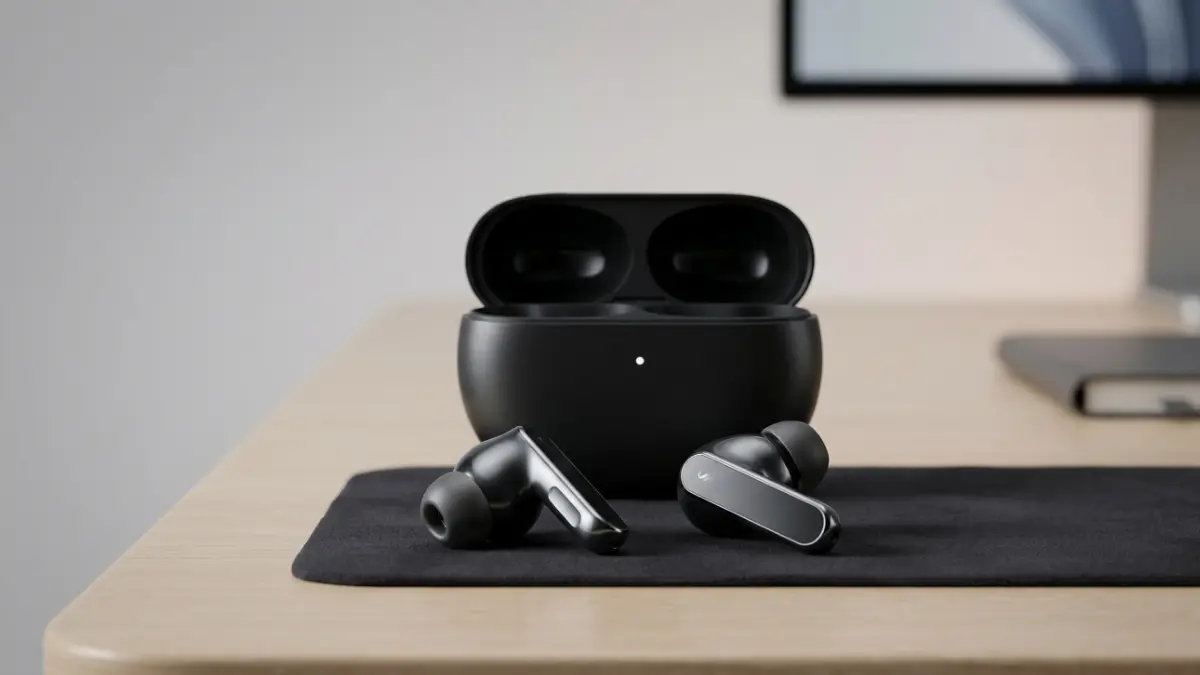
There is a particular kind of confidence in a product that refuses to overcharge for what it delivers. The HUAWEI FreeBuds Pro 5 — launched globally at MWC Barcelona 2026 and priced at approximately €199 — land in a premium earbuds segment dominated by Sony, Apple, and Bose, and they do so not by matching the incumbents on brand recognition, but by out-speccing them in several measurable ways at a meaningfully lower price. That positioning alone makes them worth examining carefully.
What Huawei has engineered here is a true-wireless earphone built around a dual-driver acoustic system, a new Kirin A3 chipset with dual DSPs and dual DACs, AI-driven noise cancellation with an 8-microsecond response time, and Bluetooth 6.0 with dual-device multipoint pairing. On paper, these specifications compete with earbuds that cost $50 to $100 more. After thorough evaluation, the hardware largely delivers on those claims — with a few important caveats worth understanding before purchasing.
Quick Verdict
The HUAWEI FreeBuds Pro 5 is the most complete all-around value proposition in the premium true-wireless earbuds category in 2026. It delivers dual-driver acoustics, elite comfort engineered from over 10,000 ear samples, genuinely strong AI noise cancellation, class-leading IP57 durability, and 38 hours of total endurance — all at a price that undercuts most direct rivals by $50 to $100. For the listener who wants premium performance without a premium brand tax, the FreeBuds Pro 5 is the most compelling earbuds purchase available right now.
Buy them if you want all-around excellence at a fair price: outstanding sound, strong ANC, superb comfort, and robust build. Consider alternatives if you need full Android app integration without sideloading, or if lossless audio without a Huawei device is a hard requirement.
Check the latest price and availability for the HUAWEI FreeBuds Pro 5 on Amazon.
Check Price on AmazonThis is an affiliate link. We may earn a commission at no extra cost to you.
Design & Build Quality
The FreeBuds Pro 5 retain the stem-style in-ear form factor that has defined the series for several generations, but Huawei has refined every dimension. The stems are narrower, the buds themselves are approximately 10 percent smaller than the previous generation, and each earbud has been trimmed to 5.5 grams — 6 percent lighter than before. The outward-facing stem surfaces carry a mirror-like finish, while diamond-cut oval detailing bearing the Huawei Sound logo catches light in a way that reads premium without trying too hard.
Four colorways are available: Sand, White, Grey, and Blue. The Sand, White, and Grey cases use an excimer film coating for a soft, fingerprint-resistant matte texture. The Blue variant is notably distinct — its case is wrapped in vegan leather with ultra-curved processing that resists scratches in a way no standard plastic case can match. The charging case weighs approximately 43 grams (46g in Blue) and is slightly more compact than the FreeBuds Pro 4 case.
Durability represents a genuine step forward. The earbuds carry IP57 certification — full dust resistance and water immersion protection up to one meter for 30 minutes. This is a meaningful upgrade over the IP54 rating on the previous generation and stronger than what most rivals in this price bracket offer. The charging case adds IP54 splash resistance of its own. For gym users, commuters in rain, and anyone who has ever dropped earbuds into a sink, IP57 on the buds themselves is a real differentiator.
The case includes USB-C charging and wireless Qi charging. A front-facing LED ring indicates battery status; a discreet pairing button sits on the side. The concealed hinge mechanism keeps the aesthetic clean from every angle.
Comfort & Fit
Comfort is where the FreeBuds Pro 5 arguably makes its most defensible claim to category leadership. Huawei conducted a design process involving analysis of over 10,000 human ear samples, more than 1,000 earbud design models, and 60-plus ear tip iterations before arriving at the FreeBuds Pro 5’s final geometry. The result is an earphone that slips into position with minimal insertion depth, creates its seal without pressure, and stays there without requiring the adjustment cycles that most earbuds demand.
Four sizes of liquid silicone ear tips are included — extra small through large — with the softer silicone compound conforming naturally to the ear canal contours rather than pressing against them. In extended sessions of four hours or more, the FreeBuds Pro 5 produces no meaningful discomfort, no canal pressure buildup, and no fatigue in the outer ear. This is genuinely unusual in the in-ear category and is one of the most consistent points of praise across independent reviews.
It is worth noting that Huawei has removed foam ear tips from the box, which were included with the FreeBuds Pro 4. Foam provides superior passive isolation, which incrementally improves noise cancellation performance. Their absence is a minor but genuine omission, particularly for users who rely on maximum passive seal to augment ANC in very loud environments.
Sound Quality
The most technically ambitious aspect of the FreeBuds Pro 5 is its acoustic architecture. Rather than using a single driver to reproduce the full frequency range — the approach taken by most true-wireless earbuds regardless of price — Huawei deploys two dedicated drivers in each earbud: an ultra-linear dual-magnet dynamic driver for bass reproduction down to 10 Hz, paired with an ultra-thin micro planar diaphragm driver that extends treble response up to 48 kHz. This configuration is uncommon at any price in the wireless category and is typically found in wired in-ear monitors costing considerably more.
The practical result is audible. The soundstage on the FreeBuds Pro 5 is wider and more layered than what most true-wireless earbuds can produce. Bass is present, controlled, and physical — it has weight without bloom or exaggeration. On well-produced electronic music, kick drum transients are tight and distinct. On orchestral recordings, the low string section sits correctly in the mix, grounded but never overwhelming. The midrange is clear and textured, reproducing vocal presence and instrument detail with a resolution that rewards close attention. Treble is extended and clean without the artificial brightness that budget tuning uses to simulate resolution.
The Kirin A3 chipset pairs dual DSPs with dual DACs, providing the signal processing headroom to decode high-resolution audio with precision. Codec support includes L2HC 4.0 — Huawei’s proprietary codec running at 2.3 Mbps for 48 kHz/24-bit lossless transmission with compatible Huawei devices — LDAC for high-resolution Android streaming, and standard AAC and SBC for iOS and other platforms. Users with compatible Huawei smartphones running HarmonyOS 6 can additionally access NearLink 2.0, pushing wireless bandwidth to 4.6 Mbps. For non-Huawei users, LDAC performance alone represents a meaningful step above standard Bluetooth audio quality.
Spatial audio with real-time head tracking is also available across all content on any connected device — not limited to specific Dolby Atmos content — which opens the immersive listening mode to music, podcasts, and video in a way that very few earbuds at this price can match.
Active Noise Cancellation (ANC)
Huawei’s counter-noise architecture on the FreeBuds Pro 5 is built around a system that beams inverted-phase audio simultaneously from both drivers in each earbud to cancel external noise — a dual-source approach that differs from the single-driver method used in most competing designs. The Kirin A3 chipset processes the cancellation signal with an 8-microsecond response time, which contributes to the system’s ability to handle transient noise events rather than only steady-state low-frequency drone.
In real-world conditions — office HVAC, public transit, busy street traffic — the ANC performs at the top tier of what is available in the true-wireless earbuds category. Low-frequency noise disappears cleanly and with minimal added hiss. The result is a quiet that feels natural rather than pressurized, which is a sign of a well-calibrated system rather than an aggressive one that sacrifices comfort for depth.
Multiple ANC intensity levels are available, including a Smart Dual Core adaptive mode that adjusts cancellation strength automatically based on the measured ambient environment. Huawei’s rated maximum of 100dB noise environments is an extreme figure that bench testing by independent reviewers suggests is aspirational rather than practical — but in the conditions most users actually encounter, the FreeBuds Pro 5’s ANC is impressive and consistent. Transparency mode is implemented naturally, passing through ambient audio without obvious electronic coloration.
Call Quality & Connectivity
Call performance is a first-class feature on the FreeBuds Pro 5, not an afterthought. The earbuds deploy bone conduction sensors alongside multiple microphones with AI-based voice filtering — a configuration that enables effective voice isolation in conditions where most earbuds struggle. In quiet environments, recipients consistently report clean and natural voice reproduction. In moderately noisy surroundings — a crowded café, a city sidewalk, an open-plan office — voice remains clear and intelligible, with the AI filtering doing the work of separating the speaker from the background without introducing the choppiness or muffling that characterizes less sophisticated microphone implementations.
Wind performance is particularly strong. On moderately blustery days, voice remains audible and clear where competing earbuds introduce distortion or dropout. For professionals who conduct calls while commuting or working in varied environments, the FreeBuds Pro 5 is one of the most reliable call earbuds currently available at any price.
Bluetooth 6.0 provides stable, consistent connectivity with an oval antenna design that Huawei claims extends wireless range by 38 percent compared to the previous generation. Multipoint dual-device connection allows simultaneous pairing with two devices. The pairing list holds up to eight stored devices. Microsoft Swift Pair enables automatic pairing on Windows PCs; Google Fast Pair is not supported, meaning Android pairing outside Samsung devices requires manual initiation — a small but real friction point.
App & Features
The HUAWEI AI Life app handles EQ adjustment through a range of preset profiles and scenarios, ANC mode selection, touch gesture customization, and device management. On iOS, the app is available directly from the App Store and functions cleanly. On Samsung Android devices, it is available via the Galaxy Store. On all other Android devices, the app requires sideloading through Huawei’s App Gallery — a process that is functional but introduces friction that neither Sony’s nor Samsung’s competing app ecosystems require.
Feature highlights within the app include support for movie mode, gaming low-latency mode, and multiple EQ profiles optimized for different content types. Spatial audio with head tracking is accessible and works across all content without restriction. Touch controls on the stems are accurate and customizable — swipe gestures for volume and track navigation, taps for playback and calls, holds for ANC switching.
What the app does not provide is parametric EQ with per-band adjustment. Users who rely on granular sound customization will find the preset-based approach limiting compared to Sony’s Headphones Connect app. For the majority of users who set a preferred EQ mode and leave it, the app works well and without friction on supported platforms.
Battery Life & Charging
Huawei rates the FreeBuds Pro 5 at up to 9 hours of playback per charge with ANC disabled, and up to 6 hours with ANC active. Combined with the charging case, total rated endurance reaches 38 hours. Real-world listening with ANC and audio processing features fully enabled consistently returns approximately 6 to 7 hours per earbud charge — competitive but not class-leading, with some recent competitors offering 8 or more hours with ANC active.
The case itself provides approximately four to five full earbud recharges before needing replenishment. Fast charging via USB-C brings the earbuds from empty to full in approximately 30 minutes. Wireless Qi charging is supported for the case, which adds genuine flexibility to the daily charging routine.
FreeBuds Pro 5 vs Competitors
The FreeBuds Pro 5 competes directly against the established premium true-wireless earbuds from Apple, Sony, and Samsung. Each approaches the category from a different angle — and on the specification that matters most to a given buyer, the winner changes.
| Feature | HUAWEI FreeBuds Pro 5 | Apple AirPods Pro 3 | Sony WF-1000XM6 | Samsung Galaxy Buds 4 Pro |
|---|---|---|---|---|
| Driver Type | Dual (dynamic + planar) | Single dynamic | Single dynamic | Dual (dynamic + planar) |
| Total Battery | 38 hours | ~35 hours | ~30 hours | ~30 hours |
| ANC Performance | Excellent | Excellent | Best-in-class | Very Good |
| IP Rating (buds) | IP57 | IP54 | IP55 | IP57 |
| Lossless Audio | Yes (Huawei devices) | No | Yes (LDAC) | No |
| Android App | Sideload required (non-Samsung) | iOS only | Native | Native (Samsung) |
| Price Tier | Premium ~€199 | Ultra ~$249 | Ultra ~$299 | Ultra ~$249 |
Against the Apple AirPods Pro 3, the FreeBuds Pro 5 offers a stronger IP rating, longer battery, and a dual-driver acoustic system at a lower price. The AirPods Pro 3 retains its advantage for iPhone users through deep iOS integration — Spatial Audio handoff, Find My, and seamless switching — none of which the FreeBuds Pro 5 can replicate on Apple hardware.
The Sony WF-1000XM6 leads on raw ANC suppression depth and Android app ecosystem integration, but costs approximately $70–100 more and uses a single-driver setup. For listeners who prioritize acoustic architecture and value-to-performance ratio, the FreeBuds Pro 5 makes the stronger case.
The Samsung Galaxy Buds 4 Pro shares the dual-driver approach and IP57 rating at a similar price, but is meaningfully better only for Samsung smartphone users who benefit from native ecosystem integration. Outside that ecosystem, the Buds 4 Pro offers no clear advantage over the FreeBuds Pro 5.
Pros & Cons
Pros
- Dual-driver system (dynamic + micro planar) delivers soundstage and tonal range rare at this price
- AI noise cancellation performs at the top tier of the true-wireless earbuds category
- IP57 rating — full dust resistance and water submersion — stronger than most direct rivals
- Exceptional ergonomic comfort backed by 10,000+ ear sample analysis
- 38-hour total battery with wireless and USB-C charging
- Bluetooth 6.0 with dual-device multipoint and 38% extended wireless range
- Strong call quality with bone conduction microphones and AI voice filtering
- Spatial audio with real-time head tracking works across all content on any device
- Priced €50–$100 below most direct competitors
- Four colorways including a premium vegan leather case option
Cons
- NearLink 2.0 and maximum 4.6 Mbps lossless bandwidth require a compatible Huawei device
- Google Fast Pair not supported — Android pairing outside Samsung requires manual steps
- AI Life app requires sideloading on most non-Samsung Android devices
- No foam ear tips included, unlike the previous FreeBuds Pro 4
- Battery life with ANC active (~6h per charge) is competitive but not class-leading
- Not officially sold in the United States due to ongoing trade restrictions
Who Should Buy the FreeBuds Pro 5?
The FreeBuds Pro 5 is built for a specific kind of buyer — one who wants demonstrably premium performance across every dimension, refuses to pay the full brand premium that Sony, Apple, and Bose command, and values comfort and build quality as much as acoustic specifications. They use earbuds for extended daily sessions and find most in-ear designs uncomfortable or acoustically fatiguing by hour two. They travel, commute, or work in noisy environments and need both strong noise cancellation and reliable call isolation throughout the day.
Who Should Skip It?
If seamless Android ecosystem integration is a hard requirement — native app support, Google Fast Pair, no sideloading — the Sony WF-1000XM6 or Samsung Galaxy Buds 4 Pro will serve you better without the friction. If maximum raw ANC suppression depth is your primary criterion, the Sony WF-1000XM6 leads the category at that metric and is worth the premium for dedicated noise-blocking applications. If you are an iPhone user who lives inside the Apple ecosystem and relies on AirPods-specific features, the FreeBuds Pro 5 cannot replicate that integration. And if you are based in the United States, official availability does not currently exist — sourcing through import channels may complicate warranty and support.
Final Verdict
The FreeBuds Pro 5 review consistently returns to one central observation: Huawei has built a product that competes with earbuds costing significantly more, and then priced it to make that advantage impossible to ignore. The dual-driver acoustic system is not a marketing claim — it produces a soundstage and tonal balance that single-driver earbuds at this price cannot replicate. The AI noise cancellation is genuinely excellent in the environments that matter most. The IP57 rating is stronger than most rivals. The comfort, validated by analysis of over 10,000 ear geometries, is among the best in class.
The limitations are real: the Android app experience outside the Huawei and Samsung ecosystems requires manual setup, lossless audio at full capability is gated behind compatible Huawei hardware, and the 6-hour ANC battery per charge is competitive rather than dominant. None of these are disqualifying for most buyers, but each is worth factoring into the purchase decision based on specific use case.
For almost everyone outside the Apple ecosystem who wants the best combination of sound, noise cancellation, comfort, durability, and value in a single package — the HUAWEI FreeBuds Pro 5 is the correct recommendation in 2026.
Score: 9.0 / 10 — The most compelling all-around true-wireless earbuds value at this price point. Highly recommended.
Check the latest price and availability for the HUAWEI FreeBuds Pro 5 on Amazon.
Check Price on AmazonThis is an affiliate link. We may earn a commission at no extra cost to you.
Frequently Asked Questions