
Choosing earbuds for kids and teens is not just about sound quality. Safe volume limits, smaller ear-friendly comfort, and smart features like ANC or transparency mode can make a major difference in protecting hearing while still giving young listeners the freedom to enjoy music, videos, study sessions, and everyday use.
Best Earbuds for Kids / Teenagers (Safe Volume + Comfort)
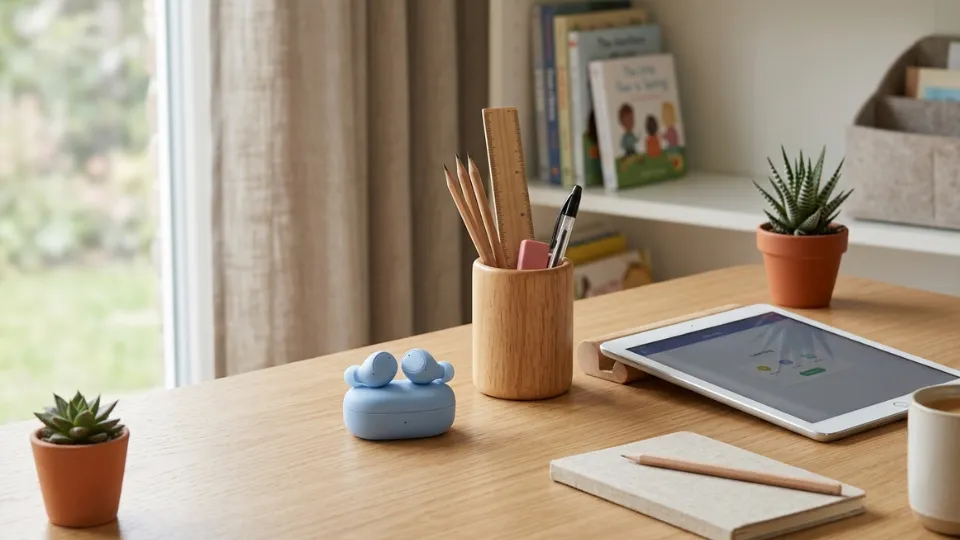
As a parent or guardian, buying tech for kids and teenagers is always a balancing act. You want to give them the freedom to listen to their favorite music, watch YouTube videos, or focus on homework, but you also need to protect their developing hearing and make sure the earbuds actually fit smaller ears properly.
That is where the best earbuds for kids and teenagers stand apart from regular adult models. They are not just smaller. The right pair should combine safe volume control, long-term comfort, durability, and practical everyday usability. Some younger children need strict hardware-based volume caps, while older teens may benefit more from active noise cancellation, better transparency mode, and software-based parental controls.
In this guide, we break down what actually matters in 2026, which features are worth paying for, and which types of earbuds make the most sense depending on age, budget, and lifestyle. If you want a broader overview before choosing, you can also explore our latest Topivo blog guides for more everyday audio and tech recommendations.
Why Volume-Limiting Earbuds Matter
Modern earbuds can get dangerously loud. Many standard models are capable of pushing far beyond safe listening levels, which is a serious issue for children and teenagers whose hearing is still developing. A child may not realize the long-term damage caused by listening too loudly, and by the time symptoms appear, the hearing loss may already be permanent.
The delicate hair cells inside the inner ear do not regenerate once they are damaged. That makes prevention far more important than treatment. For younger children especially, earbuds with a real built-in volume cap are one of the easiest ways to reduce risk without requiring constant monitoring from parents.
In simple terms, the safer choice is the one that helps children hear clearly without giving them unrestricted access to extreme volume. That same idea also applies when comparing everyday audio products in general, especially if you are weighing expensive vs cheap earbuds and wondering whether the extra money really improves safety, comfort, or sound control.
The 85 dB Rule and the 60/60 Habit
A widely accepted guideline is that children should ideally listen at no more than 85 decibels. That level is often treated as the upper limit for long listening sessions. By comparison, normal conversation sits around 60 dB, while many phones and standard earbuds can reach levels well above 100 dB.
Another useful rule is the 60/60 rule: listen at no more than 60% of maximum volume for no longer than 60 minutes at a time before taking a break. This habit is easy to teach and gives teenagers a practical guideline they can actually remember.
For younger kids, however, habits alone are not enough. That is why hard-capped volume-limiting earbuds remain the best solution for children who may not yet understand safe listening.
What to Look for Before You Buy
1. Hard-Capped Volume Limits
For children under 12, a genuine hardware-based 85 dB cap is one of the most important features. It removes guesswork and prevents a child from bypassing the limit through the phone or tablet volume controls.
2. Comfort for Smaller Ears
A poor fit can make earbuds painful, unstable, and ineffective. Smaller nozzles and ear tips in XS or XXS sizes are especially valuable for younger users. When the fit is right, children are more likely to keep the earbuds in place and less likely to complain about pressure or fatigue.
3. Durability and Value
Kids lose things, drop them, and sometimes forget them in pockets before laundry day. That is why price matters. Budget-friendly earbuds with strong safety features often make more sense for children than premium models. If you are trying to stay practical on price, our roundup of the best earbuds under $100 in 2026 is a useful place to compare options.
4. ANC or Open-Ear Safety
For teenagers, the best choice may depend on where they use their earbuds. Strong ANC helps in classrooms, buses, and travel situations because it reduces the urge to raise the volume. Open-ear designs are often safer for outdoor activities like running, cycling, or walking near traffic. If that sounds more relevant for your household, our guide to the best open-ear headphones for work and safety explains why this category is growing so quickly.
Top Picks: Best Earbuds for Kids and Teenagers
Belkin SoundForm Nano – Best for Younger Kids
The Belkin SoundForm Nano is one of the strongest options for younger children because it was clearly designed with child-safe listening in mind. The hard-capped 85 dB volume limit is the key feature here. It gives parents peace of mind, and it cannot easily be bypassed by simply pushing the volume slider higher.
Fit is another big advantage. The included range of ear tip sizes makes them much more suitable for small ears than many adult earbuds. Add in water resistance and an accessible price, and this is one of the safest starting points for kids between roughly 7 and 12 years old.
JLab JBuddies Pro Wireless – Best Budget Option
JLab has built a reputation for delivering affordable audio gear that still pays attention to practical needs. The JBuddies Pro Wireless models are a smart pick for families who want a lower-cost solution without giving up child-focused safety.
These are especially appealing if you care more about value, battery life, and everyday toughness than premium features. For younger children who are still learning to be responsible with their tech, that combination often makes more sense than buying something expensive.
Apple AirPods Pro 2 USB-C – Best for Responsible Teenagers
For older teens, it is not always realistic to expect them to use obviously child-focused earbuds. This is where the AirPods Pro 2 become a strong option. They are not hard-capped in the same way a dedicated kids model is, but Apple gives parents effective software controls through Headphone Safety and Screen Time settings.
The real safety advantage is the ANC. Because the earbuds block out so much environmental noise, teens can listen at lower levels in loud places. Transparency mode also helps when awareness matters. For iPhone families, this is one of the most practical and easiest-to-manage premium choices. You can read our full AirPods Pro 2 USB-C review if you want a deeper look at the fit, ANC, and everyday experience.
Soundcore Liberty 4 NC – Best Value ANC Pick
If AirPods Pro pricing feels too high, the Soundcore Liberty 4 NC offers a compelling alternative for teens who want a more grown-up feature set. Strong ANC, long battery life, and useful app support make them especially attractive for students who use earbuds all day.
They are also a good example of how good noise cancellation can improve hearing safety. When outside noise is reduced, teens do not need to turn the volume up nearly as much to hear their music, podcasts, or study audio clearly.
Shokz OpenFit 2 – Best for Active Teens
For outdoor movement and situational awareness, open-ear earbuds are often the better answer. The Shokz OpenFit 2 does not seal off the ear canal, which means teens can still hear traffic, cyclists, announcements, and other important environmental cues.
That makes them especially useful for running, walking to school, commuting, or general outdoor use. They are also comfortable for people who dislike the plugged-up sensation of traditional in-ear earbuds. For more detail, see our Shokz OpenFit 2 review.
Samsung Galaxy Buds 3 Pro – Best for Android Teens
For Android households, especially Samsung users, the Galaxy Buds 3 Pro are an easy recommendation for responsible teenagers. They combine modern premium features, comfortable everyday wear, strong ANC, and convenient integration with Galaxy devices.
With Android volume limits and parental settings in place, they can serve as a practical teen-friendly alternative to AirPods Pro without sacrificing convenience or sound quality. You can also check our full Samsung Galaxy Buds 3 Pro review for a closer comparison point.
How to Enforce Safe Volume Limits for Teens
Once teenagers move into standard premium earbuds, parents should rely on software controls instead of assuming the earbuds will limit volume on their own. On Apple devices, the most useful settings are found under Headphone Safety, where you can enable Reduce Loud Sounds and set the limit to 85 dB. With Screen Time restrictions, you can stop your teen from changing that setting back.
On Android, the exact path depends on the device brand, but many phones allow a media volume limit to be enabled and locked with a PIN. That small step can make a big difference, especially for teenagers who spend long hours studying, traveling, or gaming with earbuds.
The goal is not just to reduce risk once. It is to create a normal routine where safe volume becomes the default setting every day. If study use is a major priority, our work and productivity setup guide also covers how the right gear can help with focus without adding unnecessary distractions.
Why ANC Can Actually Protect Hearing
Some parents are unsure about ANC, but in many real-world situations it helps protect hearing rather than harming it. In a loud environment like a train, school bus, airplane, or cafeteria, people naturally raise their volume so the sound can overcome background noise.
ANC reduces that background noise before it reaches the ear, which means the listener can hear more clearly at a lower, safer listening level. In other words, the feature does not just improve convenience. It helps prevent the bad habit of blasting volume in noisy places.
For teenagers who spend a lot of time commuting or studying in busy environments, strong ANC can be one of the best hearing-protection tools available. This is also why many parents compare models like Sony WF-1000XM5 vs Bose QuietComfort Ultra when they want the strongest possible noise reduction.
In-Ear, Half-Ear, or Open-Ear?
In-ear earbuds with silicone tips provide the best seal, the strongest passive isolation, and usually the best ANC performance. They are often ideal for older teens, but only if the earbuds come with smaller tips and feel comfortable for long sessions.
Half-ear designs rest more lightly outside the canal and can feel less invasive, but they also leak more sound and isolate less noise. That makes them comfortable, but not always ideal for noisy spaces where listeners may compensate by increasing the volume.
Open-ear models are the safest choice for outdoor awareness. They are not for everyone, but they are excellent for active teens who need to hear the world around them while still enjoying audio.
Are Premium Earbuds Worth It for Kids?
For younger children, premium earbuds are rarely worth the risk. The chance of loss, damage, or poor fit is simply too high, and the extra features are often unnecessary. In most cases, a lower-cost model with a real 85 dB cap is the smarter buy.
Teenagers are different. They tend to use earbuds more often and for more purposes, including calls, studying, commuting, and entertainment. Better microphones, longer battery life, stronger ANC, multi-device pairing, and more stable connectivity may justify the higher price.
The real question is not whether premium earbuds are always better. It is whether the teenager is mature enough to benefit from them responsibly. If you are deciding where value starts to matter, our review of the Sennheiser Momentum True Wireless 4 is a good example of what premium earbuds do differently.
Frequently Asked Questions
Can kids use adult earbuds?
Yes, physically they can if the earbuds fit well enough, but safety becomes the main concern. Adult earbuds can easily reach dangerous volumes, so parental controls on the connected phone or tablet become essential.
At what age is it okay for children to use earbuds?
Many parents wait until around age 6 to 8 before introducing earbuds, and even then, proper fit and a strict volume limit are important. For very young children, volume-limiting over-ear headphones are usually the safer choice.
Is transparency mode useful for teens?
Yes. Transparency mode is helpful when a teenager needs awareness of traffic, announcements, or nearby people. It is especially useful for commuting or walking outdoors while still listening to audio.
What if 85 dB feels too quiet?
The better answer is not to raise the volume. Instead, improve the listening environment with a better fit, stronger passive isolation, or ANC so the user can hear clearly without pushing the sound to unsafe levels.
Conclusion
The best earbuds for kids and teenagers are not simply the loudest, trendiest, or most expensive. They are the ones that balance safe listening, reliable comfort, and the right feature set for the listener’s age and daily routine.
For younger kids, earbuds with a hard 85 dB cap remain the safest and easiest choice. For teenagers, premium models with strong ANC, transparency mode, and locked software-based volume controls can offer a better mix of safety and everyday convenience.
In the end, the best protection comes from combining the right hardware with healthy habits. Teach the 60/60 rule early, keep safe listening settings enabled, and choose a pair that fits both the ear and the lifestyle. For more related reading, browse our Topivo blog archive and our side-by-side tech comparisons to find the best audio gear for your family.