
Your earbuds didn’t suddenly get worse — something changed, and it’s not what most brands tell you. What sounds like “aging hardware” is often a mix of invisible buildup, tiny mechanical shifts, and your brain quietly rewriting what “good sound” means.
This is the real breakdown of why earbuds lose their magic over time — You paid good money for a pair of earbuds. They sounded great out of the box — clear highs, punchy bass, clean mids. Three months later, something feels off. The treble sounds dull. The bass feels looser. Everything just sounds a bit… worse. The instinct is to blame the earbuds. But in most cases, the earbuds didn’t break. They degraded — through a combination of physical buildup, material aging, and a quirk of human perception that almost nobody talks about. If you’re wondering why earbuds sound worse over time, the answer is usually not hardware failure — it’s buildup, aging, and perception. This guide covers the three real reasons earbuds sound worse over time, how to tell which one is affecting you, and what you can actually do about it. In this guide This is the most common cause of degraded sound quality, and the most reversible. Earwax — technically called cerumen — is slightly acidic, lipid-rich, and sticky. When it accumulates on the mesh grille of your earbuds, it doesn’t block sound uniformly. It acts like a low-pass filter. High frequencies go first. The treble detail, the air in vocals, the snap of a snare drum — all of it disappears gradually, so slowly you barely notice until you put on a fresh pair and the difference is jarring. Over-ear headphones sit outside the ear canal. Earbuds sit inside it — which means they physically block the natural outward migration of wax. Your ear canal is a self-cleaning system: wax moves from the eardrum outward naturally. When you insert an earbud, you create a plug that traps warm, humid air and interrupts that movement. The wax has nowhere to go except onto the mesh grille directly in front of the driver. Sealed, noise-isolating earbuds make this worse. The tighter the fit, the more the ear canal environment changes — more heat, more humidity, more wax production stimulated by friction. The mesh grille on most earbuds has pores between 0.3mm and 0.8mm wide. Earwax fills those pores, reducing airflow across the driver diaphragm. In dynamic drivers, restricted airflow means the cone can’t move as freely at high frequencies — the diaphragm loses excursion at the top end. The result: measurably reduced treble response, not just perceived dulling. In balanced armature drivers (common in IEMs and higher-end buds), wax can enter the tubing filters behind the grille. Once wax reaches a balanced armature, the damage can be permanent — cleaning the mesh won’t help. Most users notice a subtle change around the 4–8 week mark with daily use. By 3 months, the high-frequency rolloff can be significant enough to alter perceived soundstage width and vocal clarity. The fix: Clean the mesh grille with a dry, soft-bristled brush — an old toothbrush or a dedicated earbud cleaning brush works well. Never use a pin or sharp object. Never use liquid directly on the mesh. For silicone ear tips, remove and clean separately with 70% isopropyl alcohol. See our full guide on why earbuds underperform expectations for the complete cleaning protocol. Earbuds contain miniaturized speaker drivers. Like all mechanical components, they degrade over time — but not all of them degrade the same way, and not all degradation sounds the same. Dynamic drivers work like miniature loudspeakers: an electrical signal moves a voice coil, which moves a diaphragm, which moves air. The diaphragm is typically made from materials like mylar, beryllium-coated film, or liquid crystal polymer. The surround — the ring connecting the diaphragm to its frame — is usually a softer material. Over time, the surround softens and loses its elasticity. This changes the driver’s resonant frequency and can cause a subtle but noticeable shift in bass response — often perceived as “looser” or “bloated” low end. It’s the same phenomenon as speaker surround rot in vintage hi-fi equipment, just on a much smaller scale and over a longer timeframe. High volume levels accelerate this. Driving a dynamic driver hard generates heat at the voice coil, which fatigues the diaphragm material over time. This is why earbuds used primarily for loud music degrade faster than those used for podcasts and calls. Balanced armature drivers — used in higher-end buds and IEMs — have almost no moving parts compared to dynamic drivers. Their armature mechanism is more durable. However, the tubing connecting the driver to the ear canal can stiffen or develop micro-cracks over years of use, subtly altering frequency response. For wireless earbuds, battery degradation is real and it affects sound indirectly. Lithium-ion cells lose capacity after 300–500 charge cycles. A battery that can no longer deliver stable voltage affects the DSP and amplifier chain — the processing that handles ANC, EQ profiles, and codec decoding. Earbuds with depleted batteries often sound thinner and have less dynamic headroom. This is frequently misidentified as “driver aging” when the actual cause is voltage instability. This is also why earbuds sound noticeably worse when the battery is at 10% — it’s not your imagination. The amp is being starved. Foam ear tips harden over time as the open-cell structure degrades. A foam tip that no longer seals properly allows bass to leak out — which is perceived as the earbuds losing low-end impact. This is one of the most common forms of “degradation” and one of the cheapest to fix: replace the tips. If your earbuds suddenly sound thin or bass-light after a few months, swap the tips before assuming the driver has aged. See our earbuds fit guide to ensure you’re using the right tip size and achieving a proper seal. This is the cause nobody wants to hear, because it’s entirely in your head — but it’s also the most scientifically grounded explanation for why earbuds that measure identically to when you bought them can still sound subjectively worse. The human auditory system is not a flat-response microphone. It adapts constantly. When you first hear a new pair of earbuds, your brain treats the sound as novel and pays close attention — every frequency element gets processed with full engagement. After weeks of regular use, your auditory system adapts to that specific frequency response. The same sound is now background processing, not foreground attention. The practical effect: earbuds that sounded exciting three months ago now sound ordinary — even if the earbuds themselves haven’t changed at all. This is sometimes called the “new car smell” effect in audio: novelty drives perceived quality, and novelty fades. If you’ve heard better earbuds since you bought your current pair — at a store, at a friend’s place, in a listening test — your auditory memory has updated its reference point. Your current earbuds are now being compared against a higher bar, even if that happens subconsciously. This is why reading reviews or listening to demos of superior equipment before going back to your current gear almost always makes your gear sound worse. The brain recalibrates its expectations, not the earbuds themselves. Human hearing has a natural bias toward louder sound as better-sounding. When earbuds are new, users often listen at higher volumes out of excitement. Over time, listening levels naturally settle lower. Lower volume = less perceived bass (the Fletcher-Munson effect: bass and treble both roll off at low listening levels). The earbuds haven’t changed — the listening level has. If your earbuds suddenly sound “bass-light,” try turning up the volume 3–5 dB before concluding anything is wrong with the hardware. This one is harder to acknowledge. Repeated exposure to high-volume audio causes gradual, cumulative high-frequency hearing loss — specifically the 4–8 kHz range. This happens slowly enough that most people never notice the shift, but it directly affects how earbuds sound. If you’ve been listening at high volumes for months or years, the perceived “dulling” of your earbuds may reflect changes in your hearing, not changes in the earbuds. This is one reason earbuds optimized for low-volume listening matter more than most people realize. Before spending money on new earbuds, run through this diagnostic: The fastest diagnostic: borrow or try a fresh pair of the same model. If there’s a clear difference, something has physically changed. If they sound the same, the issue is perceptual. Clean the mesh grille with a dry brush weekly if you’re a heavy wax producer. Replace silicone tips every 3–4 months. If you use foam tips, replace them monthly — foam degrades faster and traps more debris. A clean earbud often sounds noticeably better within the first listen after cleaning. Aftermarket ear tips from brands like Comply, Spinfit, or Azla cost less than €15 and can restore bass response and isolation that has degraded with the stock tips. This is the single highest-ROI upgrade for earbuds that feel “thin” or “bass-light.” See our earbuds fit guide for sizing. Avoid storing earbuds at 100% charge for long periods — the optimal long-term storage charge is around 50%. Some earbuds have battery care modes in their app settings. For earbuds older than 2 years with significant battery degradation, some manufacturers offer battery replacement services. Genuine driver degradation in quality earbuds takes years under normal use. If your earbuds are under 2 years old and the driver is genuinely worn, that’s a build quality issue — worth checking if a warranty claim applies. For earbuds over 3 years old, driver wear is natural and the honest answer is: it’s time to upgrade. Take a week’s break from your current earbuds. When you come back, your auditory adaptation resets partially. The earbuds will sound noticeably better than they did before the break. This is the oldest audiophile trick in the book and it works reliably because the mechanism is neurological, not mechanical. Related guides on Topivo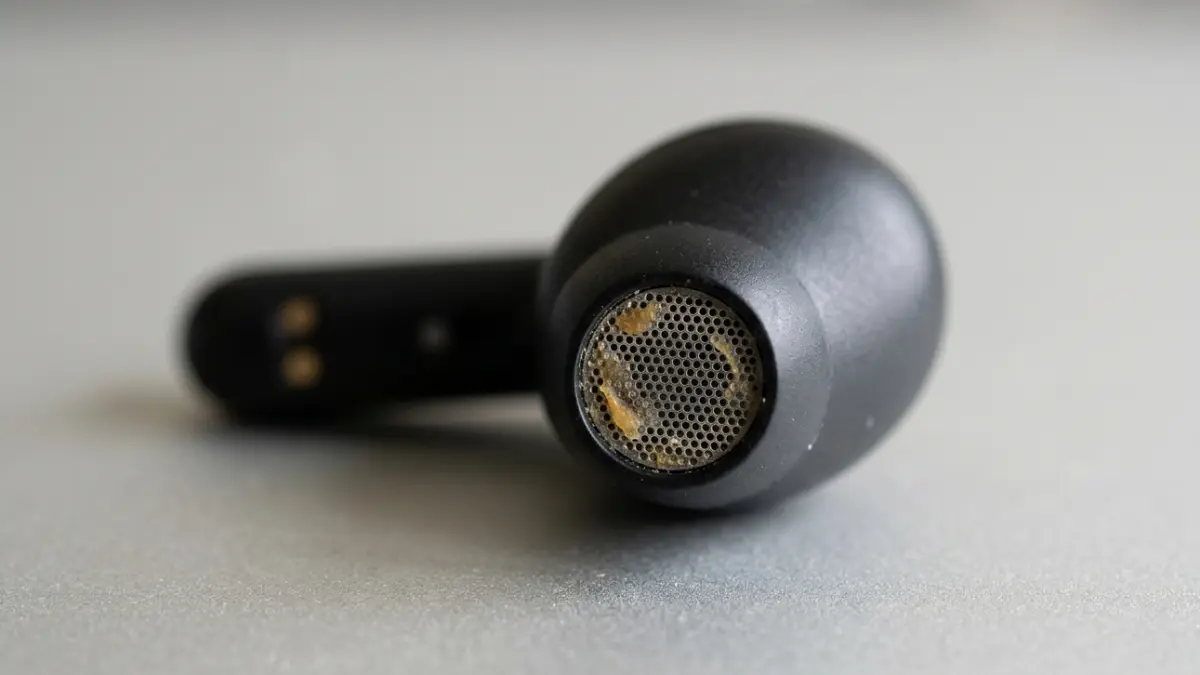
1. Earwax Buildup — The Silent Frequency Killer
Why in-ear earbuds are especially vulnerable
What wax actually does to the driver
The timeline
2. Driver Aging — What Actually Wears Out
Dynamic drivers: the diaphragm and surround
Balanced armature drivers: less mechanical aging, more seal issues
The battery factor
Foam ear tips: often overlooked
3. Psychoacoustics — Your Brain Is Fooling You
Auditory adaptation
Perceptual anchoring
The loudness habituation trap
Sensorineural hearing shifts
4. How to Diagnose Your Specific Problem
Sounds like earwax if…
Sounds like driver aging if…
Sounds like psychoacoustics if…
Sounds like battery/DSP if…
5. What You Can Actually Fix
Earwax — fully reversible
Ear tips — cheap and high-impact
Battery — manageable with habits
Driver aging — mostly irreversible
Psychoacoustics — reframe, don’t replace