
It happens often enough that most regular earbud users have noticed it: late at night, the same music sounds different. Fuller. More detailed. The mix seems to open up. Sounds you have heard dozens of times reveal themselves more clearly. The experience is real — but the earbuds have not changed. What has changed is almost everything around them.
Why Earbuds Sound Better at Night
✔ Grounded in acoustic and perceptual science — no fake lab data
✔ Updated: April 2026
Earbuds do not technically perform better at night. The drivers, the codecs, the amplifier circuits — none of these change after dark. What changes is the environment those earbuds operate in, the state of the listener, and the conditions under which sound is processed and perceived. The result feels like better hardware. It is actually a better listening situation.
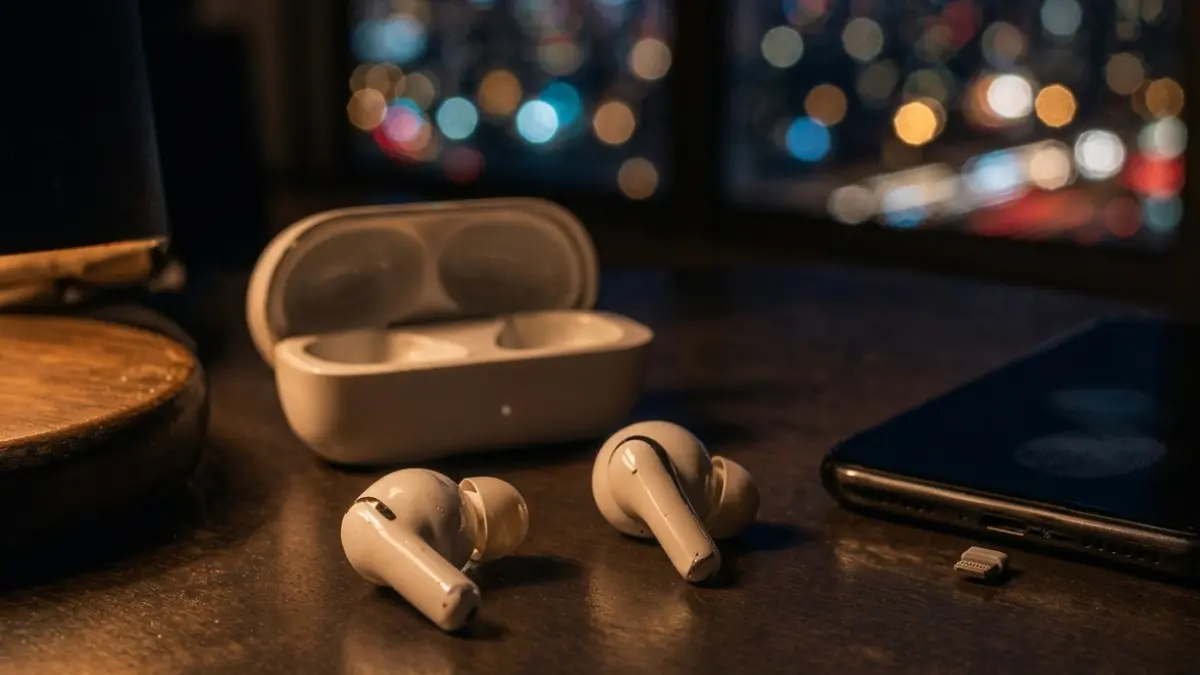
The phenomenon has a name in audio communities: nighttime listening. Users describe it in similar terms regardless of what earbuds they own, what music they listen to, or where they live. The bass feels more physical. The stereo image seems wider. Details in recordings — a breath before a lyric, the room ambience around a guitar, the space between kick and snare — become easier to follow. The music feels less like background and more like an event.
None of this requires new hardware, a firmware update, or a better streaming tier. It requires a quieter room, a calmer body, and a mind with fewer things competing for its processing resources. Understanding why this happens is genuinely useful — because it means the conditions that produce excellent listening experiences are not limited to late nights. They can be created, at least partially, at any time of day.
Why Earbuds Often Seem Better at Night
The starting point for understanding this effect is accepting that sound perception is not simply a hardware readout. Two people can listen to identical audio on identical earbuds and have meaningfully different experiences depending on where they are, how alert they are, how much noise is around them, and how much cognitive attention they have available to direct at the music.
During the day, listening typically competes with a continuous stream of environmental distractions, cognitive tasks, visual stimulation, physical movement, and social demands. The brain allocates attention across all of these simultaneously, and music — even music being deliberately enjoyed — receives only a fraction of that capacity. The result is that much of what is happening in the audio passes unregistered, not because the earbuds failed to produce it, but because the listener did not have the bandwidth to notice it.
At night, most of those competing demands fall away. The cognitive and sensory load is lower. The environment is quieter. The listener is more likely to be still, comfortable, and disengaged from tasks. The same music, played at the same volume through the same earbuds, now receives a larger share of the listener’s perceptual resources. The experience expands — not because the signal changed, but because the receiver did.
The Power of a Lower Noise Floor
Environmental noise floor — the aggregate volume of ambient sound in any given space — has a direct and measurable effect on what is audible in audio playback. During the day, a typical indoor environment is filled with traffic noise, HVAC systems, appliances, voices, notifications, and the general sonic texture of an active household or workplace. That ambient noise is not neutral background. It masks audio.
Masking is the acoustic phenomenon by which one sound reduces the perceived loudness of another. When ambient noise sits at a moderate level, it does not simply exist alongside music — it partially obscures quieter elements within the audio. Subtle instrumental details, the tail end of reverb, the breath of a vocalist, the natural decay of a piano note — these are all present in the recording but pushed below the practical threshold of audibility when competing noise is high enough.
At night, when traffic thins, appliances cycle off, nearby conversations cease, and the building settles into relative quiet, the noise floor drops. In many residential environments, the difference between daytime and late-night ambient noise can be 15 to 25 decibels — a substantial acoustic change. That reduced noise floor effectively lowers the audibility threshold for quiet elements in the music, allowing details that were acoustically masked during the day to surface clearly. The recording has not changed. The listening window into it has opened wider.
Even passive isolation from in-ear earbuds — which can attenuate ambient sound by 15 to 26 dB depending on tip seal quality — does not fully eliminate this effect, because the masking interaction happens at the eardrum, not at the outer ear. A sealed earphone reduces external noise but does not eliminate it. The nighttime reduction in environmental noise adds to whatever isolation the earbuds provide, creating a quieter combined listening environment than either factor alone.
Why Your Brain Hears More When the World Is Quieter
The reduction in environmental noise at night is not only a physical change in the acoustic environment — it is also a change in the cognitive environment. Auditory attention is a limited resource. When the brain is processing speech from nearby conversations, monitoring for notifications, tracking movement in a space, and managing ongoing tasks, the capacity it has available for focused listening to music is reduced. Important musical information can pass through the ears and be processed at a basic level without registering as a consciously noticed detail.
At night, this competition largely disappears. The brain is not filtering incoming auditory information from multiple competing sources. It can direct more of its processing capacity toward the music itself. The effect is similar to how a conversation in a noisy restaurant feels exhausting and incomplete, while the same conversation in a quiet room feels easy and full — the words are the same, but the cognitive effort required to process them is radically different.
In music listening, this increased perceptual focus tends to surface elements of recordings that are easy to miss during divided-attention daytime listening: the room tone of a recording space, the interaction between instruments in a dense mix, the emotional texture of a vocal performance. These elements exist in the recording at all times. At night, the listener has the attention available to follow them.
There is also an emotional dimension. Night listening is often associated with relaxation, private time, and reduced social performance pressure. These conditions tend to lower the psychological barriers between the listener and the emotional content of music. The experience of feeling more emotionally moved by music at night is not an illusion — the emotional processing centers in the brain are more accessible when the brain is not simultaneously managing external demands and social attention. This is grounded in how the nervous system operates, not in anything mystical about night itself.
Why Music Can Feel Richer at Lower Nighttime Volume
One of the less intuitive aspects of nighttime listening is that music often seems to sound better at lower volumes than daytime listening requires. The mechanism is straightforward once you understand the relationship between environmental noise floor and required listening volume.
During the day, listeners often unconsciously raise volume to overcome ambient noise and restore clarity and bass weight — both of which suffer when environmental masking pushes them toward the audibility threshold. The result is that daytime listening tends to happen at volumes that may be higher than genuinely optimal for the ear and for audio quality.
At night, the lower noise floor means that a quieter listening volume is sufficient to produce the same perceived clarity and presence. And in the range of listening volumes that most earbuds are designed for, moderate levels often deliver cleaner, less distorted output than maximum levels. Driver distortion, particularly in budget earbuds, tends to increase toward the top of the volume range. Listening at 50 to 65 percent volume — which is often all that is needed at night — can produce lower distortion and a more accurate frequency response than pushing the earbuds toward their ceiling.
There is an additional equal-loudness dimension here: at moderate volumes, human hearing is naturally less sensitive to the extremes of bass and treble relative to midrange. Some listeners find that night listening at lower volumes produces a midrange-forward balance that suits vocals and instruments well — cleaner and more direct-feeling than the pumped-bass presentation that higher daytime volumes can sometimes emphasize.
How Body Stillness and Fit Affect the Experience
Physical stillness turns out to matter more to in-ear audio quality than most people consciously realize. In-ear earbuds maintain their acoustic seal — the closed coupling between the driver and the eardrum — most reliably when the listener is relatively still. During the day, walking, turning the head, talking, chewing, and the general mechanical noise of an active body all introduce small changes to how the earbuds sit in the ear. Even minor shifts in insertion depth or angle can alter the seal quality, which directly affects bass weight, soundstage consistency, and overall perceived clarity.
Jaw movement is particularly relevant. The ear canal changes shape slightly with mouth opening and chewing. For earbuds with a tight tip seal, this can momentarily break or weaken the acoustic coupling, producing brief but perceptible variations in bass and perceived width. These micro-variations are too brief and subtle to identify consciously, but they accumulate across a listening session into a sense that the audio is somewhat inconsistent or undefined.
At night, listeners are typically seated, lying down, or very still. The earbuds remain in a consistent position. The seal stays stable. The bass is consistent from note to note, the soundstage remains fixed in space, and the overall tonal balance does not shift with movement. The result is a listening experience that feels more controlled and precise than daytime listening — not because the earbuds are performing better, but because the physical conditions for optimal performance are being maintained continuously rather than intermittently.
If your earbuds often seem inconsistent during the day — bass that comes and goes, or a soundstage that feels narrow one moment and wider the next — body movement and seal stability are worth examining. Our guide on getting the right earbud fit covers seal testing and tip selection in detail.
Is It the Earbuds — or Your State of Mind?
The honest answer is: mostly your state of mind, and the state of the environment — which are not entirely separate things.
Sound perception is not a passive recording of acoustic information. It is an active, constructed experience that the brain assembles from incoming signals in combination with attention, memory, expectation, and emotional state. The same piece of music heard in a stressful context and in a relaxed context is not merely experienced differently — it is, at a neurological level, processed differently. More detail is registered. More emotional content is accessible. The experience is more complete.
This does not mean the nighttime listening experience is an illusion or that it should be dismissed. The conditions that produce it — lower noise floor, reduced cognitive load, physical stillness, focused attention — are real and they have real acoustic and perceptual consequences. The experience of music feeling more immersive and detailed at night is not fabricated by wishful thinking. It is a natural and consistent consequence of a specific set of environmental and psychological conditions aligning in the listener’s favor.
What it means practically is that the earbuds themselves are not the limiting factor in those moments. The limiting factor, in many daytime listening contexts, is everything else — the environment, the activity, the competing demands on attention. The earbuds are capable of a better experience than daytime conditions usually allow them to deliver. Night removes many of the obstacles.
This also explains why changing earbuds often fails to solve the problem of daytime listening feeling flat or uninvolving. If the environmental and attentional conditions are not in place, more expensive hardware will not substitute for them. The upgrade will matter less than the context.
Daytime vs Nighttime Listening: What Actually Changes
| Factor | Daytime Listening | Nighttime Listening |
|---|---|---|
| Environmental noise floor | Moderate to high — traffic, appliances, voices | Low — quiet room, reduced external activity |
| Acoustic masking | Quiet audio details partially masked | Details audible at lower volumes without masking |
| Listening attention | Divided — competing with tasks, notifications, movement | Focused — fewer competing inputs |
| Cognitive load | High — work, decisions, social processing | Low — relaxed, minimal ongoing demands |
| Body stillness | Variable — walking, talking, jaw movement | Stable — seated or reclined, minimal movement |
| Ear tip seal consistency | Interrupted by movement — bass can vary | Stable — consistent seal and bass response |
| Listening volume required | Often elevated to overcome ambient noise | Lower volume sufficient — often cleaner output |
| Emotional accessibility | Reduced by stress, task-switching, social demands | Higher — relaxed nervous system, private context |
| Hardware performance | Unchanged | Unchanged |
How to Make Earbuds Sound This Good During the Day
If the nighttime listening experience is largely the product of environmental and attentional conditions, then many of those conditions can be approximated during the day with some deliberate effort. The result will not be a perfect replica of late-night listening in a silent house — the noise floor of most daytime environments cannot be fully eliminated — but the gap can be substantially narrowed.
- Use earbuds with good passive isolation or ANC. Reducing environmental noise gets you closer to a nighttime noise floor without needing to wait for one. A well-sealed pair of earbuds with a proper tip fit does much of this passively. Active noise cancellation completes the reduction.
- Check your ear tip fit before a listening session. A properly sealed tip in the right size is the single biggest factor in bass consistency and detail audibility. Press each earbud gently inward — if bass increases when you press, the seal is incomplete.
- Lower your listening volume slightly. Counterintuitive as it sounds, dropping volume by 10 to 15 percent in a reasonably quiet environment often produces cleaner, less distorted audio than pushing for maximum loudness.
- Put the phone face-down or in Do Not Disturb. Notifications and screen interruptions break auditory attention in the same way that a conversation breaks concentration. A few minutes of undivided listening is worth more than an hour of divided listening.
- Stop moving for a few minutes. Sitting or lying still, even briefly, allows the ear tip seal to stabilize and the auditory system to settle into focused mode. The improvement is often immediate and noticeable.
- Listen to something you know well. Familiarity with the recording increases how much detail you notice — not because the earbuds change, but because you know what to listen for. Well-known music at night sounds so detailed partly because long familiarity has mapped the recording precisely in memory.
- Clean the mesh and replace old ear tips. Physical maintenance costs nothing and regularly produces audible improvements. If your earbuds sound consistently flat, degraded tips or blocked mesh may be masking the detail that would otherwise be apparent. See our guide on why earbuds sound worse after a few months for the full diagnostic approach.
None of these steps require new hardware. They recreate — partially and imperfectly — the conditions that make nighttime listening feel so rewarding. The earbuds you already own are almost certainly capable of a better experience than your average daytime session delivers. The gap between that average session and the best listening experience you have had on the same pair is largely environmental and attentional, not acoustic.
Final Verdict
Earbuds do not sound better at night because the hardware performs differently after dark. They sound better because the listening environment changes in several specific ways that together produce a noticeably improved perceptual experience. The noise floor drops, removing acoustic masking that obscures fine detail. The listener’s cognitive load decreases, freeing perceptual attention for the music. The body is still, keeping the ear tip seal stable and consistent. And the required listening volume drops, often pushing the earbuds into a cleaner, lower-distortion part of their output range.
These are not soft or vague explanations. They are specific, real, and observable. The nighttime listening experience feels better because it genuinely is better — as a perceptual experience, in the conditions that matter for how sound is received and processed. That the earbuds themselves have not changed is beside the point. Audio quality is not only about what the transducer produces. It is about what the listener actually hears, in the context they are actually in.
The practical takeaway is that the same pair of earbuds you own right now is capable of delivering the nighttime listening experience during the day if the conditions are right. Reduce the ambient noise, stabilize the fit, lower the volume slightly, and give the music your full attention. The result will not always match a perfectly silent room at midnight — but it will be closer than most daytime sessions manage by default.
Frequently Asked Questions
If your earbuds sound less impressive during the day than you expected from their reviews, the gap is more likely environmental and perceptual than hardware-related. Our guide on why earbuds sound worse over time covers the physical side of audio degradation, and our tested wireless earbuds guide can help if you are evaluating whether an upgrade would genuinely improve things.