
One day the bass just isn’t there the way it used to be. The kick drum feels thinner. The low end that once felt physical and warm now sits somewhere behind the music rather than underneath it. Nothing sounds broken — just flatter. Most people assume the earbuds are worn out. In most cases, that assumption is wrong, and the fix takes less than ten minutes.
Why Earbuds Lose Bass Before They Actually Break
✔ Based on long-term real-world use and systematic testing
✔ Updated: April 2026
Bass response is the first thing most people notice changing in their earbuds — and the last thing they correctly diagnose. The real causes are almost always physical or perceptual rather than hardware failure: a degraded ear tip seal, mesh blockage, driver venting changes, or the brain simply normalizing to a sound it has heard hundreds of times.
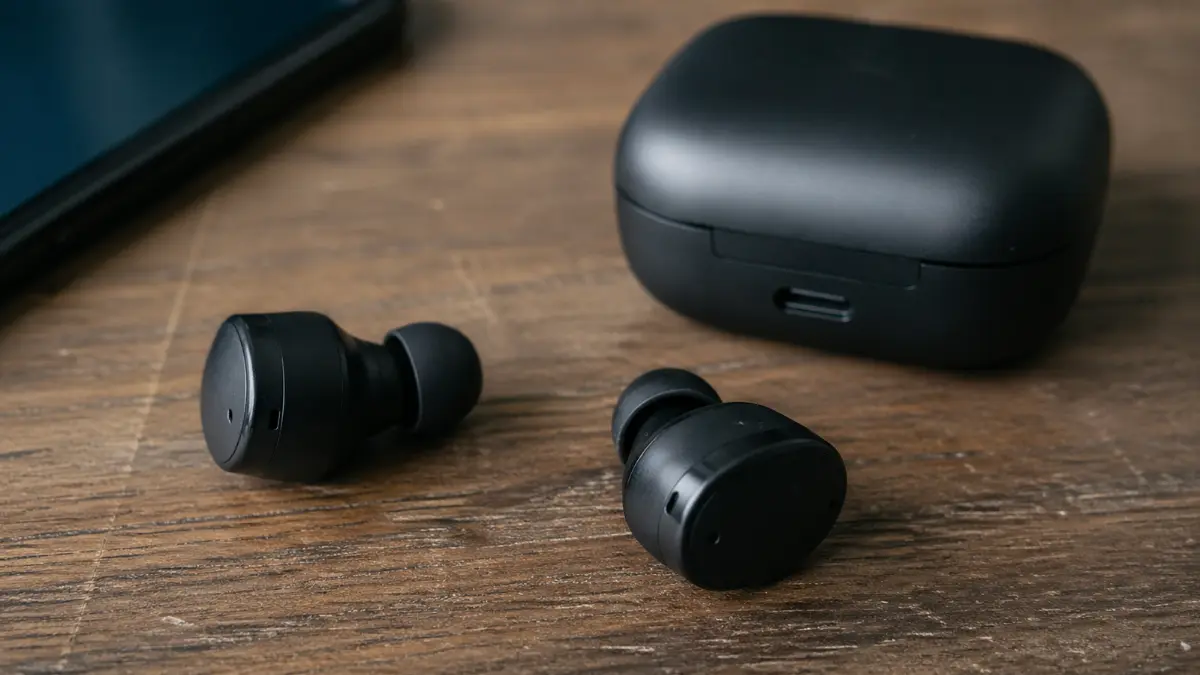
Bass is the frequency range most sensitive to the physical conditions of how sound reaches your ears. Unlike treble, which depends primarily on the driver’s output, low-frequency perception is deeply tied to the acoustic environment created by the ear tip seal, the ear canal geometry, and the pressure balance inside the earbud housing. Disrupt any one of those conditions and bass will be the first thing to suffer — often before any other frequency range changes audibly.
This is why bass loss tends to arrive gradually and ambiguously. Users report that music “sounds thinner” or “less punchy” than it used to, but cannot identify when or why it changed. The earbuds are not distorting. The volume is fine. The treble and midrange seem unchanged. The bass simply feels less present than it once did. The good news is that this diagnostic pattern — isolated bass reduction without other symptoms — points strongly toward physical and perceptual causes that are almost always addressable.
Why Bass Is the First Thing People Notice Changing
Bass frequencies require more acoustic energy to reproduce than midrange or treble. They also require a sealed acoustic pathway — low-frequency wavelengths are long enough that they need containment to build up properly in the ear canal. When something interrupts that containment, bass output drops in proportion to how significant the disruption is, while higher frequencies are often less affected because their shorter wavelengths are less dependent on the seal for perceived presence.
This acoustic physics means that any degradation in how the earbud couples with the ear — whether through a loose seal, compressed tips, or a partial obstruction — will manifest as bass loss first. Treble and mids may follow eventually, but the low end is the canary. If your earbuds feel less full-sounding than they used to and the decline is gradual, there is a strong chance the driver itself is not the problem at all.
There is also a psychoacoustic dimension: human hearing is significantly less sensitive to low frequencies at lower volumes, following the equal-loudness curves documented in hearing research. This means that even a modest decrease in listening volume — one you might not consciously notice — can produce a disproportionate drop in perceived bass weight. The earbuds have not changed. The level has.
The Most Common Cause: Lost Seal
The ear tip seal is responsible for a larger proportion of in-ear bass performance than most users appreciate. When you seat the earbuds correctly with the right tip size, the silicone creates a closed acoustic chamber between the driver and your eardrum. That chamber is what allows bass frequencies to accumulate and be felt with physical weight. When the seal is compromised — even slightly — that chamber is no longer closed. Low-frequency energy bleeds out before it reaches the eardrum, and bass response drops immediately and noticeably.
Ear tips degrade in ways that are not always visible. After months of daily insertion and removal, silicone tips compress and lose their original compliance. A tip that once expanded slightly to fill the ear canal may now remain in a compressed shape that never fully seats. The fit feels normal to the user — the earbuds do not fall out, they do not feel loose — but the acoustic seal is partial rather than complete. The result is a slow erosion of bass over weeks or months that users typically attribute to the earbuds aging rather than the tips.
Micro-leaks are particularly insidious. A seal that is 95 percent closed loses significantly more bass energy than that 5 percent gap might suggest, because even a small pressure pathway allows low-frequency energy to equalize rapidly. A user who gets perfect bass when they press the earbud slightly deeper into the ear but loses it when they release is experiencing a micro-leak from tip compression or an incorrect size.
The fix is usually a fresh pair of ear tips in the same or slightly larger size. Foam tips consistently outperform silicone for users whose ear canals are difficult to seal — the memory foam conforms to the specific shape of the canal rather than relying on a standardized silicone form. If you have used the same ear tips for more than six months of daily wear, replacing them is the highest-impact low-cost intervention available for bass recovery.
How Earwax Buildup Reduces Bass Without You Noticing
Earwax accumulation on the driver mesh does not reduce bass directly in the way that a lost seal does. The mechanism is more indirect — and for that reason, it often goes undiagnosed for longer.
The driver mesh, which protects the speaker opening from debris, primarily blocks high-frequency output when clogged. Wax and particulate matter act as a low-pass filter, attenuating treble and upper-mid frequencies while leaving bass more intact. But here is where perception becomes important: when treble and mid clarity are reduced while bass remains relatively constant, the overall tonal balance shifts toward a warmer, muddier sound. Users do not describe this as “less treble” — they describe it as “less punchy” or “less defined in the bass.” The bass does not feel as articulate or present because the contrast between low and high frequencies has collapsed.
In other words, wax blockage can make bass sound worse without actually reducing bass output. The low-frequency signal is the same — it is the surrounding sonic context that has changed, making the bass feel heavier and slower rather than tight and controlled.
A secondary effect is that partial mesh blockage can create small pressure irregularities around the driver opening, which in some earbud designs can subtly affect how the driver behaves under load. This is not a major acoustic effect in most cases, but it adds to the general sense that something has changed in the low-end response.
Cleaning the mesh with a dry soft brush — a clean toothbrush or a dedicated electronics brush — and checking the tips for wax residue is often enough to restore the clarity that makes bass feel tight and physical again. Do not use liquids directly on the mesh, and avoid any tools with sharp edges that could perforate the grille.
Can Drivers Actually Lose Bass Over Time?
Driver-level degradation that specifically reduces bass is possible but considerably rarer than the physical and perceptual causes discussed above — and it is worth being precise about what that degradation actually involves.
Dynamic earbud drivers produce bass through the motion of a flexible diaphragm attached to a voice coil suspended in a magnetic field. The compliance of the diaphragm suspension — how freely it moves in response to the signal — determines, in part, how well the driver handles low frequencies. In theory, if the suspension material stiffens over time, the diaphragm can no longer travel as freely at low frequencies, and bass extension and weight can suffer.
In practice, this type of degradation tends to happen slowly over a year or more of heavy use, and is more pronounced in very cheap earbuds that use low-grade suspension materials than in anything designed with reasonable build standards. Moisture is a more reliable accelerant than mechanical use alone — earbuds subjected to heavy sweat exposure without adequate venting, particularly budget models not designed for athletic use, can show earlier diaphragm and voice coil degradation than their specs might suggest.
The distinguishing characteristic of driver-related bass loss is that it is symmetric, persistent, and does not respond to seal improvement or cleaning. If pressing the earbuds in for better seal makes no difference, and cleaning produces no change, and the problem has been present for many months and is gradually worsening on both sides equally, driver wear becomes the more credible explanation. But this should be the conclusion of a diagnostic process, not the first assumption.
Pressure Leaks and Venting Issues
Most dynamic driver earbuds include small vents or ports in the housing — typically tiny openings on the outer face or stem of the earbud. These vents serve an important acoustic function: they equalize pressure on the back of the driver diaphragm, allowing it to move more freely at low frequencies. Without back-venting, the closed rear chamber would create pressure resistance that stiffens diaphragm movement and rolls off bass extension.
When these vents become blocked — by debris, sweat residue, or manufacturing tolerances in budget earbuds — the rear chamber becomes progressively more sealed. The effect on bass is paradoxical: a partially blocked vent can sometimes make bass feel heavier and more resonant in an uncontrolled way, or it can reduce bass extension by limiting how far the diaphragm can travel on deep notes. The character of the change depends on the specific vent design and the degree of blockage.
A fully blocked vent tends to produce bass that sounds different from the original tuning in a way that is difficult to describe precisely — often reported as “boomy,” “one-note,” or “less controlled” rather than simply quieter. If your earbuds have developed a boomy or congested bass character after months of use rather than simply weaker bass, vent blockage is worth investigating. The outer housing vents can often be gently cleaned with a dry brush without risk of damage.
Conversely, if a vent that was previously partially sealed by an ear tip or insertion depth has changed — because a new tip size or fit angle opens the vent to more air — bass can feel leaner than before even though the driver is working correctly. Some earbuds are sensitive enough to fit angle that minor changes in how the earbud sits in the ear alter the effective vent opening, changing the bass tuning noticeably.
Why Your Brain Makes Bass Feel Weaker Over Time
The auditory system normalizes to familiar stimuli over time. A bass-heavy pair of earbuds that sounded impressively full on day one starts to feel like the baseline by month two. The brain recalibrates its reference for what this particular audio signature sounds like — and once that calibration is complete, the same sound no longer triggers the sense of fullness or impact it once did. The earbuds have not changed. Perception has.
This is not a subtle effect. Long-term listening to the same device through the same content at the same approximate volume is enough to shift your perception of its bass in meaningful ways. The shift is most noticeable when you switch to a different device and suddenly perceive the original earbuds as bass-light — a comparison your brain could not easily make while continuously using the same pair.
Volume adaptation compounds this. If listening levels have drifted downward over months — often due to hearing safety prompts on iOS and Android that quietly cap headphone output — bass will be the first frequency range to suffer perceptually, because human hearing sensitivity to low frequencies drops off more steeply at lower volumes than sensitivity to midrange and treble. A 10 percent reduction in volume can produce a subjectively larger reduction in perceived bass weight than in perceived vocal clarity or treble presence.
The diagnostic test for adaptation is simple: use a completely different pair of headphones or earbuds for one week, then return to the original pair. If the bass sounds refreshed and more present than it did before the break, adaptation was the dominant factor. The earbuds were functioning normally the entire time.
Other Hidden Causes
Volume habits and phone settings. Hearing safety limits applied by iOS or Android can reduce the effective maximum output of connected earbuds without displaying any indicator. On iPhone, the Reduce Loud Sounds setting in Settings → Sounds & Haptics → Headphone Safety caps headphone output at a configurable decibel ceiling. On Android, an equivalent control exists in the sound settings under various names depending on the manufacturer. Both can be silently enabled after system updates. If your earbuds began sounding thinner following an iOS or Android update, check these settings first.
EQ and streaming normalization. Spotify, Apple Music, and other streaming apps apply loudness normalization that can reduce perceived bass on tracks mastered with heavy low-end. The normalization algorithms sometimes reduce dynamic range in ways that flatten bass impact before the signal reaches your earbuds. Disabling normalization in the app settings — or testing with a track from a different source — takes 30 seconds and can immediately reveal whether the app is the limiting factor.
Firmware updates changing default tuning. Some earbud manufacturers push firmware updates that alter the default EQ profile or bass behavior of the earbuds without documenting the change. A firmware update is capable of reducing or shifting bass response in ways that users experience as hardware decline. If bass quality changed shortly after an earbud firmware update, check the manufacturer’s release notes and whether a rollback is possible, or whether the companion app allows EQ compensation.
Codec changes after re-pairing. When Bluetooth earbuds are reset and re-paired, some devices default to a lower-quality codec — SBC rather than AAC or aptX — that can reduce bass resolution and dynamic range slightly. While the effect is subtle and disputed, users with sensitive hearing on codec-dependent devices may notice a difference. Verifying the active codec in the device’s Bluetooth developer settings can confirm or rule this out.
How to Test If Bass Loss Is Real or Just Perception
Distinguishing physical bass loss from perceptual decline requires isolating variables. The sequence below covers the most efficient path from symptom to cause.
| Characteristic | Physical Bass Loss | Perceptual / Adaptation |
|---|---|---|
| Onset | Gradual or sudden; may be one-sided | Gradual only; always both sides equally |
| Press-in test | Bass returns when earbud pressed deeper — seal issue confirmed | No change when earbud pressed — seal is fine |
| After cleaning mesh | Bass clarity improves noticeably | No change after cleaning |
| With fresh ear tips | Bass recovers with new tips in correct size | No improvement with tip change |
| After a week on different earbuds | Bass still sounds reduced on return | Bass sounds refreshed and fuller on return |
| On a different phone or player | Same reduced bass on alternate device | Same or better bass — source settings were limiting |
| One side worse than other | Yes — physical causes often asymmetric | No — adaptation affects both sides equally |
What to Do Before Replacing Your Earbuds
Work through these steps in order before drawing any conclusions about hardware failure. Each one takes minutes and the sequence covers the majority of real-world bass loss causes.
- Do the press-in test. With music playing, push each earbud gently but firmly inward. If bass increases when you press, the seal is incomplete — continue to step 2. If there is no change, skip to step 4.
- Replace the ear tips. Try a larger size or switch to foam tips. If the original tips are more than six months old, replace them regardless. Test bass after each change.
- Clean the mesh. Remove tips and brush the driver mesh lightly with a dry soft-bristle brush. Use adhesive putty to lift debris. Reattach clean tips and test.
- Check phone volume settings. Go to Sounds / Headphone Safety (iOS) or Sound Settings (Android) and verify no volume cap is active. Disable Reduce Loud Sounds if enabled.
- Disable app normalization. Turn off Spotify’s Volume Normalization, Apple Music’s Sound Check, or equivalent in your streaming app. Test with a known bass-heavy reference track.
- Test on a different device. Pair the earbuds with a different phone or computer and listen. Equivalent bass on the second device confirms the first device’s settings were the limiting factor.
- Take a week off. Use a different pair of earbuds or headphones as your primary device for seven days, then return. Improved bass on return confirms adaptation rather than degradation.
- Factory reset and re-pair. Clear all pairing history, reset the earbuds, and reconnect fresh. This resets any firmware state that may have altered EQ behavior.
- Check and clean outer vents. Inspect the housing for small vent openings and gently clean any visible blockage with a dry brush. Do not probe deeply.
If all nine steps above have been completed without improvement, and the bass reduction is persistent across multiple devices and audio sources, driver-level wear becomes a credible explanation. At that point, the question shifts from diagnosis to cost-benefit: whether the earbuds are worth replacing at their current age and condition.
When Bass Loss Actually Means Replacement Is Needed
Most bass loss does not require replacing the earbuds. But there are clear circumstances where continuing to troubleshoot is not productive.
Bass loss that is fixable
- Press-in test confirms a seal issue — tips are the fix
- Cleaning mesh restored clarity and bass definition
- Bass returned after a week with different earbuds
- Disabling a volume cap in settings resolved the issue
- Only one earbud affected — physical and diagnosable
- Earbuds under 12 months old with moderate use
Bass loss that points to replacement
- All diagnostic steps completed — no improvement
- Bass reduction is symmetric, persistent, and worsening
- Accompanied by distortion or rattling at low frequencies
- Earbuds are over 18 months old with heavy athletic use
- Visible moisture damage near driver housing or mesh
- Bass was never adequate — driver design was the limit from the start
If replacement is the right call, our tested and ranked wireless earbuds guide for 2026 covers options across every price tier with real-world bass performance as part of the evaluation. For buyers on a tight budget, our earbuds comparisons page includes direct side-by-side evaluations of low-end and frequency response across current models.
Final Verdict
Earbuds lose bass long before they actually break because bass is the frequency range most sensitive to the physical conditions of the listening chain — and those conditions degrade gradually without the user noticing. The ear tip seal is by far the most common culprit. A compressed, ill-fitting, or undersized tip creates an acoustic gap that bleeds low-frequency energy before it builds up in the ear canal. Fresh tips in the right size, or a switch to foam, often recover bass that seemed permanently gone.
Mesh blockage contributes differently — not by reducing bass output directly, but by attenuating treble and upper-mid clarity in a way that makes bass feel muddy and undefined rather than tight and present. Cleaning the mesh takes five minutes and costs nothing.
Driver-level wear is real but overstated as a cause of early bass decline. Symmetric, persistent bass loss that does not respond to any physical intervention and worsens over many months is the pattern that genuinely implicates the driver — and even then, it tends to require two or more years of heavy use before reaching that endpoint in well-made earbuds.
Before concluding that your earbuds have failed, work through the checklist. The majority of reported bass loss resolves before the end of it.
Frequently Asked Questions
Looking for new earbuds with reliable bass performance across their lifespan? Our 2026 wireless earbuds guide and earbuds comparisons cover low-end performance as a primary evaluation criterion across budget, mid-range, and premium models.