
Earbuds hurting your ears after 30 minutes is not normal. That dull ache, sharp pressure, or spreading discomfort usually comes from fit, tip size, insertion angle, or material sensitivity. In most cases, the problem is easy to fix once you know what is actually causing it.
Why Your Earbuds Hurt After 30 Minutes (And How to Fix It)
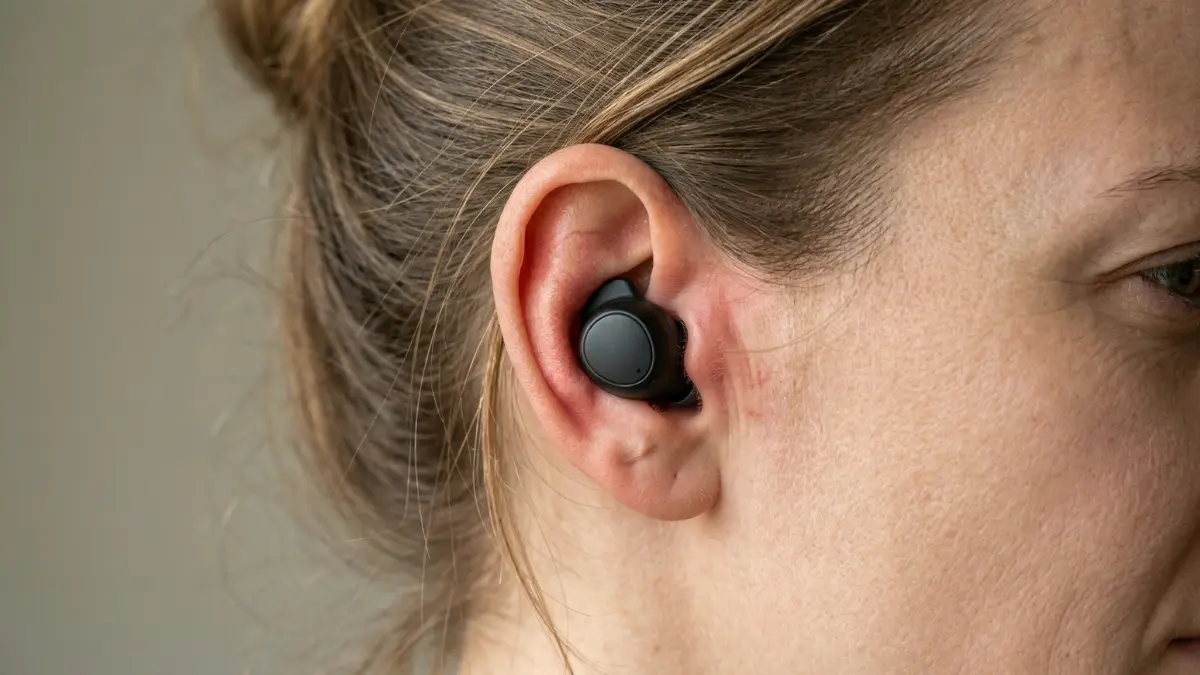
You put on your earbuds, start your commute or a work playlist, and within 30 minutes there’s a dull ache deep in your ear canal. Maybe it’s a sharp pressure against your tragus. Maybe the pain migrates down your jaw. Whatever it feels like, it is not supposed to happen.
Earbuds should be comfortable for hours of continuous use. If yours aren’t, something specific is wrong — and it’s almost always fixable without buying new gear. This guide breaks down every common cause and walks you through the exact solution for each one.
Table of Contents
- Quick Answer: The Most Common Cause
- The 6 Reasons Earbuds Cause Pain
- 1. Wrong Ear Tip Size
- 2. Incorrect Insertion Angle
- 3. Inserting Too Deeply
- 4. Pressure on Ear Anatomy
- 5. Material Sensitivity
- 6. Jaw Tension from Poor Seal
- The Fix: Quick Reference Table
- Should You Switch to Memory Foam Tips?
- The 50/10 Listening Routine
- When to Just Replace Your Earbuds
- FAQ
Quick Answer: The Most Common Cause
The single most common reason earbuds hurt after 30 minutes is using the wrong ear tip size. Most people leave the medium tips installed out of the box without testing smaller or larger options. A tip that’s even slightly too large creates sustained pressure on the cartilage of your ear canal — pressure that feels fine at first but becomes painful within half an hour as the tissue fatigues.
Try this first: put in your earbuds, then try one size smaller. If the seal still holds and the pressure decreases noticeably, you’ve probably found the fix.
But ear tip size is just one of six distinct causes. If swapping tips doesn’t help, read on — the other five are equally fixable.
The 6 Reasons Earbuds Cause Pain
- Wrong tip size — Too large means pressure. Too small means no seal and deeper insertion.
- Wrong angle — Straight-in insertion does not match the natural bend of the ear canal.
- Too deep — Pushing past the first curve creates canal pressure.
- Pressure points — The tragus, antihelix, and concha can all become painful under constant force.
- Material sensitivity — Silicone can irritate skin over time.
- Jaw tension — A poor seal can make you clench slightly without noticing.
1. Wrong Ear Tip Size
Ear canals vary enormously between people — even between your left and right ear. Most earbuds ship with three sizes (S/M/L), and some premium models include XS and XL as well. The medium tip is rarely the right choice for everyone; it just happens to be installed by default.
How to find your correct tip size
A correctly-sized tip creates a gentle seal on the first insertion — meaning you feel passive noise reduction immediately without pressing the bud further in. If you have to push hard to hear bass frequencies, the tip is too large. If you get no low-end and sound is thin, the tip is too small.
- Remove your earbuds and take out all included tip sets.
- Start with the smallest tips. Insert at a natural angle without forcing.
- If you get a clear seal and can hear bass naturally, that may be your size.
- If there is no seal, go one size up and repeat.
- Remember that your left and right ears may need different sizes.
Related guide: Earbuds Fit Test: Wrong vs. Correct — How to Know If Your Earbuds Actually Fit
2. Incorrect Insertion Angle
The human ear canal doesn’t run straight inward — it angles slightly downward and forward. Most people insert earbuds the way they’d put in a plug: straight in, perpendicular to their head. This creates immediate friction against the canal wall and forces the housing to press against the tragus.
The correct insertion technique
Pull your earlobe gently downward and backward with your free hand. This straightens the ear canal and opens the aperture. Then insert the earbud with a slight downward angle — nozzle pointing toward the corner of your jaw, not directly inward. Release your earlobe once inserted. You should feel the tip settle gently into place without any force.
Why this works: pulling the earlobe temporarily widens the canal opening. When you release it, the canal walls gently grip the tip instead of forcing the tip deeper.
3. Inserting Too Deeply
When an earbud feels like it won’t stay in, the natural instinct is to push it further. But the ear canal narrows significantly past the first 8–12mm. Forcing a tip past its natural resting depth creates high pressure against thin, sensitive canal wall skin — the kind of pain that starts as mild discomfort and escalates to a sharp ache within 20–30 minutes.
How to tell if you’re inserting too deeply
- You hear a significant change in pressure when you insert.
- Sound becomes very bass-heavy or muffled immediately.
- Pain concentrates deep in the canal, not at the opening.
- Removing the earbuds gives instant relief.
The fix: use a smaller tip size so the tip seals at the first natural narrowing point, not past it. The tip should seal on the canal walls, not bottom out against them.
4. Pressure on Ear Anatomy
Beyond the canal itself, earbud housings can press against three external pain points on the outer ear: the tragus, the antihelix, and the concha. Each of these has limited padding, and sustained pressure against any of them becomes painful in 20–40 minutes.
This is especially common with earbuds that have large, wide housings or prominent stabilizer fins. The earbud housing itself — not the ear tip — is pressing against your ear.
Fixes for external pressure pain
- Rotate the housing: Try rotating 10–15 degrees in each direction.
- Check stabilizer fin clearance: Make sure fins sit in place rather than pressing hard.
- Try the earbud without fins: If removable, test without them.
- Choose lighter earbuds: Earbuds under 5g per bud usually create less long-session pressure.
Related guide: Best Earbuds for Sensitive Ears (2026): Low-Pressure Picks That Don’t Hurt
5. Material Sensitivity
Standard silicone ear tips are the industry default for good reason: they’re durable, easy to clean, and provide a reliable seal. But silicone is also non-porous, which means it blocks moisture and can dry out the delicate skin of the ear canal over time. For people with sensitive skin or eczema-prone ears, this creates irritation that compounds with each hour of use.
Some people also have a mild contact sensitivity to specific silicone formulations or to the plastic nozzle material itself.
Material alternatives that reduce irritation
- Memory foam tips: Slower compression, lower contact pressure, and often more comfortable than solid silicone.
- Double-flanged silicone tips: These can seal at a shallower depth.
- Foam + silicone hybrid tips: These combine comfort with easier cleaning.
Watch for dermatitis symptoms: if you notice itching, redness, or a burning sensation rather than simple pressure pain, the issue may be the material, not the fit.
6. Jaw Tension from Poor Seal
This one is subtle and often overlooked. When earbuds don’t fit properly, you subconsciously compensate by slightly tensing your jaw or temple muscles to hold the buds in place. After 30–45 minutes, this can produce a diffuse ache that feels like ear pain but may actually originate in the jaw area.
The telltale sign is that the pain spreads toward your jaw or temple, not just your ear canal. Once the buds stay in without conscious effort, that tension usually disappears.
The Fix: Quick Reference Table
| Cause | Pain Location | Fix |
|---|---|---|
| Wrong tip size | Deep canal, canal walls | Try all included sizes and aim for a gentle seal |
| Wrong insertion angle | Canal wall, tragus | Pull earlobe down and back; angle toward jaw corner |
| Inserting too deeply | Deep canal | Use smaller tips and a shallower seal |
| External pressure | Tragus, antihelix, concha | Rotate housing or try lighter earbuds |
| Material sensitivity | Canal lining | Switch to foam or gentler materials |
| Jaw tension | Jaw, temple | Fix the fit so the buds stay in naturally |
Should You Switch to Memory Foam Tips?
For many people who experience pressure-related ear pain, memory foam tips are the single most effective upgrade available. They compress to insert, then expand slowly, which reduces sudden pressure and distributes contact more evenly.
- Lower insertion pressure
- Better pressure distribution
- Better seal at shallower depth
Downsides: foam tips wear out faster than silicone and need more frequent replacement and cleaning.
The 50/10 Listening Routine
Even with perfectly-fitting earbuds, the tissues of the ear canal experience some degree of fatigue from sustained occlusion. The skin in your canal needs periodic ventilation, especially during long sessions.
Adopt a simple rule: 50 minutes of listening, 10 minutes of rest. Remove the earbuds completely during breaks rather than leaving them inserted. This allows the canal to ventilate, the cartilage to decompress, and any minor moisture buildup to dissipate.
When to Just Replace Your Earbuds
If you’ve tried different tip sizes, corrected your insertion technique, switched to foam tips, and adjusted the housing orientation — and you’re still in pain after 30 minutes — the earbuds may simply be incompatible with your ear anatomy.
Common design issues include:
- Nozzles that are too wide for small ear canals
- Wide, rigid housings
- Heavy earbuds that shift during wear
- Fixed wing tips that do not match your ear shape
Recommended reading: Best Earbuds for Sensitive Ears (2026): Tested for Low-Pressure Comfort
Quick Fix Summary
- Try a smaller tip size first
- Change the insertion angle
- Rotate the earbud housing
- Switch to memory foam tips
- Use the 50/10 break rule
- Replace the earbuds if the shape simply does not fit your ears
Frequently Asked Questions
Why do my earbuds hurt after 30 minutes?
The most common causes are the wrong ear tip size, incorrect insertion angle, or pressure from the earbud housing against sensitive parts of the ear.
How do I stop earbuds from hurting my ears?
Try all included tip sizes, use a gentler insertion angle, take regular breaks, and switch to foam tips if silicone causes irritation.
Is it normal for earbuds to hurt?
No. Pain is a sign that something is wrong with fit, shape, or material.
Can earbuds damage your ears?
Ill-fitting earbuds usually cause temporary soreness or irritation. The bigger long-term risk comes from listening at high volume for too long.
What are the best earbuds for people with ear pain?
Look for lightweight earbuds, smaller nozzle sizes, multiple tip options, and models designed for long-session comfort.
Why do my ears hurt more with some earbuds than others?
Because earbud nozzle size, housing shape, and weight vary from model to model, and not every design matches every ear.
Author
Topivo Editors
Audio & Tech Reviewers
The Topivo team has tested over 200 pairs of earbuds, with a focus on real-world comfort, long-session wearability, and practical advice for everyday users — not spec sheets.