
Headphones Buying Guide (2026): How to Choose the Best Headphones for Your Needs
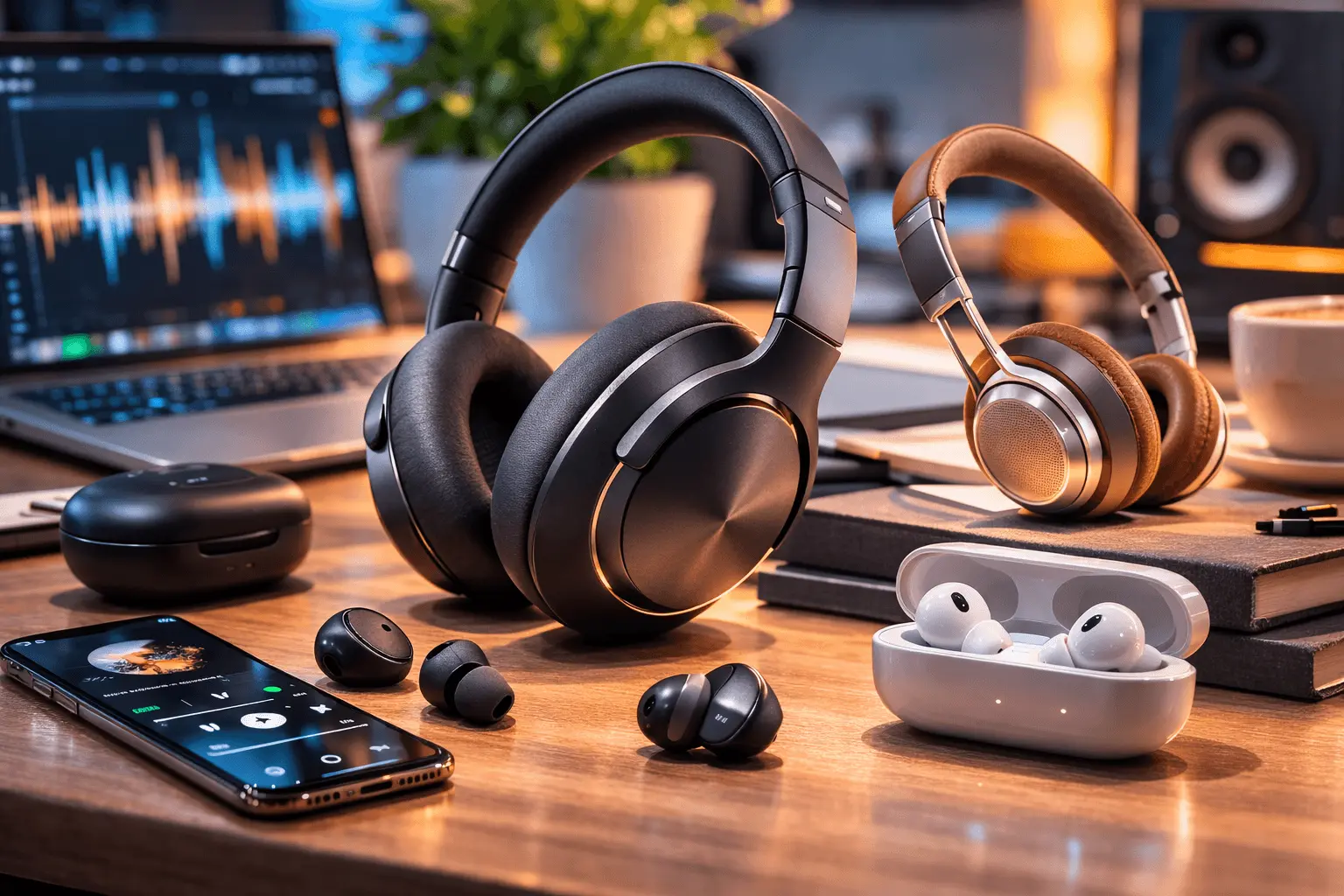
Buying headphones seems easy until you start comparing real options. Some models focus on deep bass and energetic tuning, others promise studio detail, while premium pairs highlight noise cancelling, battery life, and luxury comfort. Add in terms like open-back, closed-back, Bluetooth codecs, ANC, soundstage, impedance, and transparency mode, and the process quickly becomes confusing for everyday buyers.
The truth is that the best headphones are not simply the most expensive ones or the most heavily marketed models. The right choice depends on where you listen, what you listen to, how long you wear them, whether you need wireless freedom, and how much outside noise you want to block. A great pair for commuting may not be the best for gaming. A studio-focused model may not be ideal for casual listening. And premium ANC headphones may be unnecessary if you mainly listen at home in a quiet room.
This headphones buying guide explains everything you need to know before making a decision. We cover the main headphone types, sound quality basics, comfort, ANC, connectivity, battery life, use-case recommendations, budget strategy, and the most common buying mistakes. If you are also comparing smaller portable options, you can explore our guide to the best wireless earbuds and our broader wireless earbuds buying guide.
Start With Your Main Use Case Before Anything Else
The biggest mistake many buyers make is choosing headphones based on specs alone instead of starting with their real-life use case. Before you compare brands, drivers, or noise cancellation claims, ask a simpler question: where and how will you actually use these headphones most of the time?
If you commute daily, travel often, or work in noisy environments, active noise cancelling and comfort should probably be near the top of your list. If you mostly listen at home, you may care more about sound quality, openness, and long-session comfort than portability or battery life. If you edit video, take frequent calls, or move between a laptop and phone throughout the day, multipoint Bluetooth, microphone quality, and easy controls may matter more than absolute audiophile detail.
Students and office workers often need a good balance: enough isolation to stay focused, enough comfort for long sessions, and battery life that lasts all day. Gym users usually benefit more from workout earbuds than large headphones, but some still prefer over-ear models for indoor training. Gamers may value imaging, comfort, and low latency above all else. Music enthusiasts who listen in quiet environments may prefer open-back wired headphones for a more spacious presentation.
The goal is simple: narrow the category before narrowing the model. Once you understand your primary use case, many bad options disappear automatically. This keeps you from overpaying for features you do not need or buying a technically impressive pair that feels wrong in daily use.
Types of Headphones Explained
Headphones come in several main forms, and each one has strengths and trade-offs. Understanding these categories is one of the most important parts of buying well.
Over-Ear Headphones
Over-ear headphones, also called around-ear headphones, surround the ears with larger ear cups. They are often the most comfortable option for long listening sessions because the pads rest around the ear rather than pressing directly on it. They also tend to offer larger drivers, stronger passive isolation in closed-back designs, and more room for advanced ANC systems in wireless models.
For travel, office use, and immersive home listening, over-ear headphones are often the safest recommendation. Their larger size is the main drawback. They are less portable than earbuds and can feel warmer during extended use, especially in hot weather.
On-Ear Headphones
On-ear headphones rest directly on the ears instead of around them. They are usually lighter and more compact than over-ear models, which makes them easier to carry. However, they often provide less isolation and can become less comfortable over long sessions because of the direct pressure on the ears.
For people who want something smaller than full-size headphones but larger than earbuds, on-ear models can still make sense. They are less dominant in today’s market than they used to be, but they remain relevant for portability and lightweight listening.
In-Ear Headphones and Earbuds
In-ear headphones, often called earbuds when discussing true wireless models, sit in or seal into the ear canal. They are the most portable and convenient option, and many premium earbuds now offer impressive ANC, sound quality, and battery life. For some buyers, especially frequent travelers or gym users, earbuds may be a better choice than traditional headphones.
Still, earbuds are not always the best answer. Fit matters far more, battery life per charge is typically shorter, and some users simply prefer the comfort and fuller sound of over-ear designs. If you are comparing ANC performance between form factors, our article on ANC vs passive noise isolation can help explain what really matters.
Open-Back vs Closed-Back Headphones
This distinction matters especially for wired and home-focused headphones. Closed-back headphones seal the rear of the driver, reducing sound leakage and helping block outside noise. Open-back headphones allow air and sound to pass through the outer housing, creating a more spacious and natural sound but with almost no isolation.
Closed-back is usually better for commuting, offices, shared environments, and general use. Open-back is often better for quiet home listening when soundstage and natural presentation matter more than isolation.
Wired vs Wireless Headphones
One of the biggest buying decisions is whether to go wired or wireless. Neither is automatically better. It depends on convenience, sound priorities, and where you listen.
Wireless headphones are clearly more convenient for commuting, work, travel, and daily movement. You get freedom from cables, better compatibility with modern phones, and features like ANC, transparency mode, app EQ, touch controls, and multipoint pairing. Premium wireless headphones are now good enough that most mainstream buyers are better served by them than by wired models.
Wired headphones still make a lot of sense for home listening, gaming, studio work, and users who want maximum simplicity without battery concerns. They are often easier to use with desktop setups, audio interfaces, and amplifiers, and many offer excellent value for sound quality at lower prices than premium wireless alternatives.
Wireless sound quality has improved dramatically, but wired still has advantages in consistency and simplicity. There is no battery degradation to worry about, no wireless pairing issues, and often less latency. That said, many buyers overestimate how important the wired advantage is for everyday listening. For commuting, office use, or casual music playback, convenience often matters more than chasing small theoretical gains.
If you mostly use a phone, travel a lot, or want noise cancelling, wireless is often the smarter buy. If you sit at a desk, listen for long periods in quiet environments, or prefer a more traditional audio setup, wired can be the better value.
Sound Quality Basics: What Actually Matters?
Sound quality is often treated like a mysterious or highly technical subject, but for most buyers, the important ideas are straightforward. Good headphones should sound balanced, clear, enjoyable, and appropriate for the way you listen.
The first factor is tuning. Tuning describes how the headphones present bass, mids, and treble. Some headphones are bass-heavy and energetic, which many listeners enjoy for pop, hip-hop, and workouts. Others are more balanced or neutral, which can work better for vocals, acoustic music, podcasts, and long listening sessions. Neither style is automatically better. The best choice depends on preference and use case.
The second factor is detail and clarity. Better headphones often make it easier to hear layers in the mix, separate instruments, and follow vocals without the sound turning harsh or fatiguing. But more detail is only valuable if the overall tuning still sounds natural and enjoyable.
The third factor is soundstage and imaging. Soundstage refers to how spacious or open the audio feels. Imaging is how clearly sounds are placed within that space. Open-back headphones often create a wider sense of space, while many closed-back and wireless models prioritize punch, isolation, and convenience instead.
The fourth factor is fit and seal. This is especially important for closed-back headphones and earbuds. If the seal is poor, bass may sound weak, and isolation suffers. Fit changes the experience more than many buyers realize.
Finally, app EQ can make a real difference. Some headphones sound good out of the box, while others improve significantly when you can adjust bass, mids, or treble in a companion app. A useful EQ often matters more in practice than small differences in raw driver size.
For most buyers, the smartest approach is to ignore flashy marketing language and focus on what the headphones sound like in real usage. Ask whether they fit your music, your volume habits, and your comfort expectations. Headphones should not just measure well on paper. They should sound right to you.
ANC, Passive Isolation, and Transparency Mode
Noise control is now one of the most important parts of the headphone buying process, especially in wireless models. But many buyers confuse the different features or focus too much on ANC marketing claims without understanding the full picture.
Active noise cancelling (ANC) uses microphones and signal processing to reduce environmental sound, especially steady low-frequency noise such as airplane hum, train rumble, fans, and office ventilation. Strong ANC can make a huge difference for commuting and travel. It also helps reduce listening fatigue because you do not need to raise the volume as much in noisy environments.
Passive noise isolation comes from physical design. In headphones, this depends on ear cup seal, padding, clamp force, and construction. Even without ANC, some closed-back headphones isolate very well simply because they block sound physically.
The best wireless ANC headphones use both. Passive isolation reduces how much sound enters, while ANC reduces what remains. If you want a deeper explanation, our dedicated guide on ANC vs passive noise isolation breaks down which method works better in different situations.
Transparency mode, sometimes called ambient mode, is the reverse of ANC. It intentionally lets outside sound in so you can hear conversations, traffic, or announcements without removing your headphones. This is useful for commuting, office interactions, and safer outdoor awareness.
Not everyone needs elite ANC. If you mainly listen at home or in quiet environments, you may care more about comfort and sound than maximum noise reduction. But for frequent travelers and office users, strong ANC is often worth paying for.
Comfort and Fit: The Feature You Will Notice Every Day
Comfort is one of the most underrated parts of buying headphones. A model can sound excellent and still be the wrong choice if it causes heat, pressure, or fatigue after an hour. This matters even more if you wear headphones during work, study, travel, or long flights.
Over-ear comfort depends on several factors: pad softness, pad depth, headband design, weight distribution, and clamp force. Some heavy headphones still feel comfortable because the headband distributes weight well. Others feel tiring quickly because the clamp is too strong or the pads are too shallow.
On-ear headphones are more likely to create direct ear pressure, which is why they work better for shorter sessions than all-day use for many people. Ear shape also matters a lot, which is why comfort reviews can vary so much between users.
If you wear glasses, comfort becomes even more important. Some pads press the frame arms into the side of your head, which can cause discomfort over time. Softer pads and moderate clamp force usually help.
Heat buildup is another common issue. Leather-like pads can seal better and improve bass, but they may also get warmer during long listening sessions. Fabric pads often breathe better but may isolate less.
Comfort should never be treated as a bonus feature. It is part of performance. If the headphones become uncomfortable, you will use them less, enjoy them less, and possibly regret the purchase no matter how good the specs look.
Battery Life, Charging, and Long-Term Convenience
If you are buying wireless headphones, battery life matters. Most modern wireless models provide anywhere from 20 to 60 hours depending on ANC use, volume, and feature set. Premium ANC headphones often sit somewhere in the middle: enough for multiple days of regular use, but lower than simpler wireless models without advanced processing.
When evaluating battery life, do not just look at the biggest number on the box. Ask whether that number includes ANC, whether fast charging is available, and how the headphones behave in realistic daily use. A pair that charges quickly and lasts through your workday may be more practical than a pair with a higher maximum number but slower charging.
Fast charging is especially useful for commuters and travelers. Many good wireless headphones now offer several hours of playback from just a short charge. USB-C is the standard you want to see for convenience and compatibility.
Battery longevity matters too. With wireless headphones, the battery will age over time. That does not mean you should avoid wireless models, but it is one reason some buyers still prefer wired headphones for long-term ownership and simplicity.
If you mostly listen at home, battery life may be less important than sound or comfort. But if you rely on your headphones every day for work, commuting, or calls, long and consistent battery performance becomes a major quality-of-life factor.
Bluetooth, Audio Codecs, and Multipoint Connectivity
Wireless headphone specs often mention Bluetooth versions and codecs, but buyers can easily overcomplicate this part. The practical questions are simpler: do the headphones connect reliably, do they sound good with your device, and do they switch smoothly when needed?
Most good modern wireless headphones support Bluetooth 5.2 or newer, which generally improves efficiency and stability. The exact version is less important than the real-world connection quality.
Codecs such as SBC, AAC, aptX, aptX Adaptive, and LDAC affect how audio is transmitted over Bluetooth. Apple devices rely heavily on AAC, so iPhone users should make sure wireless headphones handle AAC well. Many Android phones benefit from codecs like LDAC or aptX, but codec support alone does not guarantee better sound. Tuning, driver quality, and seal still matter a lot more.
Multipoint connectivity is one of the most useful features for office and productivity users. It allows headphones to stay connected to two devices at once, such as a phone and laptop, making it easier to switch between music and calls without reconnecting manually.
If you work across devices, multipoint can matter more than small codec differences. Likewise, stable app support and simple controls often improve daily use more than technical specs that sound impressive but change little in practice.
Microphone Quality, Controls, and Everyday Features
Headphones are no longer used just for music. Calls, meetings, voice assistants, commuting, and daily multitasking all matter now. That is why microphone quality and convenience features deserve real attention.
For calls, the key questions are whether your voice sounds clear, how well the microphones handle wind and background noise, and whether the headphones remain stable in busy environments. Some headphones sound great for music but perform only average on calls. If phone and video calls are part of your daily routine, this can become more important than raw audio performance.
Controls matter too. Physical buttons are often easier and more reliable than touch surfaces, especially in cold weather or while moving. Touch controls can feel sleek and modern, but they are not always more practical.
Wear detection, app customization, EQ, voice assistant support, and cable options may seem secondary, but together they shape how polished the headphones feel over time. The best everyday headphones do not just sound good. They reduce friction. They pair quickly, stay comfortable, respond consistently, and fit naturally into your routine.
This is why review sites often emphasize real-world use instead of specs alone. The best product is rarely the one with the longest feature list. It is the one that performs reliably in the situations you actually care about.
How to Choose the Best Headphones by Use Case
For commuting and travel: Choose wireless over-ear headphones with strong ANC, long battery life, and reliable comfort. These are usually the best all-around option for airplanes, trains, and public transport.
For office and work: Look for comfort, multipoint connectivity, strong microphones, and a good transparency mode. If you work around other people, balanced ANC and all-day wearability matter a lot.
For home listening: If your environment is quiet, sound quality and comfort become the priority. This is where wired closed-back or open-back headphones can shine depending on whether you need isolation.
For gaming: Focus on comfort, imaging, and latency. Wired models often remain a strong choice here, though some wireless gaming-focused headphones also perform well.
For calls and productivity: Good microphone performance and multipoint connectivity often matter more than extreme bass or flashy styling.
For gym use: In many cases, earbuds are more practical than headphones. If portability, sweat resistance, and secure fit matter most, workout-focused earbuds may be the better path than full-size headphones. For example, use-case articles like earbuds for iPhone or gym-oriented earbuds can complement this broader guide and strengthen your topical structure.
How Much Should You Spend on Headphones?
Budget matters, but spending more only makes sense when you understand what you are paying for. At the lower end, you can find usable headphones with decent sound and basic wireless features, but compromises are common in comfort, ANC, microphones, and app support.
The mid-range is often the sweet spot. This is where many buyers find the best balance of sound, comfort, battery life, and feature quality. For a lot of people, mid-range wireless headphones deliver enough performance that paying premium prices only makes sense if you specifically want stronger ANC, more refined comfort, or a better ecosystem experience.
Premium headphones usually offer the most complete package rather than one dramatic leap in a single area. You may get stronger ANC, better transparency mode, more polished controls, better microphones, stronger build quality, and a more refined sound signature. That can absolutely be worth it for frequent users, but it is not necessary for everyone.
A smart budget strategy is to pay for the features that affect your real listening habits. Do not overpay for ultra-premium ANC if you mostly listen at home. Do not chase audiophile terminology if your main priority is work calls and commuting. Buy for your routine, not for the most impressive spec sheet.
Common Headphone Buying Mistakes to Avoid
One of the biggest mistakes is buying only by brand reputation. A respected brand can still make a model that is wrong for your ears, your priorities, or your environment. Another mistake is ignoring comfort until after purchase. Long-term wearability should be one of the first filters, not an afterthought.
Many buyers also chase technical terms without understanding how they affect real use. Codec support, driver size, and ANC claims matter, but not more than tuning, fit, stability, and daily convenience. A slightly less technical model that fits better and works more smoothly can be the better buy.
Another common mistake is buying headphones that do not match your main device ecosystem. iPhone users should think about AAC performance and Apple compatibility. Multi-device workers should think about multipoint. Travelers should think about ANC and comfort more than absolute wired fidelity.
Finally, some people buy one pair expecting it to be perfect for every situation. In reality, the best travel headphones may not be the best home-listening pair, and the best gaming headset may not be ideal for commuting. Understanding trade-offs is part of buying intelligently.
Final Verdict: How to Choose the Right Headphones
The best headphones are the ones that match your life, not just your wishlist. Start by defining your main use case. Then compare the factors that matter most for that situation: sound quality, comfort, ANC, battery life, connectivity, microphone quality, and everyday convenience.
If you travel or commute often, wireless over-ear headphones with strong ANC are usually the best choice. If you listen mostly at home, wired or home-focused headphones may offer better sound value. If you need something smaller and more portable, premium earbuds may make more sense than full-size headphones.
Most importantly, do not buy by hype. Buy by fit, function, and real use. The right pair should sound good, feel comfortable, and make daily listening easier, not more complicated.
For more audio buying help, you can also explore our guides to the best wireless earbuds, best earbuds for iPhone, and ANC vs passive noise isolation.
Frequently Asked Questions
What is the best type of headphones for everyday use?
For most people, wireless over-ear headphones offer the best balance of comfort, sound quality, and convenience for everyday listening.
Are wired headphones better than wireless?
Wired headphones can offer lower latency and simpler long-term use, but wireless headphones are usually more convenient for commuting, work, and travel.
Do I really need active noise cancelling?
You need ANC most if you commute, travel, or work in noisy spaces. If you mostly listen in quiet environments, it may be less important than comfort and sound quality.
How much should I spend on headphones?
For many buyers, the mid-range offers the best value. Premium models make sense when you specifically want stronger ANC, better comfort, or more refined everyday features.
Are earbuds better than headphones?
Earbuds are more portable and convenient, but headphones often provide better comfort for long sessions, stronger battery life, and a fuller listening experience.