
Most earbuds don’t fail because of sound — they fail because they can’t stay in your ears. The moment you start running, everything changes. Sweat builds up, your jaw moves, your stride creates micro-shocks, and suddenly even “secure fit” earbuds begin to slip, rotate, and eventually fall out.
This guide isn’t based on marketing claims or spec sheets. It’s built on real-world stability testing — including movement, sweat, and long-distance comfort. If you’re tired of adjusting your earbuds every 5 minutes, this is what actually works in 2026.
Best Earbuds That Don’t Fall Out While Running (2026 Stability Guide)
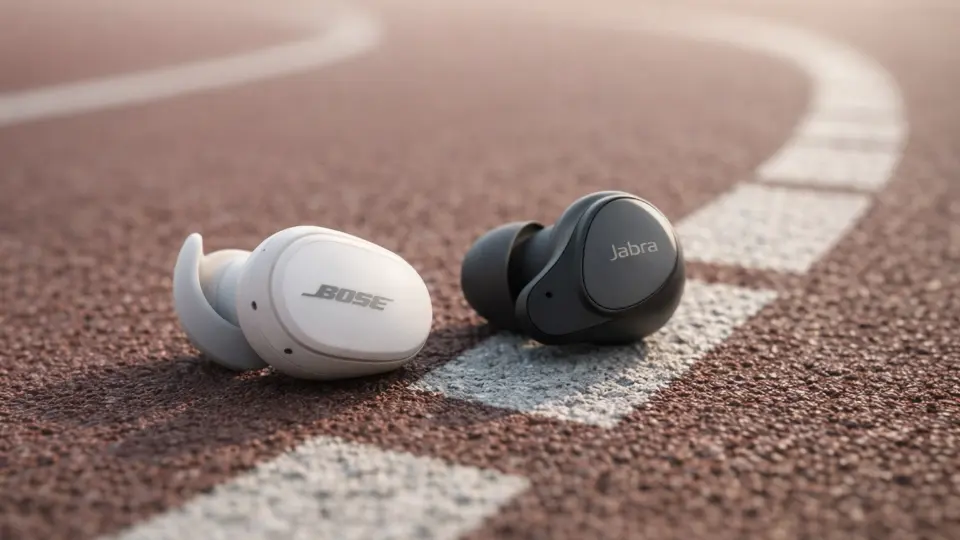
Why Earbuds Fall Out When You Run
Most earbuds are designed for passive listening — sitting, commuting, or working at a desk. Running introduces a completely different set of physical forces that disrupt the fit almost immediately.
There are three primary reasons earbuds fail during a run: vertical impact, lateral motion, and moisture. Each step creates a micro-bounce that pushes the earbud outward. At the same time, your head moves side to side, adding rotational force. Sweat then reduces friction between the ear tip and your ear canal, weakening the seal.
Movement Changes Everything
At an average running cadence of 160–180 steps per minute, your earbuds are subjected to constant vibration. Even a tiny imbalance in weight distribution can cause gradual loosening over time. That’s why earbuds that feel “fine” while walking often fail after just 10–15 minutes of running.
Sweat Is the Hidden Enemy
Sweat doesn’t just make earbuds slippery — it actively changes the grip dynamics of silicone tips. As moisture builds up, the seal weakens, and the earbud begins to rotate. This is why many runners experience earbuds slowly backing out rather than falling instantly.
Jaw Movement Breaks the Seal
Breathing heavily while running causes subtle jaw movement. This shifts the shape of your ear canal in real time, which can break the seal of earbuds that rely on deep insertion. If the design doesn’t compensate for this, stability will always be temporary.
How We Tested Stability (Real-World Conditions)
The 45-Minute Movement Test
Each earbud was tested during a continuous 45-minute run. This included steady pacing, sprint intervals, and directional changes. Any earbud that required adjustment more than once failed the test.
The Shake and Jaw Simulation
Before running, we simulated exaggerated head movement and jaw motion. This reveals fit weaknesses instantly. If an earbud shifts during this phase, it will not survive a real run.
Sweat Exposure
We tested in both dry and humid conditions to evaluate how sweat affects grip over time. Earbuds that rely solely on friction rather than structural support performed noticeably worse.
👉 For a broader comparison across categories, see our full guide: Best Wireless Earbuds 2026
Best Earbuds That Stay Secure While Running (2026)
1. Bose QuietComfort Ultra Earbuds — Best Overall Stability
Bose has effectively solved the stability problem with its StayHear Max system. Instead of relying only on the ear canal, these earbuds anchor against the outer ear structure. This distributes pressure across multiple contact points, reducing movement significantly.
The nozzle angle is slightly forward-tilted, aligning naturally with most ear canals. This reduces internal pressure while improving seal consistency. Even after extended runs in humid conditions, these earbuds remain locked in place.
They’re not the smallest or lightest option, but stability is unmatched. If your priority is zero adjustment mid-run, this is the benchmark.
2. Jabra Elite 10 Gen 2 — Best for Comfort + Stability Balance
Jabra approaches stability differently. Instead of deep insertion, the Elite 10 uses an oval-shaped tip that distributes pressure evenly. This makes it ideal for runners who experience discomfort with traditional designs.
The MultiSeal system adapts to movement, maintaining contact even as your ear shape shifts during breathing and motion. It’s not as aggressively locked-in as Bose, but it offers a better balance between comfort and security.
3. Shokz OpenRun Pro 2 — Best Zero-Fall Solution
If you’ve tried everything and nothing stays in, bone conduction is the answer. Shokz eliminates the problem entirely by removing in-ear contact. The wraparound design keeps the device physically stable, regardless of movement.
Audio quality has improved significantly in 2026, especially in bass response. While still not equal to in-ear models, it’s now good enough for most runners who prioritize awareness and comfort.
4. Sony WF-SP900 — Best Mechanical Lock Design
Sony uses a dual-anchor system: a fin that presses against the ear’s upper structure and a tip that seals the canal. This creates two independent points of stability, which dramatically reduces movement.
The fit requires some adjustment initially, but once dialed in, it’s extremely secure. This is a great option for trail runners or uneven terrain where stability is critical.
5. Apple AirPods Pro 2 — Best Everyday + Running Hybrid
AirPods Pro 2 aren’t designed specifically for running, but improvements in tip sizing and weight distribution make them surprisingly stable for moderate activity.
They excel in ecosystem integration and convenience. While they won’t outperform dedicated sports earbuds in extreme conditions, they’re ideal if you want one device for everything.
Choosing the Right Fit for Your Ear Shape
Small vs Large Ear Canals
Many fit issues come down to incorrect tip size. Most users default to medium, but this is often wrong. A tip that’s too small won’t seal properly, while one that’s too large creates pressure and instability.
👉 If you struggle with fit, read: Best Earbuds for Small Ears (2026)
Nozzle Angle Matters More Than You Think
Even with the correct tip size, a poor nozzle angle can cause constant slipping. The ear canal isn’t straight — it angles forward. Earbuds that don’t match this natural direction will never sit securely.
Weight Distribution and Balance
Heavier earbuds aren’t always worse — but poor weight distribution is. If most of the mass sits outside the ear, it creates leverage that pulls the earbud loose over time.
Ear Hooks vs Wing Tips vs Fin Systems
Ear Hooks
Ear hooks wrap around the outer ear, providing the strongest mechanical support. They’re ideal for intense running or difficult ear shapes, but can feel bulky for everyday use.
Wing Tips
Wing tips press against the inner ear structure, offering a balance between comfort and stability. They’re less intrusive than hooks but still effective for most runners.
Fin Systems
Fin designs, like Sony’s, provide targeted pressure without full ear coverage. They’re often the best compromise between security and comfort.
How to Test Stability Before You Run
Step 1: Jaw Movement Test
Insert the earbuds and open your mouth wide. If the seal breaks or the earbuds shift, the fit is incorrect.
Step 2: Shake Test
Shake your head in multiple directions. The earbuds should feel locked, not loose.
Step 3: 5-Minute Sweat Simulation
Wear them for a few minutes until slight moisture builds. If they start slipping early, they won’t last a full run.
Final Verdict
The best running earbuds aren’t defined by specs — they’re defined by stability under movement. A perfect fit means no adjustments, no distractions, and no interruptions during your run.
Bose QuietComfort Ultra leads in pure stability. Jabra offers the best comfort balance. Shokz eliminates the problem entirely. The right choice depends on your ear shape and running style.
For deeper comparisons, real-world testing, and unbiased reviews, visit Topivo — where performance matters more than marketing.
See how these earbuds perform in real running conditions in our full test: Best Wireless Earbuds 2026