
The Soundcore P20i has been one of Amazon’s most reliable budget earbud hits for a reason. It promises the basics people actually want — long battery life, dependable Bluetooth, decent sound, and a price low enough to feel safe. The real question is whether it still deserves the hype in 2026.
Soundcore by Anker P20i Review: Why It Keeps Selling Out on Amazon
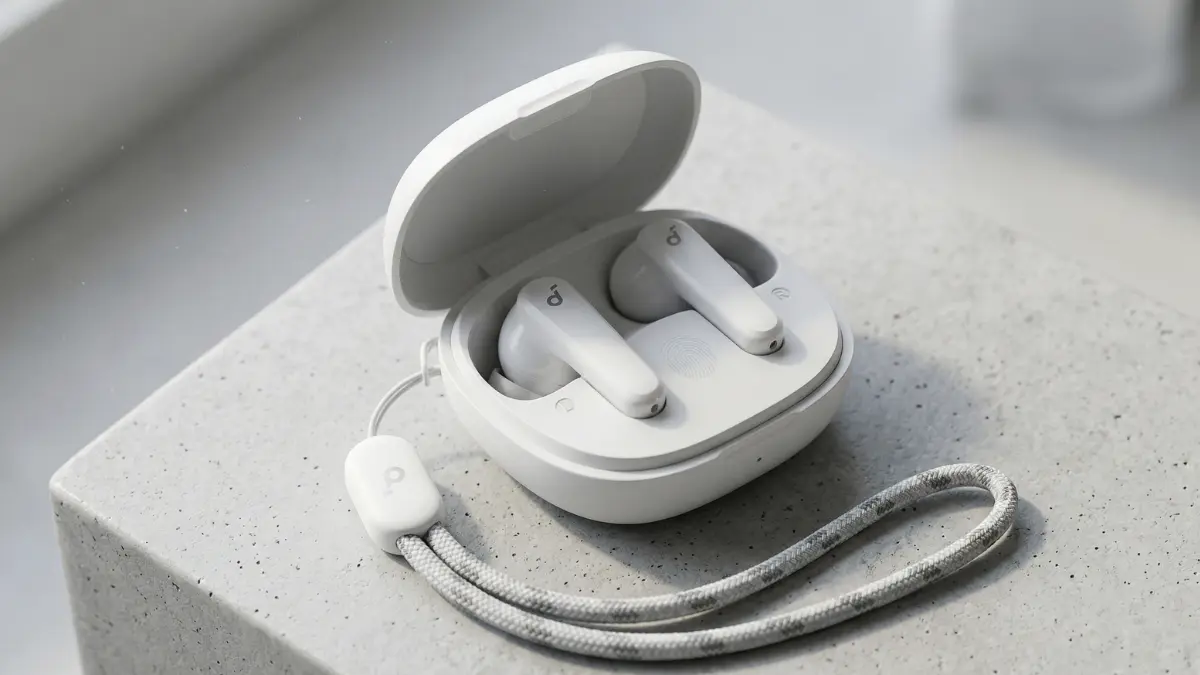
Under $30, 10mm drivers, 30 hours of total battery life, and IPX5 water resistance. We wore them every day for a week to find out whether the hype is real.
The Soundcore P20i has been one of Amazon’s consistently top-selling earbuds for over two years — and not because of a flashy marketing campaign. It sells because it solves a specific problem: getting a reliable pair of wireless earbuds for under $30 without gambling on an unknown brand.
But “sells well” and “worth buying” aren’t the same thing. We put the P20i through a week of daily use — commuting, gym sessions, Zoom calls, and long listening sessions — to tell you exactly what you get and what you’re giving up at this price point.
Quick Verdict
The P20i is the best answer to the question “what earbuds should I get for under $30?” It delivers solid bass-forward sound, a genuinely impressive battery, a comfortable lightweight fit, and the reassurance of Anker’s brand reputation.
The trade-offs — no ANC, average mic in wind, no multipoint — are exactly what you’d expect at this price. For the vast majority of buyers considering a budget pair, it’s the default recommendation.
Score: 4.2/5
Pros
- Outstanding battery life for the price
- 10mm driver delivers real bass weight
- IPX5 handles sweat and rain well
- Lightweight at around 4.5g per bud
- Bluetooth 5.3 with stable connection
- Trustworthy brand at budget price
Cons
- No active noise cancellation
- Mic is mediocre outdoors and in wind
- No multipoint connection
- No meaningful sound customization
- Treble lacks air and detail
Full Specs at a Glance
| Specification | Soundcore P20i |
|---|---|
| Driver size | 10mm dynamic driver |
| Bluetooth version | 5.3 |
| Codecs supported | SBC, AAC |
| Frequency response | 20Hz – 20kHz |
| Earbud battery | Up to 10 hours |
| Total with case | Up to 30 hours |
| Charging case | USB-C |
| Water resistance | IPX5 |
| Weight per earbud | ~4.5g |
| ANC | No |
| Multipoint | No |
| Touch controls | Yes |
| Companion app | Soundcore app |
| Colors | Black, White, Blue, Green, Pink |
Check the latest price and availability for the Soundcore by Anker P20i on Amazon.
Check Price on AmazonThis is an affiliate link. We may earn a commission at no extra cost to you.
Design and Build Quality
The P20i has a straightforward in-ear design with a short cylindrical stem — think AirPods proportions but rounder and more compact. The housing is all matte plastic, which gives it a clean look without attracting fingerprints. It does not feel cheap in the hand; the seams are tight, the buttons have a satisfying click, and the charging case shuts with a positive magnetic closure.
The case itself is one of the P20i’s quiet strengths. It is genuinely pocket-sized — about the same footprint as a pack of gum — and it charges via USB-C, which is the right call in 2026.
At this price point, you are not getting metal accents, premium finishes, or wireless charging for the case. But everything that matters structurally — seam quality, connector durability, and button tactility — is above average for the sub-$30 tier.
Fit and Comfort
This is where the P20i earns its reputation. At approximately 4.5g per earbud, it is lighter than earbuds that cost three times as much. In practice, that means you forget they are in your ears within a few minutes — there is no progressive discomfort from weight pulling the tip angle and creating canal pressure.
The three included ear tip sizes (S/M/L) are standard silicone. The medium tips fit most users, and the selection is wide enough that you can find a workable seal without buying aftermarket options. The angled nozzle is well matched to average ear canal geometry, so inserting with a slight downward-forward angle seats them naturally.
Fit tip: If the P20i feels loose or bass-light, try the small tips before giving up on the fit. Many users find the small tips seal better than mediums, especially for narrower ear canals. Pull your earlobe gently down while inserting and then release.
The P20i does not have stabilizer fins, which is a deliberate trade-off. Most casual users will find they stay in place for walking, gym workouts, and even light running. Very high-impact activities like sprinting may cause them to shift, but this is common across all non-finned earbuds at this price.
Sound Quality
The P20i uses a single 10mm dynamic driver per earbud — a generous driver size at this price that gives it more low-end authority than you would expect. The sound signature is V-shaped: boosted bass and a slight treble lift, with a relatively polite midrange.
What sounds good
Bass-heavy genres — hip-hop, EDM, pop, workout playlists — sound punchy and fun. Kick drums have real thump, bass guitars are present without being muddy, and the overall sound is engaging at moderate volumes. Podcasts and spoken-word content are clear and easy to follow.
Where the tuning falls short
Classical music, acoustic jazz, and anything that depends on instrument separation and treble extension sounds compressed. The upper frequencies roll off noticeably, removing the air and shimmer that make higher-end earbuds sound more open. Vocals, while clear, sit slightly back in the mix behind the bass emphasis.
This is a normal limitation of a single 10mm driver at this price. If your listening is mainly pop, hip-hop, electronic, or podcasts, the P20i’s tuning works very well. If you care deeply about resolution and subtle detail, this is not the right category.
Sound Scores
- Bass: 8.5/10
- Midrange: 6.8/10
- Treble: 6.2/10
- Soundstage: 5.8/10
- Detail and Separation: 6.0/10
- Value for Price: 9.2/10
Battery Life
The P20i’s battery story is genuinely impressive at this price. Anker claims 10 hours from the earbuds alone and 30 hours total with the case, and our real-world testing came close: 9.2 hours at 65% volume, which is better than many $100+ earbuds manage.
The case holds approximately two full charges for the earbuds, getting you through 2–3 days of typical use without reaching for a cable.
Real-world battery results: We measured 9.2 hours at 65% volume. At 80% volume, the earbuds ran for 7.8 hours before dying. Anker’s 10-hour claim assumes roughly 50–60% volume — accurate for low-to-medium listening, slightly optimistic for louder environments.
The USB-C charging case takes about 90 minutes to go from empty to full. There is no fast charge function, but at this price tier that is expected.
Related reading: Best Earbuds for Battery Life (2026): Tested and Ranked
Call Quality and Microphone
The P20i uses two microphones per earbud for call pickup. In quiet indoor environments — home office, desk, library — voice quality is acceptable for Zoom calls and phone conversations. Your voice comes through clearly enough that recipients usually do not complain.
Outdoors and in wind, the story changes. There is no active wind noise suppression, which means a moderate breeze can significantly degrade your audio to the other party. Background noise in busy environments is also picked up without meaningful filtering.
For heavy call users: if you take frequent outdoor calls or work in noisy environments, the P20i’s microphone will frustrate you. For quiet home calls, it works fine.
Bluetooth and Connectivity
Bluetooth 5.3 is a meaningful spec at this price — many competing earbuds still ship with older versions, which means more dropouts and slightly higher latency. With the P20i, pairing is fast, the connection stays stable at typical indoor distances, and re-pairing after removing them from the case is immediate.
The one notable limitation is no multipoint. You can only connect to one device at a time. Switching from your laptop to your phone requires going into your Bluetooth settings and manually connecting. For people who work on a computer and receive phone calls frequently, this adds friction that more expensive earbuds eliminate.
Latency in normal listening and watching videos is acceptable. We did not notice major lip-sync issues during YouTube or Netflix viewing. Gaming latency is higher and somewhat noticeable, but the P20i was never designed for gaming use.
P20i vs. No-Name Budget Earbuds: Why the Brand Matters
Amazon is full of $15–25 earbuds from brands you have never heard of, often with impressive-looking spec sheets. Here is why the P20i consistently wins in head-to-head comparisons with no-name alternatives despite often costing a little more.
| Factor | Soundcore P20i | Typical No-Name Earbuds |
|---|---|---|
| Driver quality | 10mm with consistent tuning | Often smaller drivers with inconsistent tuning |
| Battery accuracy | Rated 10h, real-world close to claim | Often much lower than claimed |
| Water resistance | IPX5 | Often unclear or unreliable |
| Bluetooth stability | Bluetooth 5.3, stable | More frequent dropouts |
| After-sale support | Anker warranty and support | Usually none that matters |
| Price | ~$25–30 | ~$12–20 |
The $5–10 premium over generic alternatives buys you driver consistency, accurate battery specs, verified water resistance, and actual customer support. For most buyers, that trade is worth it.
Deep dive: Budget vs. Premium Earbuds in 2026: Is It Worth Paying More?
Who Should Buy the Soundcore P20i
Buy the P20i if you…
- Need reliable earbuds under $30
- Prioritize battery life
- Use them for the gym, commute, or casual listening
- Want IPX5 for sweat and rain
- Only connect to one device at a time
- Are replacing a cheap pair that died quickly
- Want a proven brand with warranty support
Skip the P20i if you…
- Need active noise cancellation
- Take frequent outdoor calls in wind
- Need multipoint for laptop and phone
- Listen to classical, jazz, or acoustic music critically
- Want deeper sound customization
- Need premium codec support
If you are in the “skip” column on one or two points, the next step up is earbuds in the $50–80 range — where you start getting ANC, multipoint, and better mic quality.
Next step up: Best Budget ANC Earbuds (2026): Ranked by Real Noise Cancellation Performance
Frequently Asked Questions
Is the Soundcore P20i worth buying?
Yes — for under $30, the P20i consistently outperforms no-name competitors on driver quality, battery accuracy, water resistance reliability, and Bluetooth stability. It is one of the safest budget recommendations.
Does the Soundcore P20i have noise cancellation?
No. The P20i relies only on passive noise isolation from the ear tips. If ANC is a requirement, you will need to move up in price.
How long does the Soundcore P20i battery last?
In our testing, the earbuds ran 9.2 hours at 65% volume — very close to Anker’s 10-hour claim. The charging case adds two more full charges, bringing total playtime to roughly 27–30 hours.
Is the Soundcore P20i good for the gym?
Yes. IPX5 water resistance handles sweat well, the lightweight design is comfortable for long sessions, and the battery easily covers multiple workouts.
What is the difference between the Soundcore P20i and P20?
The P20i features Bluetooth 5.3, a refined housing, improved driver tuning, and slightly better microphone performance. At similar pricing, the P20i is the better choice.
Can I use only one Soundcore P20i earbud at a time?
Yes. The P20i supports single-earbud use, which is useful for calls or for maintaining awareness outdoors.
Author
Topivo Editors
Audio & Tech Reviewers
The Topivo team has tested more than 200 earbuds across all price tiers, with a focus on real-world performance, long-session wearability, and honest value assessments — not spec sheet comparisons.